

Why Privacy Matters in Penile Enhancement
The decision to pursue penile enhancement is deeply personal, and patients must feel confident that their health information will remain confidential. HIPAA fundamentals require that any U.S. clinic handling protected health information (PHI) implement administrative, physical, and technical safeguards—encrypted servers, role‑based access controls, and Business Associate Agreements with third‑party vendors—to prevent unauthorized disclosure. When a clinic consistently adheres to these standards, it builds patient trust and confidentiality, allowing men to discuss sensitive concerns without fear of stigma. Conversely, a data breach can expose intimate medical records, leading to embarrassment, loss of reputation, and potential discrimination, which may deter individuals from seeking necessary sexual‑health care. Protecting PHI therefore not only satisfies legal obligations but also sustains the therapeutic relationship, encourages honest communication, and safeguards the overall wellbeing of men undergoing enhancement procedures.
Foundations of HIPAA and Privacy‑by‑Design
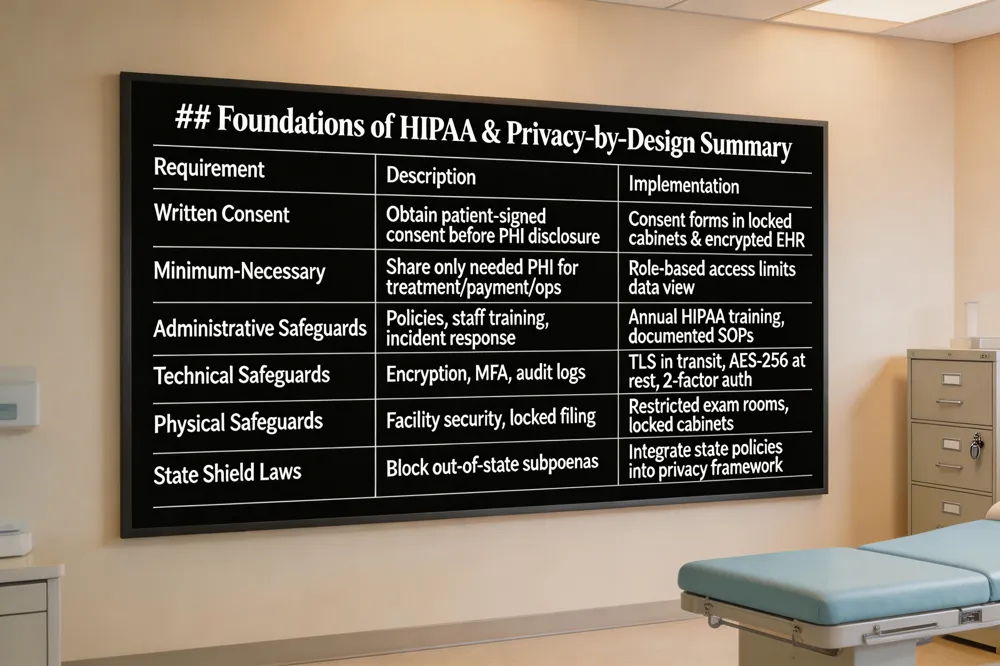 The HIPAA Privacy Rule obligates any clinic that handles protected health information (PHI) – including male genital enhancement practices – to obtain written consent before disclosing data and to provide a clear notice of privacy practices. Complementing this, the HIPAA Security Rule requires administrative, technical, and physical safeguards: policies for staff training, encryption of electronic PHI in transit and at rest, role‑based access controls, two‑factor authentication, locked filing cabinets, and restricted‑area examination rooms. A core tenet is the “minimum‑necessary” standard, which limits the amount of PHI shared to the smallest amount needed for treatment, payment, or health‑care operations. Beyond federal law, many states have enacted shield‑law statutes and reproductive‑health protections that bar out‑of‑state subpoenas and limit law‑enforcement access to lawful sexual‑health care. Clinics must incorporate these state‑level safeguards into their privacy‑by‑design frameworks to ensure comprehensive, discreet protection of patient data.
Secure Digital Channels and Patient Portals
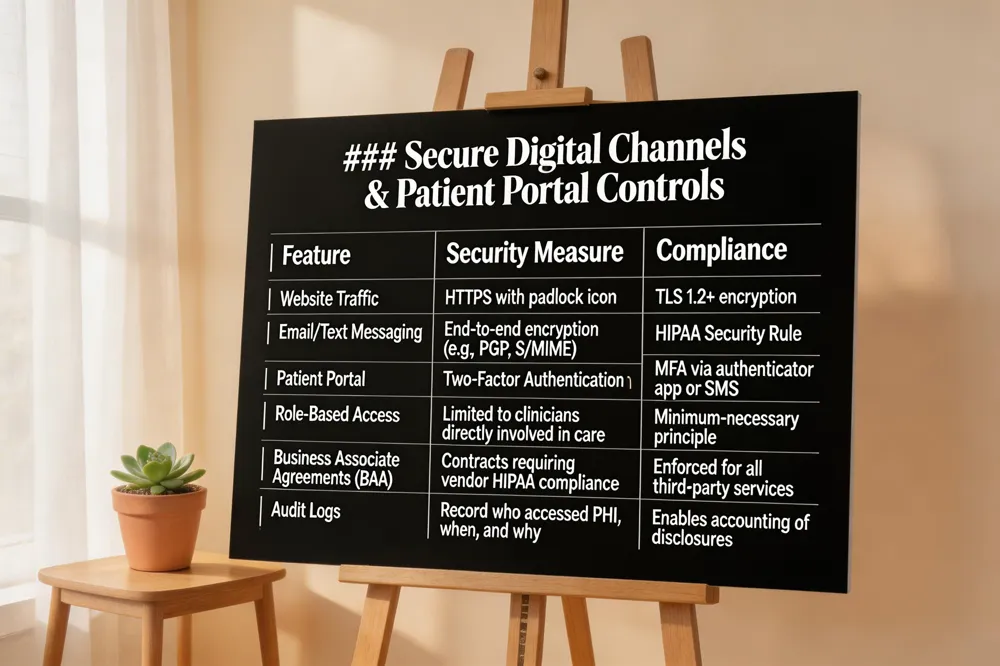 When you book a consultation or share sensitive health data online, the clinic’s website must display HTTPS and a padlock icon confirming that all traffic is encrypted in transit. All electronic communications—email, text messages, and patient‑portal messages—should be protected with end‑to‑end encryption, and the portal must require two‑factor authentication to verify a user’s identity. Access to your electronic health record is limited by role‑based controls, so only clinicians directly involved in your care can view your PHI. Any third‑party service that processes, stores, or transmits your data (e.g., imaging labs, billing platforms, tele‑medicine software) must sign a Business Associate Agreement, obligating the vendor to meet HIPAA security standards. Together, these safeguards create a confidential, HIPAA‑compliant environment that protects your personal and medical information throughout the enhancement journey.
Consent, Records, and Access Rights
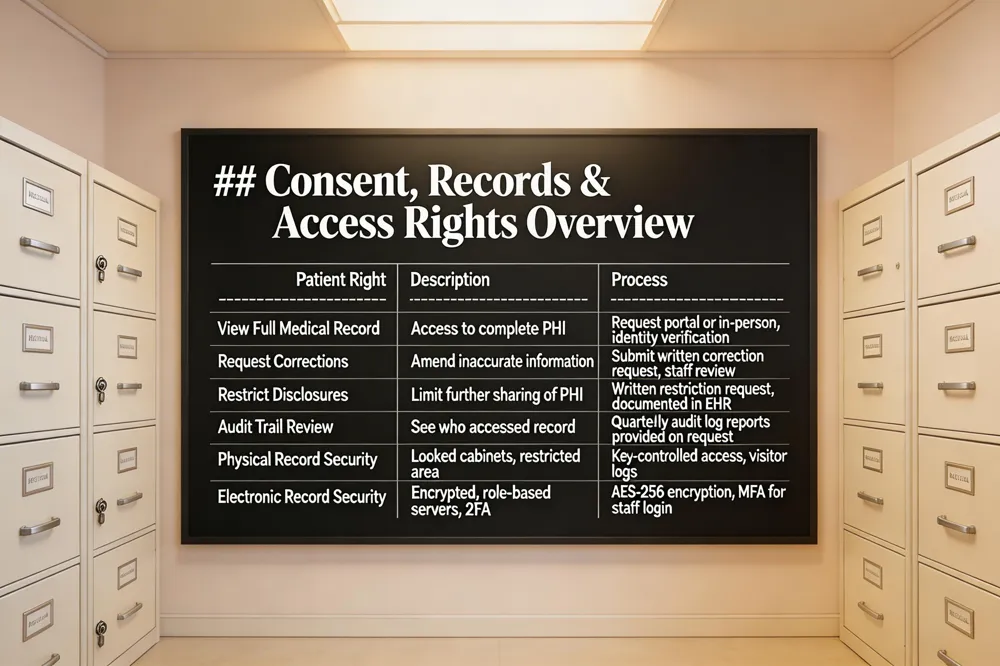 All reputable male‑enhancement clinics must provide a written privacy policy that meets HIPAA requirements and clearly describes how personal health information (PHI) will be collected, stored, used, and shared. Informed‑consent forms should explicitly outline the purpose of any photographs, videos, or medical data, the duration of retention, and obtain the patient’s written authorization before any disclosure. Patients retain the right to view their complete medical record, request corrections, and impose reasonable restrictions on further PHI as mandated by the HIPAA Privacy Rule. Clinics are required to maintain audit logs that record who accessed a patient’s file and for what purpose, enabling an accounting of disclosures when requested. Physical records must be secured in locked filing cabinets and stored in restricted‑access areas, while electronic records are protected on encrypted, role‑based servers with two‑factor authentication, ensuring that only authorized staff can view or modify sensitive information.
Imaging, Photography, and Media Consent
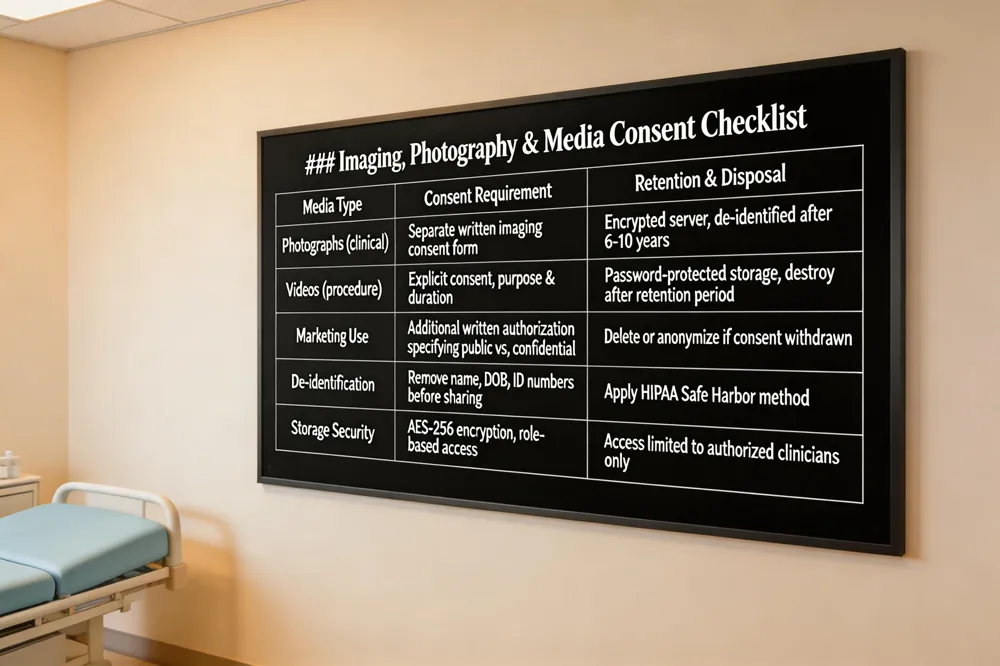 All photographic and video documentation taken during photographs and videos taken during penile enhancement consultations, surgeries, or follow‑up visits must be stored on encrypted, password‑protected servers that satisfy HIPAA’s technical safeguards. Clinics should require a separate, written imaging‑consent form that explicitly describes the purpose of the media, the duration of storage, and the patient’s right to decline or restrict its use. Before any image is retained, it must be de‑identified—removing names, dates of birth, and other direct identifiers—to meet the minimum‑necessary standard and to protect patient dignity. Use of patient media for marketing, research, or education is permitted only after the patient provides explicit written authorization, and the consent must specify whether the media will be shared publicly or kept confidential. A clear retention schedule should be communicated, typically retaining visual records for the legally required period (often six to ten years) and then securely destroying or anonymizing them in accordance with HIPAA and state privacy laws.
Financial Confidentiality and Billing Discretion
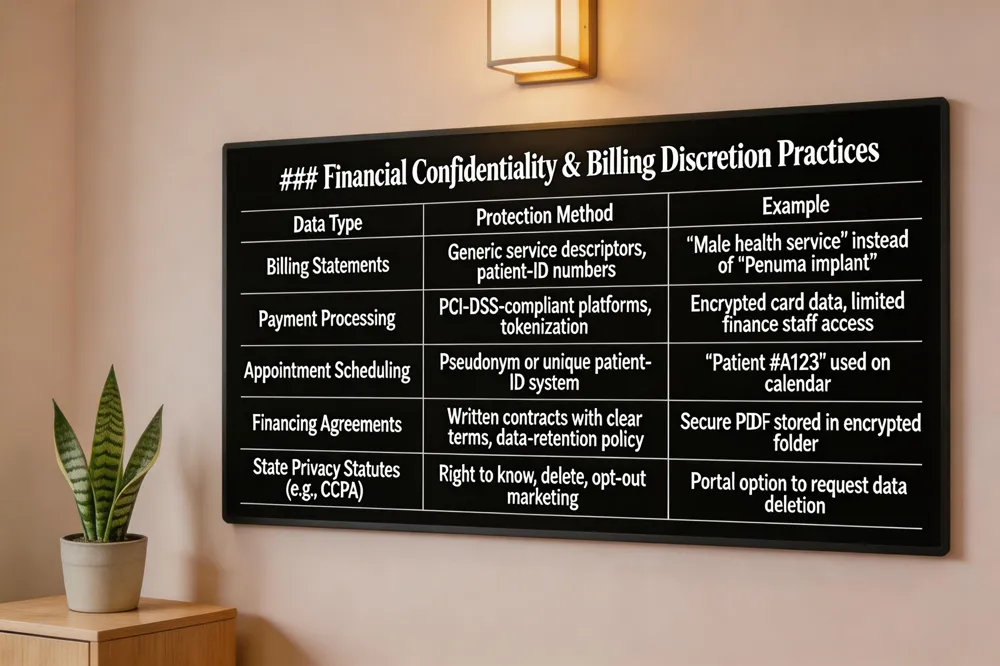 Clinics that perform penile enhancement procedures must protect not only clinical data but also financial information. Discrete billing descriptors—such as generic service names or patient‑ID numbers—are used on statements and credit‑card receipts to prevent inadvertent disclosure of the procedure. Many practices employ pseudonym or unique patient‑ID systems for appointment scheduling and billing, allowing men to keep their legal name off visible documents. All payment transactions are processed through PCI‑DSS‑compliant platforms that encrypt card data and limit access to authorized finance staff only. For patients who prefer to spread costs, financing plans and medical‑credit options are offered with clear, written agreements that outline interest rates, repayment schedules, and data‑retention policies. In addition to federal HIPAA safeguards, clinics adhere to the California Consumer Privacy Act (CCPA) and other state privacy statutes, giving patients the right to know what financial data is collected, request deletion, and opt out of any data‑sharing for marketing purposes. Together, these measures ensure that both health and monetary information remain confidential throughout the enhancement journey.
Clinical Procedures, Costs, and Expected Outcomes
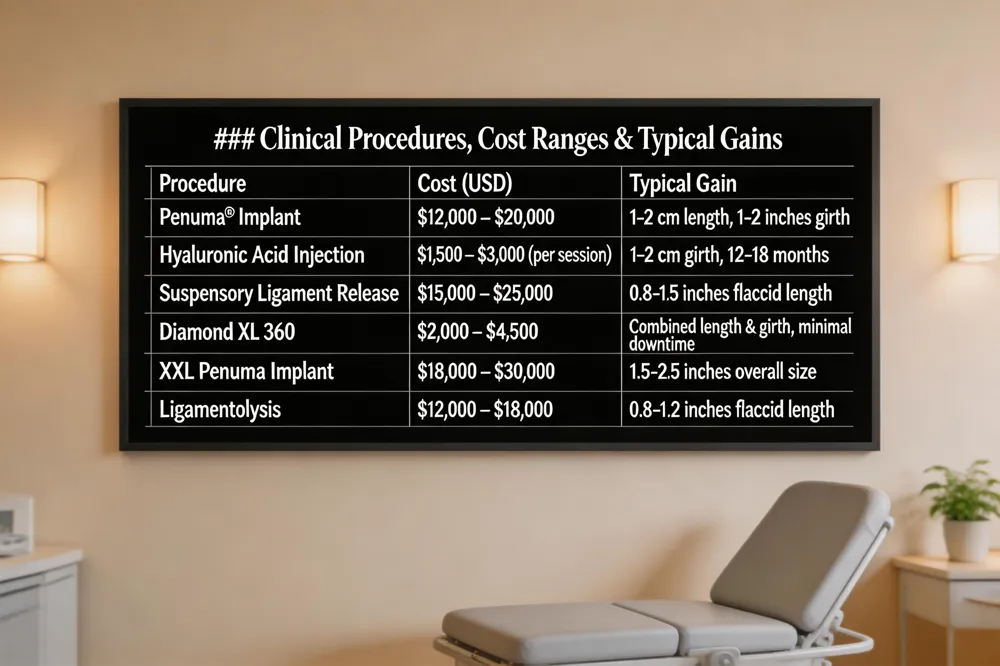 Penuma® implant cost – The Penuma® silicone implant typically ranges from $12,000‑$20,000 in the U.S., covering the device, incision, anesthesia, and follow‑up. Financing options are offered; insurance does not cover this cosmetic procedure.
What does a penile implant feel like? – After 6‑8 weeks of recovery, most men describe the implant as soft and pliable, feeling like natural tissue. It adds fullness when flaccid and expands with the corpora during erection, preserving normal sensation and sexual pleasure.
Penis enlargement with hyaluronic acid – HA injections add 1‑2 cm of girth for 12‑18 months with minimal downtime. The procedure is quick (30‑45 min) and safe, with only mild swelling or bruising.
Best male enlargement surgery before and after – Board‑certified surgeons achieve 1‑2 cm length and 1‑1.5 cm girth gains using ligament release, fat grafting, or dermal‑fat flaps, while maintaining erectile function.
Suspensory ligament release before and after – Patients gain 0.8‑1.5 inches in flaccid length and a smoother pubic transition; results are immediate, though swelling may mask full gain initially.
How many inches does Himplant add? – Himplant typically adds 1‑2 inches of girth and 0.5‑1 inch of flaccid length, with permanent, natural‑feeling results.
Diamond XL 360 procedure before and after – Non‑surgical dermal‑filler injections increase both length and girth, delivering a fuller appearance with minimal downtime and enhanced confidence.
Suspensory ligament surgery cost – Costs range from $15,000‑$25,000 in the U.S., varying by surgeon, facility, and ancillary services; financing is often available.
Ligamentolysis before and after – Similar to ligament release, it yields 0.8‑1.2 inches of added flaccid length, with immediate visual improvement after swelling subsides.
How many inches does the XXL Penuma add? – The XXL Penuma typically provides 1.5‑2.5 inches of overall size increase, balancing length and girth while preserving natural function.
Anatomy, Size Factors, and Expectation Management

What factors influence penis size?
Penis size is driven chiefly by genetics; multiple genes on the X and Y chromosomes shape genital development. Testosterone surges during puberty determine the extent of elongation and thickening, while nutrition, overall health, and body composition fine‑tune the result. Obesity can mask length because pubic‑fat pads shorten the visible flaccid penis, whereas a healthy weight reveals the true size. Endocrine‑disrupting chemicals and chronic illness may modestly affect growth, but they are far less influential than genetic and hormonal factors. Height, shoe size, and other unrelated traits have no proven correlation.
Is it normal to gain 5 inches when erect?
Typical erect lengths range from 5‑7 inches; flaccid length varies widely. A five‑inch increase from flaccid to erect would be unusually large and only occurs in men whose flaccid penis is at the lower end of the spectrum. While dramatic, such a gain is not inherently pathological; any concerns should be evaluated by a qualified urologist.
Is it possible to enlarge penis size permanently?
Permanent enlargement requires medical intervention. Surgical options—autologous fat grafting, dermal grafts, Penuma implants, or suspensory ligament release—can add 0.5‑1.5 inches of length or girth. Non‑surgical hyaluronic‑acid filler injections also deliver lasting appearance, though occasional touch‑ups may be needed. All procedures should be performed by board‑certified specialists in HIPAA‑compliant settings to ensure safety and confidentiality.
State Protections, Shield Laws, and Future Regulations
 The June 2024 HIPAA Privacy Rule Final Rule expands federal safeguards to cover lawful reproductive health care, including male genital enhancement, by prohibiting disclosures of protected health information (PHI) for investigations or liability related solely to seeking or providing such services. In parallel, a growing patchwork of state shield laws—enacted in California, Connecticut, Maryland, Nevada, New York, Washington, and others—blocks out‑of‑state subpoenas and law‑enforcement requests for sexual‑health data unless a patient authorizes or a court order meets strict criteria. Several states have also banned geofencing around clinics, preventing location‑tracking technologies from revealing a patient’s visits for enhancement procedures. These statutes echo privacy‑by‑design principles, requiring clinics to segment reproductive‑health records, enforce role‑based access, and employ end‑to‑end encryption. Finally, the HIPAA Notice of Privacy Practices must be updated to reflect these new protections by February 16 2026, prompting providers to revise policies, obtain attestation forms, and disclose the enhanced privacy framework to patients.
Putting Privacy First on Your Enhancement Journey
When selecting a clinic for penile enhancement, verify that every digital touch‑point uses HTTPS (padlock icon) and that the practice maintains a written, HIPAA‑compliant privacy policy. Confirm that medical records, photographs, and video are stored on encrypted servers with role‑based access controls, and that any third‑party vendors (labs, billing services, tele‑medicine platforms) have signed Business Associate Agreements. Ask for proof of staff training on confidentiality, routine risk assessments, and the clinic’s breach‑notification protocol.
Patient empowerment begins with thorough informed‑consent documentation that spells out exactly what Personal health information will be collected, how it will be used, who may see it, and the retention schedule. The consent form should also include a separate imaging‑consent for before‑and‑after photos and a clear option for discreet billing or pseudonym use. Review the clinic’s Notice of Privacy Practices and confirm your right to receive a copy of all records, request corrections, and demand deletion of non‑essential data after treatment.
Finally, maintain ongoing vigilance. Request an accounting of disclosures at any time to see which parties have accessed your PHI. Use the secure patient portal for all communications, enable two‑factor authentication, and keep a personal record of all consent forms and privacy notices. By actively monitoring these safeguards, you retain control over your sensitive health information throughout the enhancement journey.