

Why a Tailored Timeline Matters
Safety and individualized planning
A structured, personalized timeline is the foundation of safe and effective male enhancement. Every patient has unique anatomy, health history, and aesthetic goals, which is why rigorous medical evaluation precedes any procedure. During the initial consultation, advanced imaging and standardized measurements of penile length, girth, and vascular health establish a precise baseline. This data-driven approach minimizes risks, ensures appropriate candidacy, and allows for a staged treatment plan that produces smoother, more natural outcomes than single-session approaches.
Dr. Victor Liu’s expertise and double‑board certification
Entrusting your care to a qualified provider is critical. Dr. Victor Liu is a double‑board certified plastic surgeon (American Board of Plastic Surgery and American Board of Surgery – General) with over 30 years of experience. As a Fellow of the American College of Surgeons, he specializes exclusively in male genital enhancement, performing both surgical and non‑surgical procedures with an emphasis on evidence‑based protocols and safety. His expertise ensures each stage of your timeline—from consultation through recovery—is managed with precision and accountability.
Balancing expectations with realistic outcomes
A tailored timeline also manages expectations by translating personal motivations into achievable results. Through transparent discussion of possibilities and limitations, patients understand what each procedure can and cannot deliver. This clarity reduces anxiety, prevents disappointment, and fosters confidence in the process. Whether pursuing girth enhancement or lengthening, a staged, well-communicated plan provides predictable milestones and measurable progress, leading to lasting satisfaction.
| Key Consideration | Why It Matters | How It Is Addressed in Timeline |
|---|---|---|
| Medical safety | Minimizes complications and ensures candidacy | Comprehensive health history, physical exam, and diagnostic testing before any procedure |
| Provider expertise | Directly affects outcome quality and risk management | Selection of a double‑board certified surgeon with extensive experience in male enhancement |
| Realistic expectations | Prevents dissatisfaction and supports psychological well‑being | Open discussion of achievable results, staged treatment sessions, and clear milestone communication |
| Personalized planning | Optimizes results for individual anatomy and goals | Use of precise measurements, 3D imaging, and customized treatment protocols |
| Recovery preparedness | Reduces downtime and enhances healing | Detailed post‑procedure instructions, activity restrictions, and scheduled follow‑up appointments |
Initial Consultation & Comprehensive Evaluation
Your tailored enhancement timeline begins with a thorough consultation. This is a structured, medically rigorous evaluation—not a brief sales meeting. It is designed to ensure your safety, align your goals with realistic outcomes, and determine the most appropriate path forward.
What to Expect During Your Comprehensive Evaluation
The consultation covers three critical pillars:
Medical history, psychosexual screening, and lifestyle review. Your provider will assess your overall health, cardiovascular fitness, medication use, and lifestyle factors such as smoking or alcohol intake. A psychosexual screening, often using validated tools like the COPS-P scale, helps identify if concerns stem from conditions like penile dysmorphic disorder (PDD) rather than actual size. If PDD indicators are present, ethical practice involves referring you for appropriate psychological support before any procedure.
3‑D digital imaging, measurements, and goal alignment. Advanced imaging may be used to create precise baseline measurements of penile length and girth. Standardized measurements are taken at multiple points along the shaft (distal, middle, proximal). You will discuss your personal aesthetic goals, and your provider will explain what is clinically achievable, setting clear boundaries on expectations.
Eligibility assessment for surgical vs. non‑surgical options. Based on your evaluation, your provider will recommend either surgical (e.g., ligament release, dermal graft, Penuma implant) or non‑surgical (e.g., hyaluronic acid fillers, PRP) approaches. This decision hinges on your anatomy, health profile, and goals. The consultation also reviews risks, benefits, and recovery expectations for each option.
Key Questions Answered During Your Consultation
Penis enlargement surgery includes procedures such as silicone implants, fat transfer, ligament release, or skin grafting to increase penile length or girth. While it may be medically necessary for conditions like micropenis or buried penis, most candidates have a normally functioning penis and seek surgery for cosmetic reasons. Risks include infection, scarring, loss of sensation, and unsatisfactory results, and outcomes are not guaranteed. Before considering surgery, patients should be evaluated for conditions like penile dysmorphophobia disorder, as concerns often relate to perception rather than actual size. It is essential to consult a qualified urologist or plastic surgeon to discuss realistic expectations, alternatives, and potential complications.
Non‑surgical penis enlargement primarily focuses on girth enhancement using injectable hyaluronic acid fillers, which can increase flaccid circumference by 2–3 cm and erect girth by 1–2.5 cm with minimal downtime and low allergic risk. Platelet‑rich plasma (PRP) and vacuum devices may offer temporary or modest improvements but lack robust scientific proof. Topical creams and pills have no verified efficacy and may contain harmful ingredients not regulated by the FDA. It's critical to consult a board‑certified specialist like Dr. Victor Liu to ensure safe, personalized treatment and realistic expectations, as most non‑surgical methods provide only modest, temporary gains.
The cost of the Penuma implant procedure typically ranges from $10,500 to $19,000 in the United States, though some older estimates place it between $7,000 and $12,000. Final pricing depends on surgeon expertise, geographic location, and any additional procedures such as suprapubic fat reduction or circumcision. The quoted fee usually includes the implant device, surgeon’s fee, anesthesia, and standard follow‑up care, but travel and medical clearances may add extra costs. Many clinics offer financing options through companies like CareCredit to help spread payments over time. It’s important to get an itemized estimate from your surgeon after a consultation, as individual anatomy and case complexity can significantly affect the final price.
| Evaluation Component | What Is Assessed | Why It Matters |
|---|---|---|
| Medical History | Cardiovascular health, diabetes, medications, smoking | Identifies risk factors that could affect healing or increase complications |
| Psychosexual Screening | Distress, body image, avoidance behaviors (COPS-P scale) | Rules out penile dysmorphic disorder; ensures surgery is pursued for appropriate reasons |
| Standardized Measurements | Flaccid length, stretched penile length, girth at 3 shaft locations | Provides objective baseline to predict outcomes and select correct approach |
| Goal Alignment | Patient’s specific wishes (girth vs. length, flaccid vs. erect) | Ensures expectations are clinically achievable and avoids disappointment |
| Eligibility Assessment | Anatomical suitability, overall health | Determines whether surgical, non‑surgical, or staged options are safest and most effective |
This consultation, typically lasting 45 minutes to one hour, is obligation-free and provides the foundation for a safe, personalized enhancement journey.
Choosing the Right Treatment Modality
Surgical vs. Non‑Surgical Options
A core decision in penile enhancement is choosing between non‑surgical and surgical paths. Non‑surgical methods, such as hyaluronic acid (HA) dermal filler injections, offer immediate results with minimal downtime—most men return to normal activities within one to two days and resume sexual activity after about one week. These fillers are reversible and provide a temporary increase in girth lasting 12 to 24 months. In contrast, surgical modalities deliver permanent or long‑lasting results but require a more extensive recovery. Procedures like fat grafting (autologous fat transfer) demand abstaining from sexual activity for up to six weeks, and results can be unpredictable. Understanding the trade‑off between convenience and permanence is essential for informed decision‑making.
Implant‑Based Girth and Grafting Techniques
For men seeking permanent girth enhancement, implant‑based solutions and grafting techniques are viable surgical options. The Penuma® (now Himplant®) is an FDA‑cleared, medical‑grade silicone sleeve placed under the skin of the penile shaft. It is designed for men with normal erectile function who desire a fuller, straighter appearance. Studies report average increases of about 2.5 cm in flaccid length and 3.1 cm in girth, with high patient satisfaction. However, proper patient selection is critical to avoid complications such as seroma (12% of cases) or revision surgery (7%). Alternative grafting techniques, such as Alloderm grafts, are used in combination with fat transfer or fillers to add girth, with typical gains of 1 to 1.5 inches. These methods, while offering permanent results, require a thorough evaluation to ensure suitability.
Ligamentolysis and Tunica Expansion
Lengthening procedures focus on exposing more of the penile shaft. Ligamentolysis, or suspensory ligament release, cuts the ligament anchoring the penis to the pubic bone, allowing the internal portion to drop outward. This provides an apparent flaccid length increase of 0.5 to 1 inch, but does not significantly change erect length. The procedure carries risks such as instability and scarring, and many patients remain unsatisfied with minimal visual gains. A more advanced surgical approach is the tunica expansion procedure, which enlarges the tunica albuginea via small, staggered incisions (vertical for length, horizontal for girth). This technique is commonly used during penile implant surgery for severe erectile dysfunction or Peyronie’s disease, helping to counteract shortening. Patients can expect a length gain of 0.8 to 5 cm, and advanced approaches (e.g., Dr. Valenzuela’s single scrotal incision) reduce complication risks.
Before‑and‑After Visual Expectations
Realistic expectations are vital for satisfaction with penile enhancement. Top clinics provide unedited before‑and‑after photos for procedures such as ligamentolysis, fat transfer, and the Penuma implant. These images often reveal gains of 1–2 inches in length and 1–3 cm in girth, with full results visible at 3–6 months. It is important to note that swelling can make the penis appear 30–50% larger in the first few days after filler injections, so final results are only assessable after resolution (typically 4–6 weeks). Individual outcomes vary based on surgical technique, anatomy, and adherence to recovery protocols. Transparent, unedited documentation from a board‑certified specialist offers the most reliable preview of potential outcomes.
| Treatment Option | Type | Key Benefits | Recovery Highlights | Duration of Results |
|---|---|---|---|---|
| HA Filler (e.g., Juvederm) | Non‑surgical | Immediate girth increase, reversible, minimal downtime | Return to work in 1–2 days; sexual activity cleared at 1–2 weeks | 12–24 months |
| Penuma® / Himplant® | Surgical | Permanent girth & flaccid length gain, natural feel | 6–8 weeks recovery; avoid sexual activity for 4–6 weeks | Permanent |
| Ligamentolysis | Surgical | Flaccid length gain of 0.5–1 inch | Sexual activity clearance at 4–6 weeks | Permanent |
| Tunica Expansion | Surgical | Length gain 0.8–5 cm; used in implant surgery | Recovery depends on concurrent implant surgery | Permanent |
| Fat Grafting | Surgical | Uses patient’s own fat for girth | Sexual activity abstinence up to 6 weeks; variable results | Semi‑permanent (up to 70% may absorb) |
Non‑Surgical Girth Enhancement Protocol

Hyaluronic Acid Filler Selection and Injection Technique
Hyaluronic acid (HA) fillers, such as Juvederm, are the gold standard for non‑surgical girth enhancement. Unlike collagen‑based fillers, HA stimulates natural collagen production and lasts longer. The procedure is performed in‑office under local anesthesia, using microcannulas to inject the filler beneath the skin on top of the buck fascia. This technique ensures uniform distribution, reduces bruising, and results in a natural elastic feel in both flaccid and erect states. A single session takes 30 to 60 minutes, with immediate results visible. The filler can be completely dissolved within 24 hours using hyaluronidase if needed, providing an added safety layer.
Post‑Procedure Care, Swelling Management, and Timeline
Following injection, patients can return to normal activities the same day. A soft dressing is typically worn for 48 hours to promote even filler distribution. Swelling peaks around days two to three, often making the penis appear 30–50% larger than the final result. During the first week, avoid sexual activity and strenuous exercise. A gentle “3‑3‑3‑30” routine—rolling the penis three times daily for three minutes after a 30‑minute warm soak—is recommended for three days after dressing removal to ensure smooth filler settling. Most swelling resolves within two weeks, and final results are fully apparent by four to six weeks.
Cost Considerations and Insurance Outlook
The cost of HA filler girth enhancement typically ranges from $2,000 to $3,000 per session, depending on filler volume and provider expertise. A series of two to three sessions may be recommended for optimal results. Since this is an elective cosmetic procedure, it is not covered by health insurance. Many clinics offer financing options such as CareCredit to manage expenses. Patients should also budget for consultation fees and potential touch‑up treatments every 12–18 months to maintain results.
Patient Satisfaction and Clinical Review Data
Clinical reviews confirm that HA penile girth enhancement is safe and effective, with high patient satisfaction. A retrospective study of nearly 500 patients reported minimal adverse events—mainly temporary swelling and rare injection site infections that resolve with hyaluronidase. No cases of erectile dysfunction or permanent sensation loss have been documented in large‑scale reviews. The World Journal of Men's Health study of 64 men demonstrated significant improvement in penile appearance and sexual life satisfaction. The procedure is reversible and provides a predictable, confidence‑boosting enhancement with minimal downtime.
| Aspect | Details | Key Findings |
|---|---|---|
| Filler Type | Hyaluronic acid (e.g., Juvederm) | Stimulates collagen, lasts 12–24 months |
| Procedure Time | 30–60 minutes | Office‑based, local anesthesia |
| Swelling Peak | Days 2–3 | Resolves by 2 weeks |
| Recovery | Return to work: 1–2 days; sexual activity: 1–2 weeks | Minimal downtime |
| Cost | $1,500–$3,000 per session | Not covered by insurance |
| Satisfaction | >90% | Significant boost in confidence |
Surgical Girth and Length Augmentation Pathway
Pre‑operative preparation and anesthesia options
A thorough pre‑operative evaluation is essential for safe surgical girth and length enhancement. Dr. Victor Liu begins with a detailed medical history, physical exam, and discussion of your goals, followed by lab work and specific instructions to optimize healing. You may need to stop smoking and discontinue certain medications like blood thinners. On the procedure day, a combination of local anesthesia with sedation or general anesthesia is used to ensure your comfort throughout the surgery. The choice depends on the complexity of your specific procedure and your health status.
Step‑by‑step overview of silicone implant placement, fat grafting, and graft techniques
Surgical girth enhancement typically involves three primary techniques. For silicone implant placement, Dr. Liu makes a small incision near the base or scrotum and inserts a soft, solid silicone sleeve under the penile skin to create a permanent increase in circumference. Fat grafting begins with liposuction from a donor area like the abdomen or thighs; the harvested fat is purified and then injected into the penile shaft to add girth. Graft techniques, such as using Alloderm or Surgimend, involve placing a sheet of processed human tissue under the skin to widen the shaft. For length, the suspensory ligament is carefully released to allow the internal portion of the penis to extend outward, which can add approximately 1 inch to flaccid length. All procedures are performed with precision to minimize scarring and achieve natural-looking results.
Week‑by‑week recovery milestones and activity restrictions
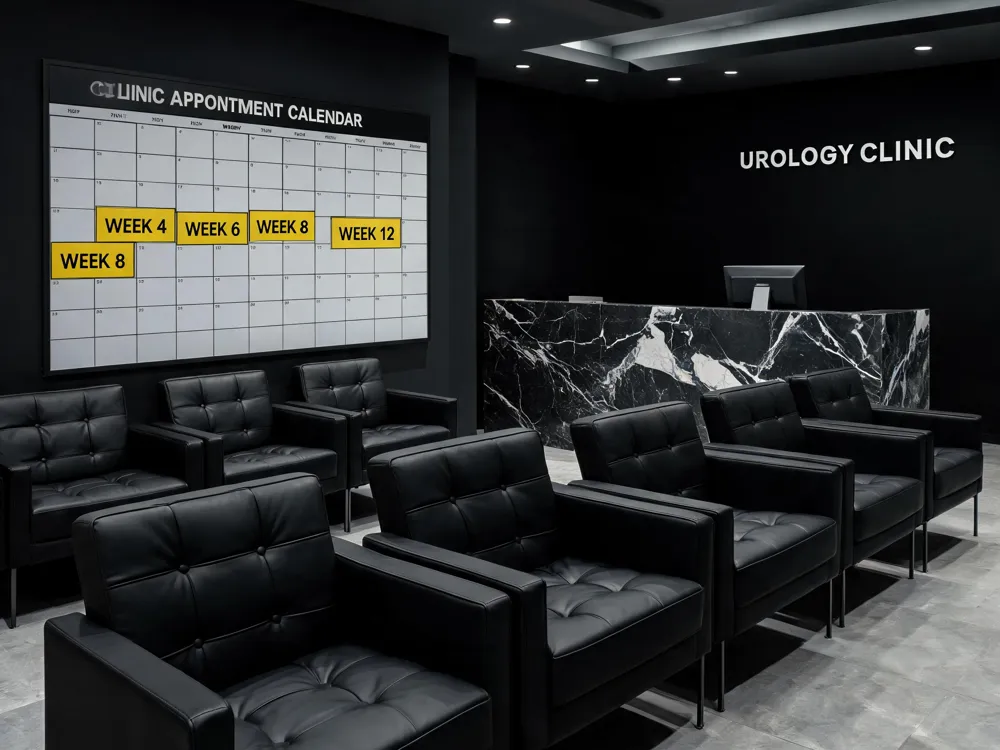
Recovery after surgical penile enhancement follows a structured timeline. During the first week, you will wear a pressure dressing to control swelling, which peaks in the first 48 hours. Rest is crucial, and you must avoid bending, straining, or lifting over 10 pounds. By week 2, swelling begins to subside and bruising fades; gentle manual stretching to the new length can start. Most surgical patients are cleared to resume sexual activity between weeks 4 and 6, contingent on your surgeon’s approval. Between weeks 7 and 12, collagen and tissue stabilize, and full results typically emerge by 8 to 12 weeks, with internal remodeling continuing up to 6 months. Throughout recovery, follow all instructions regarding compression garments, activity restrictions, and follow-up appointments to ensure optimal healing.
Potential complications and side‑effect profile
While Dr. Liu’s expertise minimizes risks, surgical penile enhancement carries potential complications. Common side effects include temporary swelling, bruising, and discomfort. More serious but less frequent risks include infection (1‑2% of cases), scarring, loss of sensation, or erectile dysfunction. With silicone implants, there is a small chance of implant migration, mechanical failure, or capsular contracture. Fat grafting can result in up to 30% fat absorption, leading to lumpiness or asymmetry. Graft materials may occasionally cause a firm feel. You should contact Dr. Liu immediately if you experience fever over 101°F, severe pain not relieved by medication, signs of infection, or difficulty urinating. A detailed discussion of these risks during your consultation will prepare you for a safe journey. A final comparison of the surgical girth and length techniques is shown below.
| Procedure | Average Girth Increase | Average Length Increase (Flaccid) | Recovery to Sexual Activity | Key Risks |
|---|---|---|---|---|
| Silicone Implant | 1–2 inches (2.5–5 cm) | Minimal | 4–6 weeks | Implant migration, infection, capsular contracture |
| Fat Grafting | 1–1.5 inches (2.5–3.8 cm) | Minimal | 4–6 weeks | Fat absorption, lumpiness, asymmetry |
| Dermal Graft (Alloderm) | 1–1.5 inches | Minimal | 6 weeks | Firm feel, infection, scarring |
| Ligament Release | No significant girth increase | ~1 inch (2.5 cm) | 4–6 weeks | Loss of sensation, ED |
Post‑Procedure Care, Retention, and Long‑Term Maintenance

After a penile enhancement procedure, immediate after‑care focuses on swelling control: apply ice packs wrapped in cloth, keep the area supported with loose‑fitting underwear, and take over‑the‑counter pain relievers as needed. Schedule the first follow‑up visit within 1‑2 weeks for a clinical exam and, if indicated, a 3‑D scan to verify filler placement or implant positioning. Subsequent appointments at 4-6 weeks and 3-months monitor healing, address any asymmetry, and determine when normal sexual activity may resume. Lifestyle recommendations include quitting smoking, limiting alcohol, maintaining a protein‑rich diet, and avoiding strenuous exercise, hot tubs, or heavy lifting during the initial 4‑6 weeks to protect tissue integrity. Touch‑ups depend on the modality: hyaluronic‑acid fillers typically require maintenance every 12‑18 months, while the Penuma® implant is permanent and only needs periodic imaging to ensure stability. Financing options such as CareCredit or Prosper Healthcare Lending help manage costs. Realistic expectations acknowledge that the XXL Penuma may add 1.5‑2.5 inches in length and similar girth gains, but individual results vary; surgical implants are permanent, whereas fillers last 12‑24 months before a refresh is needed.
Your Next Step Toward Confidence
Take the First Step Today
Your journey toward enhanced confidence and satisfaction begins with a simple, confidential step: scheduling a consultation with Dr. Victor Liu. A double-board-certified plastic surgeon with over 30 years of experience, Dr. Liu offers a private, judgment-free environment to discuss your personal goals.
Explore Your Financing Options
Investing in your well-being is important. The clinic offers flexible financing solutions, including CareCredit and Prosper Healthcare Lending, to make your treatment accessible. You can also use cash, checks, or major credit cards.
Commit to Your Transformation
Once you decide to proceed, Dr. Liu will work with you to develop a personalized enhancement timeline. This structured plan, from the initial consultation through your final follow-up, ensures optimal, lasting results tailored specifically to your anatomy and aesthetic goals.
| Enhancement Step | What It Involves | Estimated Duration |
|---|---|---|
| Confidential Consultation | Private discussion of goals, health history, and anatomy; advanced 3D imaging available. | 45–60 minutes |
| Procedure & Recovery | Non-surgical (e.g., filler) or surgical option; detailed post-op care plan provided. | Varies (1–2 hours for non-surgical; up to 3 hours for surgery) |
| Final Results & Maintenance | Full outcome visible after tissue remodeling; follow-up visits and optional touch-ups. | 3–6 months to see full results; touch-ups as needed |
Contact Dr. Liu’s office in San Francisco today at (650) 697-8888 to schedule your free consultation.