

Introduction
Artificial intelligence is reshaping male aesthetic medicine by delivering rapid, data‑driven treatment simulations that map a patient’s unique anatomy, skin elasticity, and hormonal profile. Platforms such as EntityMed and AI‑enabled 3‑D imaging create personalized visualizations of potential outcomes for fillers, fat grafting, ligament release, or penile implants, allowing men to preview realistic results before any incision. This patient‑centered approach reduces uncertainty, aligns expectations with natural‑looking aesthetics, and supports shared decision‑making. Regulatory‑cleared AI decision‑support tools also flag contraindications, predict complication risk, and recommend minimally invasive techniques, thereby enhancing safety and satisfaction. By integrating objective measurements, predictive analytics, and virtual reality previews, AI empowers clinicians to tailor interventions that respect individual goals while maintaining the highest standards of clinical care.
AI‑Powered Imaging and Virtual Simulations
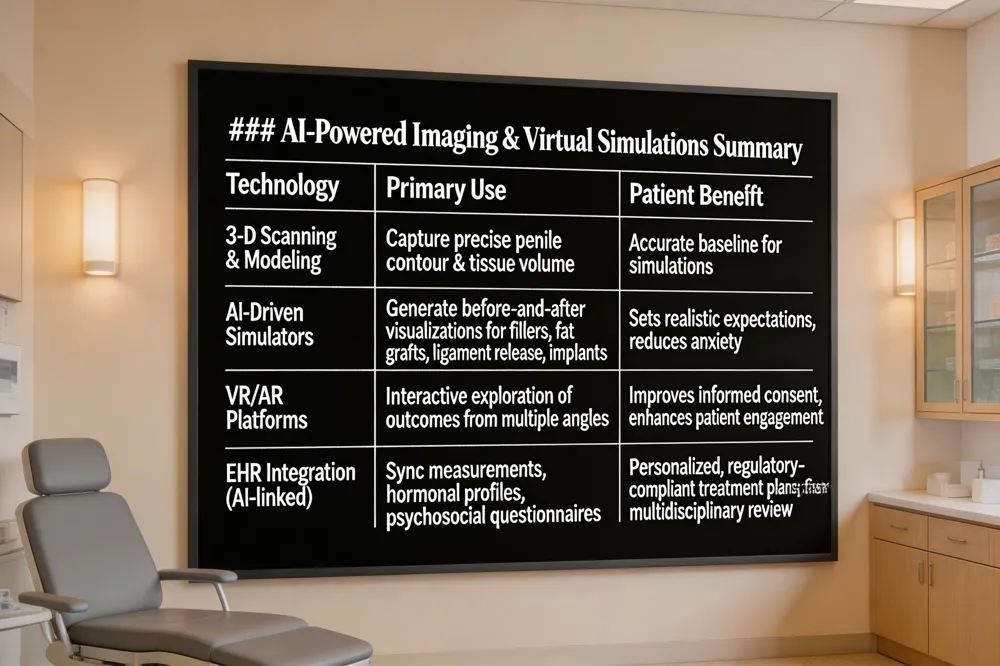 Modern male aesthetic clinics now employ high‑resolution 3‑D scanning and modeling to capture every contour of the penis and surrounding tissue. These volumetric data sets feed AI‑driven simulators that generate realistic before‑and‑after visualizations, allowing patients to see projected girth and length changes for a range of procedures—fillers, fat grafts, ligament release, or implants. Integrated virtual‑reality (VR) and augmented‑reality (AR) platforms let patients explore the simulated outcome from multiple angles, fostering informed consent and reducing anxiety. The AI workflow is linked to the electronic health record (EHR), automatically syncing measurements, hormonal profiles, and psychosocial questionnaires so that the treatment plan is personalized, regulatory‑compliant, and instantly accessible to the multidisciplinary team. This seamless integration accelerates consultation time, improves safety, and aligns patient expectations with clinically realistic results.
Personalized Girth Augmentation Options
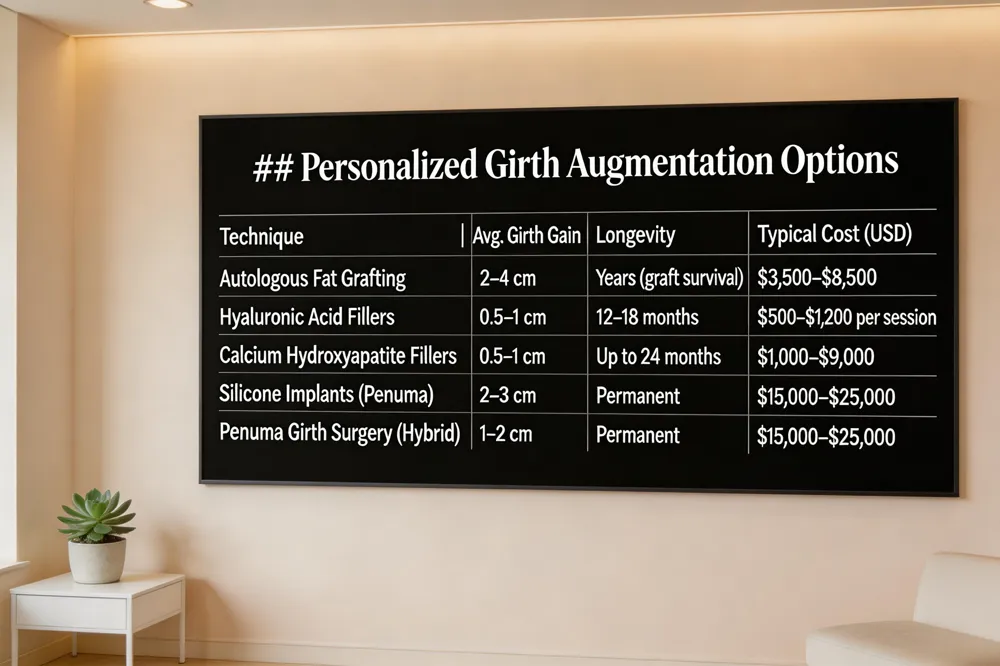 Modern male aesthetic clinics combine AI‑driven imaging with a suite of graftth‑enhancement techniques to deliver truly individualized results. Autologous fat grafting uses liposuction‑harvested adipose tissue, processed and injected into the penile shaft; AI analysis of skin elasticity and vascular density predicts graft survival, yielding a natural increase that can persist for years. Dermal fillers—most commonly hyaluronic acid or calcium hydroxyapatite—are administered in an outpatient setting; AI‑generated 3‑D models visualize the expected 0.5–1 cm girth gain and help the surgeon select the optimal volume and injection pattern, minimizing over‑correction. Silicone implants such as Penuma provide a permanent solution; pre‑operative AI simulations show how the implant will contour the shaft, allowing patients to consent with realistic expectations.
Penis girth surgery is a minimally invasive option that blends these modalities; Dr. Victor Liu tailors the material to each patient’s anatomy, ensuring safety, minimal scarring, and preservation of erectile function. Recovery typically involves mild swelling and a return to normal activities within one to two weeks.
Hyaluronic acid girth enhancement reviews report 0.5–1 cm gains lasting 12–18 months, with rare complications such as infection or granuloma that are treatable with hyaluronidase. Patient satisfaction remains high when protocols are followed.
Male enlargement injections before and after are documented with standardized photographs and measurements; immediate visual improvement is evident, and follow‑up imaging confirms durability.
Cost varies: hyaluronic‑acid fillers range $500–$1,200 per session, higher‑grade fillers $1,000–$9,000, and autologous fat transfer $3,500–$8,500. Dr. Victor Liu’s practice offers personalized pricing, financing, and bundled discounts to align with each patient’s budget.
Penuma Implant – Clinical Data and Patient Experience
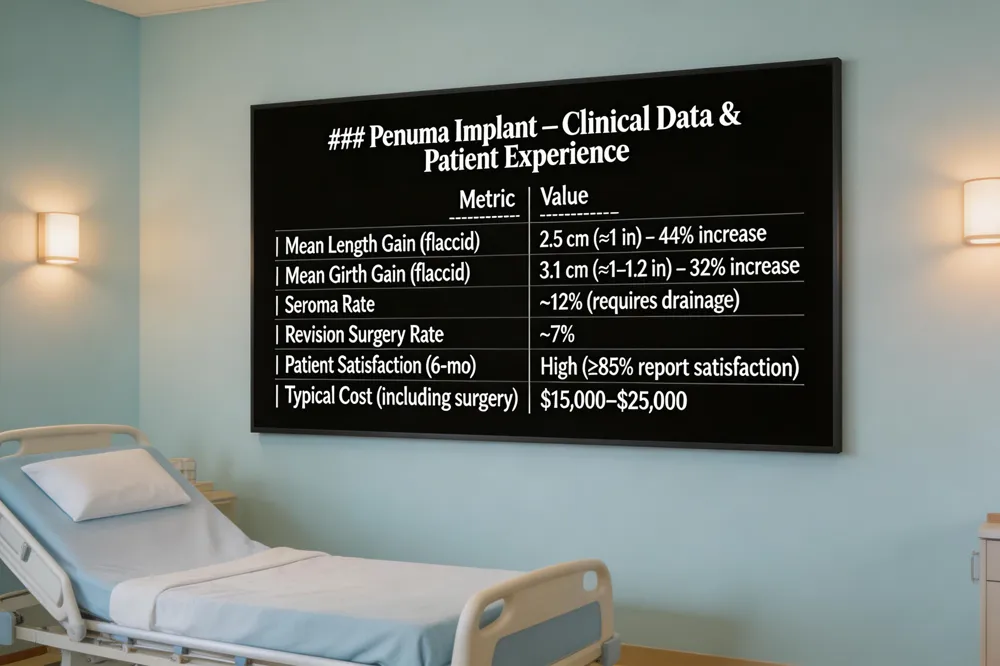 Penuma implant The Penuma implant is a soft, FDA‑cleared medical‑grade silicone device placed beneath the penile skin to provide cosmetic enlargement of the flaccid penis. Clinical data show an average increase of about 2.5 cm (≈1 in) in length and 3.1 cm (≈1–1.2 in) in girth, representing roughly a 44 % and 32 % gain respectively. The procedure can be performed through either a traditional infrapubic incision or a newer lateral scrotal approach, the latter aiming to reduce postoperative complications. Reported adverse events are generally low, with seroma formation requiring drainage in about 12 % of cases and operative revision needed in roughly 7 % of patients. When performed by an experienced, board‑certified surgeon, the Penuma implant offers a permanent, natural‑looking result with a concealed scar and minimal impact on erectile function.
Penuma silicone implant The Penuma silicone implant is a medical‑grade, FDA‑cleared soft silicone device that is placed sub‑cutaneously beneath the penile skin to provide cosmetic length and girth enhancement for men with normal erectile function. During the outpatient procedure the surgeon creates a small suprapubic or lateral scrotal incision, creates a pocket above the pubic bone, and contours the implant to the patient’s anatomy, securing the distal end under the corona while leaving the ventral urethral tissue untouched. Clinical data from a single‑surgeon series of 92 patients showed an average increase of 2.5 cm (44 %) in flaccid length and 3.1 cm (32 %) in girth, with most men reporting high satisfaction at six‑month follow‑up.
How many inches does the XXL Penuma add? The XXL Penuma implant typically adds about 1.5‑2.5 inches of flaccid length and a similar gain in girth. Individual results vary with anatomy, surgical technique, and postoperative care, but most patients notice a permanent, natural‑looking change after swelling subsides.
Penuma surgery before and after Baseline measurements are taken in the natural flaccid state. A small lateral scrotal incision allows placement of a custom‑shaped silicone sleeve. After 6‑8 weeks of healing, patients commonly report an additional 1.5‑2.5 inches of length and 1‑2 inches of girth, with restored erectile function and high confidence in the aesthetic outcome.
Tunica Expansion and Alternative Surgical Techniques
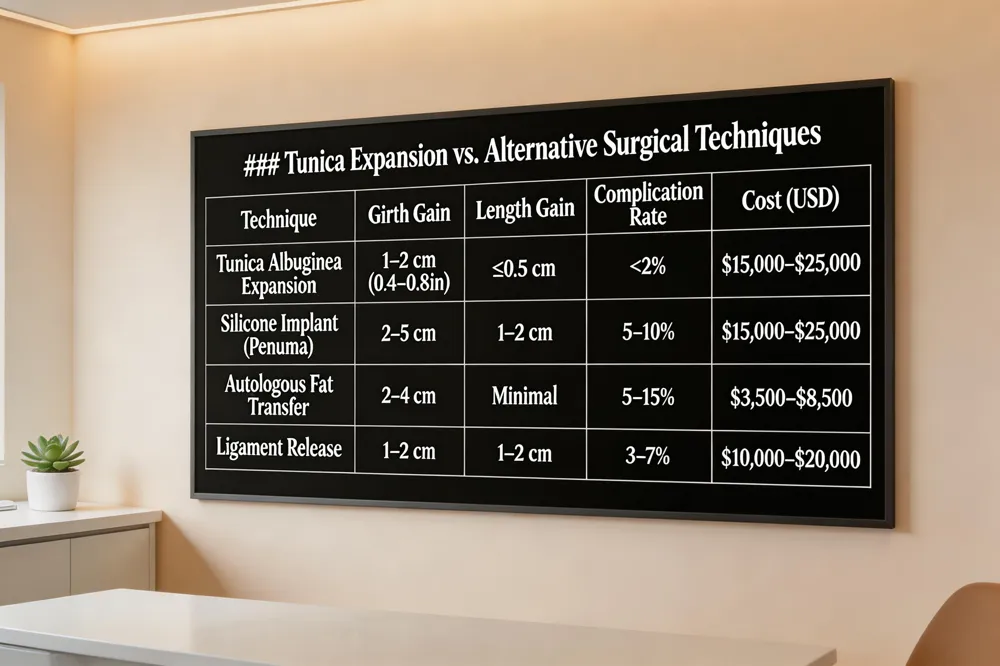 Tunica albuginea expansion AI‑driven imaging platforms create 3‑D models of the penis, allowing surgeons to plan a biocompatible graft or thin silicone sheet insertion beneath the tunica. The procedure preserves natural shaft contour and avoids visible scarring. Before surgery, baseline photographs show modest flaccid girth; after healing, patients typically gain 1–2 cm (0.4–0.8 in) in girth and a subtle increase in flaccid length, with a natural appearance and maintained erectile function.
Comparison with other surgeries Compared with ligament release, fat grafting, or autologous tissue flaps, tunica expansion offers a lower risk of asymmetry and requires a single concealed scrotal incision. Silicone implants (e.g., Penuma, Himplant®) provide larger girth gains (up to 5 cm) but involve a permanent foreign body. Fat transfer yields temporary results (2–4 cm) with unpredictable resorption. AI‑assisted outcome simulations help patients visualize each option and choose the most suitable technique.
Risk assessment AI predictive analytics evaluate age, tissue elasticity, comorbidities, and hormonal status to flag contraindications such as uncontrolled diabetes or coagulopathy. Common side effects include swelling, bruising, and mild infection; rare complications are graft migration, loss of sensation, or curvature. Board‑certified surgeons like Dr. Victor Liu report complication rates below 2 % when AI‑guided planning is used.
Cost considerations Permanent enlargement surgery ranges from $15,000 to $25,000, depending on technique, surgeon expertise, and facility fees. Silicone implants tend toward the higher end, while fat‑transfer enhancements are $3,500‑$8,500. AI‑enabled financing tools and personalized payment plans can alleviate out‑of‑pocket burden.
Potential side effects Temporary edema, bruising, and scar formation are typical. Serious risks—infection, nerve injury, or graft extrusion—are mitigated by AI‑driven intra‑operative guidance and postoperative monitoring apps that detect early signs of complications.
Tunica expansion before and after Tunica albuginea expansion is performed by inserting a biocompatible graft or a thin silicone sheet beneath the tunica to add girth while preserving the natural contour of the shaft. Before the procedure, photographs typically display the patient’s baseline circumference and shape, often with a modest flaccid girth. After healing, the graft integrates and expands the tunica, usually producing a measurable increase of about 1–2 cm (0.4–0.8 in) in girth and a subtle improvement in flaccid length. The results look natural because the expansion follows the penis’s own anatomy, and the incision is made away from the shaft, minimizing visible scarring. Most patients report a noticeable boost in confidence while maintaining normal erectile function and sensation.
Penis enlargement surgery side effects Penis enlargement surgery can cause temporary swelling and bruising in the first few weeks after the procedure. Common complications include infection, scar formation, loss of penile sensation, and implant or graft migration. Less frequent but more serious issues may involve curvature, penile deformity, severe shortening, or non‑healing wounds that require additional surgery. When performed by a board‑certified plastic surgeon such as Dr. Victor Liu, the risk of major complications is low, and most side‑effects are mild and resolve with proper postoperative care. Patients are advised to follow all follow‑up instructions to minimize these risks and achieve natural, safe results.
Best male enlargement surgery The most reliable surgical option for permanent penile length and girth enhancement is an FDA‑cleared silicone implant, such as the Penuma or the newer Himplant®, which can add 1–2 inches of girth and modest gains in flaccid length while maintaining a natural appearance. These procedures are performed through a small, concealed incision, allowing for a short outpatient recovery and minimal scarring. At our clinic, Dr. Victor Liu, a double‑board‑certified plastic surgeon, custom‑contours the implant to each patient’s anatomy for optimal safety and aesthetic results. The surgery is minimally invasive, reversible if needed, and does not interfere with erectile function or sensation. Choosing this medically vetted, surgeon‑guided approach provides the highest likelihood of lasting, natural‑looking enlargement with a proven satisfaction record.
Permanent male enlargement surgery cost Permanent male enlargement surgery typically costs between $15,000 and $25,000 in the United States, with the exact price depending on the specific technique—such as silicone implants, ligament transection, or fat transfer—and the surgeon’s expertise. In major metropolitan areas like Los Angeles, ligament release procedures often fall in the $20,000‑$25,000 range, while fat‑transfer girth enhancements are usually $3,500‑$8,500. Additional expenses can include anesthesia fees, facility charges, post‑operative care, and any needed revisions, which may add several thousand dollars to the total. Insurance rarely covers cosmetic enlargement, so patients should budget for the full out‑of‑pocket cost. Financing options and personalized payment plans are often available to help manage the investment.
AI‑Driven Predictive Analytics, Safety, and Regulatory Landscape
 Predictive risk modeling uses machine‑learning algorithms trained on thousands of male enhancement cases to estimate complications such as infection, edema, or sensory loss before a procedure is performed. Real‑time complication monitoring combines AI‑enhanced photogrammetry and wearable sensor data, flagging abnormal swelling or discoloration within hours of surgery. FDA‑cleared decision‑support platforms meet SaMD standards, providing validated recommendations for filler volumes, graft types, and implant sizing while preserving patient safety. Compliance with HIPAA and GDPR is ensured through encrypted cloud storage, audit trails, and de‑identification of imaging and questionnaire data. Integrated clinical decision support systems synthesize anatomy, hormonal profiles, and psychosocial assessments, delivering personalized treatment plans that align with regulatory requirements and improve satisfaction outcomes.
Market Growth, Energy‑Based Devices, and Future Directions
 The global energy‑based aesthetic devices market, valued at $7.03 billion in 2025, is projected to reach $11.80 billion by 2031, driven by a 9 % CAGR and strong U.S. demand for minimally invasive male genital enhancement. AI‑personalized platforms—such as laser, radio‑frequency, and ultrasound systems—integrate real‑time performance feedback and patient‑specific protocols, improving safety, efficacy, and satisfaction. AI‑driven simulators and predictive analytics enable patient‑centered care by visualizing outcomes, flagging contraindications, and tailoring treatment plans to anatomy, skin elasticity, and psychosocial factors. Emerging VR/AR and generative AI models (e.g., PiktID and Style3D AI) further enhance visualization and streamline model generation for marketing and clinical education. Regulatory oversight follows FDA SaMD guidelines, requiring validation of safety and efficacy, while multi‑center trials demonstrate AI‑enhanced decision support can raise satisfaction scores by up to 15 %.
Conclusion
Key takeaways: AI‑driven imaging, 3‑D modeling and predictive analytics now enable precise, personalized male enhancement plans, improving patient confidence and reducing complications. Future outlook: Continued integration of generative AI, VR/AR visualization, and cloud‑based decision support will expand minimally invasive options and accelerate outcome research. Commitment to patient safety: All AI tools are FDA‑cleared or validated, data is HIPAA‑protected, and clinicians employ risk‑assessment algorithms, multidisciplinary review to ensure each treatment aligns with evidence‑based standards and individual health goals. Clinicians use AI to tailor counseling, ensuring realistic patient expectations.