

A New Paradigm in Male Aesthetic Enhancement
Combined girth and lengthening protocols integrate surgical and non‑surgical modalities to address both circumference and stretched length in a single treatment plan. By pairing techniques such as suspensory ligament release or ventral phalloplasty with graft‑based girth augmentation—using autologous fat, hyaluronic‑acid fillers, or biologic tunica‑albuginea grafts—clinicians can achieve a balanced, natural‑looking result while minimizing the number of operative sessions. Patients pursue simultaneous enhancement for several reasons: many report perceived shortening after penile prosthesis placement, some experience a buried penis due to suprapubic fat, and a significant proportion suffer from small‑penis anxiety that impacts confidence and sexual satisfaction. Offering a single, coordinated procedure reduces cumulative anesthesia exposure, streamlines recovery, and often yields higher satisfaction compared with staged surgeries.
Dr. Victor Liu, a double‑board‑certified plastic surgeon at the Bay Area Penile Enhancement Clinic, has pioneered such integrated approaches. His practice emphasizes pre‑operative counseling, individualized graft selection, and postoperative protocols that include stretching devices and weight‑bearing therapy to preserve gains. By combining expertise in both reconstructive urology and aesthetic surgery, Dr. Liu provides evidence‑based care that aligns surgical outcomes with patients’ psychological and functional goals.
Understanding Combined Girth and Lengthening Strategies

Combined penile enhancement integrates length‑ and girth‑augmentation techniques in a single operative session, allowing patients to address both dimensions without multiple surgeries. Surgical adjuncts commonly performed concurrently with penile prosthesis implantation include ventral phalloplasty (release of penoscrotal web), suspensory ligament release with inverted V‑Y skin plasty, suprapubic lipectomy, and augmentation corporoplasty using biologic grafts such as AlloDerm or Tutoplast. Nonsurgical adjuncts that can be added pre‑ or post‑operatively are penile traction therapy, vacuum erection devices, and platelet‑rich plasma (PRP) injections, all of which promote tissue remodeling and modest gains in length and girth. By merging these modalities—e.g., a ventral phalloplasty, ligament release, and grafting procedure—surgeons achieve simultaneous increases in visible flaccid length (average 1 cm, up to 3 cm with postoperative stretching) and true girth (2–4 cm with grafts or fillers). Clinical series report that patients who receive combined approaches experience higher satisfaction scores (up to 90 % reporting improvement) and a marked reduction in the perception of postoperative shortening that is common after isolated prosthesis placement. The integrated strategy thus optimizes aesthetic outcomes while minimizing cumulative operative time, anesthesia exposure, and recovery periods, delivering a more natural‑looking, proportionate result that aligns with patient expectations for both length and girth.
Surgical Options for Permanent Girth Enhancement

Penile girth augmentation that endures years is most reliably achieved through surgical techniques. The FDA‑cleared Penuma® silicone sleeve (now marketed as Himplant®) is placed subcutaneously via a small scrotal incision and typically adds 1–2 inches (≈2.5‑5 cm) to the shaft circumference. Long‑term follow‑up shows stable girth with a low infection rate (~3 %) and occasional seroma or scar formation. n[Autologous tissue grafts]—fat grafts, dermal matrix, or vascularized thigh flaps—provide a biologic alternative. Fat is harvested, purified and injected into the tunica; about 50‑60 % survives, yielding a 2‑3 cm girth gain that may resorb over time, requiring touch‑ups. Human acellular dermal matrix (e.g., AlloDerm) or small intestinal submucosa can be sutured to the tunica, offering up to a 3 cm increase with less resorption, but the procedure is more invasive and carries graft‑related fibrosis risk. Non‑surgical option: Hyaluronic‑acid dermal fillers such as PhalloFILL® are the most effective non‑surgical girth enhancer. A single session adds 0.5‑1 inch (1.3‑2.5 cm) of circumference, lasts 12‑18 months, and is reversible with hyaluronidase. Patients report natural‑looking results, minimal swelling, and a rapid return to daily activities. Risks & durability: Surgical implants provide permanent change but demand anesthesia, incision healing, and possible infection, seroma, or sensation alteration. Autologous grafts avoid foreign material but may need repeat procedures due to fat resorption. Fillers are safe, low‑risk, and temporary; they do not replace surgical permanence. Selecting the appropriate modality involves thorough counseling, realistic expectations, and a board‑certified surgeon experienced in male genital reconstruction.
Surgical Options for Permanent Lengthening

Penuma® Silicone Sleeve Length Gain
The FDA‑cleared Penuma® silicone sleeve is placed subcutaneously along the dorsal shaft through a small scrotal incision. Clinical series report an average increase in mid‑shaft girth from 8.5 cm to 13.4 cm (≈4.9 cm, ~1.9 inches) and a modest flaccid length gain of 0.5–1 inch. The device expands the penile circumference while adding a small amount of visible length, and most patients experience durable results with a low infection rate (~3 %).
Autologous Grafts and Tunica Expansion Procedures
Autologous grafts—such as dermal fascia, small intestinal submucosa, or harvested fat—can be sutured to the tunica albuginea (augmentation corporoplasty) to lengthen the shaft and increase girth. Biological grafts cause less fibrosis than synthetic materials and typically add 1–2 cm of true length plus 2–3 cm of circumference. Tunica Expansion Procedure techniques (e.g., the Tunica Expansion Procedure) create staggered incisions in the tunica albuginea, allowing the tissue to stretch and accommodate a larger prosthesis or graft, yielding average length gains of 3.3 cm and girth increases of 1.6 cm.
Suspensory Ligament Release and V‑Y Flap Techniques
Cutting the suspensory ligament, often combined with an inverted V‑Y skin plasty, releases the penile shaft from the pubic bone. Patients typically gain 1 cm of flaccid length, with motivated individuals achieving 2.4–3.2 cm when postoperative stretching devices are employed. The V‑Y plasty preserves skin integrity and reduces the risk of scar contracture, providing a smoother cosmetic result.
Post‑operative Traction to Preserve Gains
After any lengthening surgery, a physician‑prescribed traction regimen (e.g., 20 minutes twice daily for 3–6 months) helps remodel scar tissue and maintains the newly added dimensions. Studies show that concurrent traction can add an additional 0.5–1 cm of length and improve the durability of graft or implant expansions.
How can a man permanently increase penile length?
Permanent lengthening is achieved through surgical interventions such as autologous grafts, Tunica Expansion Procedure, or Penuma® implantation, often supplemented by post‑operative traction to lock in gains. These procedures are performed by board‑certified plastic surgeons, offering natural‑looking, durable results with high satisfaction rates.
Is it possible to increase both girth and length permanently?
Yes. Combined surgical approaches—autologous grafts, Penuma® silicone sleeve, or Tunica Expansion Procedure—simultaneously augment circumference and shaft length. When paired with careful postoperative care, patients achieve balanced, lasting enhancements.
How many inches does the Penuma® implant add on average?
The Penuma® sleeve adds roughly 1.9 inches (≈4.9 cm) of girth and about 0.5–1 inch of flaccid length, making it the most effective FDA‑cleared option for permanent penile enlargement.
Non‑Surgical Girth Enhancers and Their Efficacy
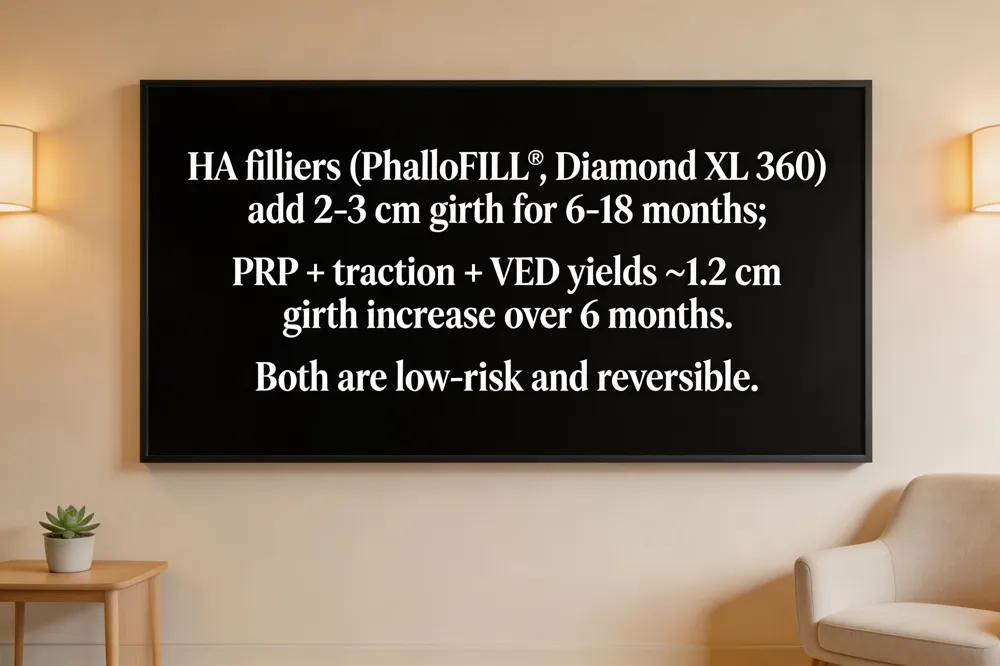
Hyaluronic‑acid (HA) fillers such as PhalloFILL® and the Diamond XL 360 Procedure™ are the most widely used injectable options for girth augmentation. HA is biocompatible, dissolvable with hyaluronidase, and typically adds 2–3 cm to flaccid circumference and 1–2.5 cm when erect. A standard session uses 15–20 ml of filler, lasting 6–18 months before gradual resorption. Multiple sessions (often three to five) are required for optimal contour and durability.
PRP‑based protocols, exemplified by the P‑Long Study, combine monthly platelet‑rich plasma injections with daily traction and vacuum therapy. Over six months, participants achieved a mean girth increase of 0.47 in (≈1.2 cm) and reported improved rigidity. PRP leverages autologous growth factors to stimulate tissue remodeling without foreign material, and adverse events have been negligible in reported series.
Safety profiles differ: HA fillers carry low rates of mild inflammation, edema, or transient nodules; complications are usually self‑limited and reversible. PRP injections are generally well tolerated, though occasional bruising or discomfort at the injection site may occur. Neither modality introduces permanent implants, reducing infection risk compared with surgical grafts.
Cost considerations reflect the need for a series of treatments. A single HA filler visit ranges from $1,500 to $3,000, yielding a total out‑of‑pocket expense of $4,500–$15,000 for a complete course. PRP protocols involve monthly injections ($500–$800 each) plus device rentals, resulting in a comparable six‑month investment of $3,000–$5,000. Insurance does not cover cosmetic enhancement, so patients must budget accordingly.
Can I increase penile girth naturally at home? No scientifically validated home method exists for permanent girth increase. Exercises such as jelqing lack robust evidence and may cause tissue damage. Weight loss, cardiovascular health, and smoking cessation improve erectile quality but do not enlarge the shaft. For measurable, lasting results, minimally invasive procedures performed by board‑certified specialists remain the most reliable option.
What does a typical course of male enlargement injections cost? A typical regimen of PhalloFILL® or Diamond XL 360 Procedure™ involves three to five sessions spaced several weeks apart. Each session costs $1,500–$3,000, leading to a total of $4,500–$15,000 depending on filler volume and provider expertise.
How common is a 7‑inch erect penis among men? Large 7‑inch erect penis falls near the 95th percentile of penile length distribution. Large surveys show that roughly 5 % of men have an erect length of 7 inches or longer, making it relatively rare.
Is a 7‑inch penis considered large? Yes. With the average erect length between 5.1 and 5.5 inches, a 7‑inch penis exceeds the median by about an inch and is statistically classified as “large,” representing the top 5 % of the population.
Traction, Vacuum, and Multimodal Protocols for Length and Girth
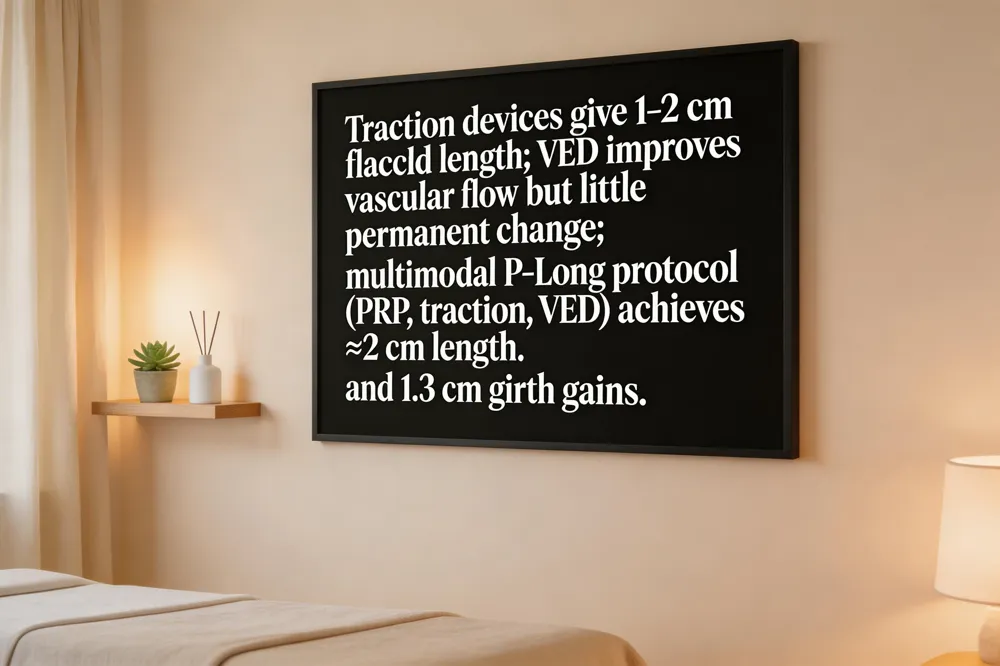
Penile traction devices apply continuous, low‑intensity stretch to the corporal tissue. Controlled clinical studies report an average flaccid length gain of 1–2 cm (≈0.4–0.8 in) after 4–6 hours of daily wear for 3–6 months, with no significant increase in girth. The effect is modest but reproducible when patients adhere to the prescribed regimen and avoid overtension that could cause micro‑tears.
Vacuum erection devices (VED) improve penile blood flow and temporarily enlarge the shaft during use. When incorporated into a structured program, VEDs can aid tissue remodeling and support modest gains, but they do not produce lasting dimensional changes on their own.
The P‑Long multimodal protocol combines monthly ultrasound‑guided platelet‑rich plasma (PRP) injections, twice‑daily traction (20 min), twice‑daily VED use (12 min), and nitric‑oxide‑boosting oral supplements. In a prospective pilot of healthy men, six months of treatment yielded a mean erect length increase of 0.8 in (≈2 cm) and girth increase of 0.5 in (≈1.3 cm), both statistically significant (p < 0.001) and without adverse events. The synergy of biological growth factors (PRP), mechanical stretch (traction), and enhanced vascular inflow (VED supplements is thought to drive tissue expansion.
Manual exercises such as jelqing lack rigorous scientific validation and carry risks of bruising, fibrosis, and erectile dysfunction. Current evidence does not support any adult stretching routine as a reliable method for permanent size enhancement.
Which exercise is recommended for penile growth? Currently, there is no scientifically validated exercise that reliably increases penis size. Techniques such as jelqing lack rigorous clinical evidence and can cause tissue damage, bruising, or vascular injury when performed improperly. Because the penis grows only during puberty, adult attempts at manual stretching or massage have not been shown to produce lasting, safe gains. For men seeking measurable and safe enlargement, the best approach is a consultation with a board‑certified urologist or plastic surgeon who can discuss evidence‑based options such as minimally invasive procedures or personalized treatment plans. Dr. Victor Liu can evaluate your individual anatomy and recommend the most appropriate, safe, and natural‑result strategies.
Can lifestyle changes improve penis size? A healthy lifestyle—regular aerobic exercise, a balanced diet, and maintaining a healthy weight—can improve blood flow and overall erectile function, which may make the penis appear slightly larger when fully erect. However, these changes do not permanently increase the actual length or girth of the penile tissue. Weight loss can reduce pubic fat, revealing more of the shaft, and improved cardiovascular health can enhance rigidity, but the underlying size remains the same. For men seeking a true increase in dimensions, medical options such as Dr. Victor Liu’s minimally invasive procedures are the only proven methods. Lifestyle modifications are essential for sexual health, but they should not be expected to produce lasting growth in penis size.
Statistical Realities: How Common Are Large Penises?

Large penile size is a statistical outlier. A large meta‑analysis that measured over 15,000 men with health‑professional techniques found that an erect length of 9 inches (approximately 23 cm) falls at the extreme upper tail of the normal distribution. Only men in the top 1 percent reach this size, which translates to roughly one in 100 men; many experts argue the true figure is closer to 0.5 percent (about one in 200).
The overall distribution of erect penile length in the adult male population is roughly bell‑shaped, with a mean of about 13 cm (5 inches) and a standard deviation of 1.5 cm (0.6 inches). Approximately 68 percent of men fall within one standard deviation of the mean (11.5–14.5 cm), 95 percent within two deviations (10–16 cm), and only a very small fraction exceed 23 cm.
These data have important implications for patient expectations. Because a 9‑inch erection is attained by far less than 1 percent of men, it should be regarded as a rarity rather than a realistic target. Counseling that emphasizes the normal range (average erect length 13 cm, circumference 11–12 cm) helps prevent unrealistic goals and reduces the risk of body‑dysmorphic concerns. When patients seek enhancement, clinicians should frame any potential size gain within the context of these population norms and stress that most men already fall within the normal size spectrum.
Finding a Skilled Surgeon in the Bay Area

When searching for a qualified penile‑enlargement surgeon in the Bay Area, prioritize board‑certified plastic or urologic surgeons with dedicated experience in male genital reconstruction. Dr. Victor Liu, a double‑board‑certified plastic surgeon, leads the Bay Area Penile Enhancement Clinic in San Francisco and routinely performs combined protocols such as ventral phalloplasty, suspensory ligament release, and graft‑based girth augmentation. To verify credentials, check the American Board of Plastic Surgery or the American Board of Urology listings, request copies of the surgeon’s certification, and review peer‑reviewed case series (e.g., the 2022 Penile Enhancement Procedures study reporting >90 % patient satisfaction when adjuvant techniques are added to prosthesis placement). During the initial consultation you should expect a confidential physical exam, discussion of realistic size goals, review of photographic before‑and‑after outcomes, and a personalized risk‑benefit analysis that includes recovery timelines and postoperative stretching or device use. This thorough vetting ensures you select a surgeon who combines technical expertise with a patient‑centered, discreet care model.
Safety Profile, Side Effects, and Risk Management
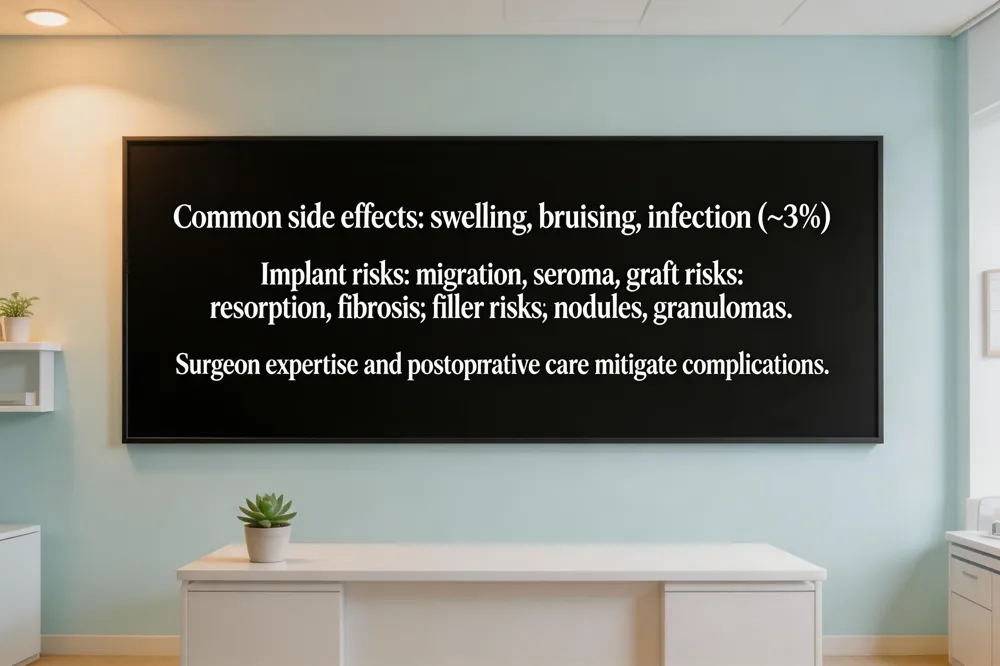
Penile enhancement procedures, whether surgical or non‑surgical, share a baseline safety profile that includes postoperative swelling, bruising, and a low‑to‑moderate risk of infection. Swelling and bruising typically resolve within two to three weeks, while infection—though uncommon when aseptic technique and prophylactic antibiotics are used—can necessitate antibiotics or, in rare cases, surgical drainage.
Implants, grafts, and fillers introduce procedure‑specific concerns. Silicone implants (e.g., Penuma) may migrate, erode, or develop seroma; allograft materials such as AlloDerm carry a lower fibrosis risk than synthetics but still pose potential graft rejection or contraction. Autologous fat grafts can resorb unevenly, producing lumps, asymmetry, or nodules, and dermal fillers (hyaluronic acid, PMMA) may cause granuloma formation, temporary inflammation, or, rarely, infection.
The expertise of the operating surgeon and diligent postoperative care are paramount. Board‑certified, double‑certified plastic surgeons with a high volume of penile cases minimize complications through precise technique, appropriate patient selection, and clear counseling on activity restrictions, garment use, and follow‑up visits.
What are the common side effects of penis enlargement procedures? Common side effects include postoperative swelling and bruising that resolve within a few weeks, occasional infection, bleeding, scarring, and altered sensation. Implant‑specific risks such as migration or erosion, and filler‑related irregularities or nodules, are also possible.
Are girth enlargement procedures worth it? For men whose confidence and sexual satisfaction would benefit from a thicker appearance, girth augmentation can be worthwhile when performed by an experienced surgeon. Gains are modest, costs are significant, and long‑term outcomes vary; realistic expectations and thorough counseling are essential.
What are the risks of penile enlargement surgery? Risks comprise bleeding, hematoma, infection, nerve injury leading to altered sensation, scar‑induced curvature, graft resorption, asymmetry, granuloma formation, and anesthesia‑related complications. Selecting a qualified surgeon and adhering to postoperative protocols mitigates these risks.
Cost Considerations and Patient Experience

Permanent male enlargement surgery typically falls between $8,000 and $12,000 for the core procedure—such as a Penuma® silicone sleeve implant or a grafting technique—while anesthesia, operating‑room fees, and postoperative care can add another $2,000–$5,000. In high‑volume urban centers total out‑of‑pocket expenses often reach $10,000–$18,000, and prices vary with surgeon expertise, geographic location, and whether custom implants or advanced imaging are required. Cosmetic enhancement is not covered by most insurance plans; only medically indicated cases (e.g., micropenis or buried penis) may be reimbursed after prior authorization.
A typical course of hyaluronic‑acid girth enhancement (PhalloFILL® involves 3‑5 filler sessions, each priced $1,500–$3,000, resulting in a total investment of $4,500–$15,000. The amount of filler and the number of visits are customized per patient, and because the procedure is outpatient with local anesthesia, no additional hospital fees are incurred.
Patient feedback on HA girth enhancement is consistently positive: most men report a natural‑looking increase of 0.5–1 inch, minimal downtime (return to daily activities within 24‑48 hours), and preservation of sensation. Satisfaction rates are high, with many patients noting improved confidence and intimacy without the risks associated with incisional surgery.
Choosing the Right Path Forward
When men consider penile enhancement, the first step is to align personal goals with the best available evidence. Surgical options—such as suspensory ligament release, ventral phalloplasty, augmentation corporoplasty, or a Penuma silicone implant—offer measurable gains in length or girth, but they carry infection risks including infection, scarring, and altered sensation. Nonsurgical modalities—hyaluronic‑acid fillers, platelet‑rich‑plasma (PRP) injections, traction therapy, or the multi‑modal P‑Long protocol—provide modest increases (typically 0.5–3 cm) with shorter recovery, yet long‑term durability remains uncertain.
A personalized, safety‑first approach begins with a thorough medical evaluation, including penile Doppler ultrasound, assessment of erectile function, and a screening for body‑dysmorphic concerns. The treating physician should discuss realistic outcomes (e.g., ligament release adds ∼1 cm flaccid length, grafts can increase girth by 2–3 cm) and the need for postoperative maintenance such as stretching or device use. Selecting a board‑certified urologist or plastic surgeon experienced in male genital reconstruction minimizes complications and ensures that any adjuvant procedures—ventral phalloplasty, suprapubic lipectomy, or grafting—are performed in a single, well‑coordinated session.
Patients seeking expert, discreet care in the Bay Area can schedule a confidential consultation with Dr. Victor Liu at the Bay Area Penile Enhancement Clinic. Dr. Liu is a double‑board‑certified plastic surgeon specializing in combined length‑and‑girth protocols, offering both surgical (ligament release, autologous fat grafting, Penuma implant) and nonsurgical (HA fillers, PRP‑shockwave, traction) options. To discuss eligibility, view before‑and‑after results, or arrange an appointment, call (415) 555‑0123 or visit www.bayareapenileclinic.com. All consultations are conducted in a private setting with strict HIPAA compliance, ensuring patient confidentiality and comfort throughout the decision‑making process.