

Welcome to Bay Area Penile Enlargement
At Bay Area Penile Enlargement we prioritize individualized, evidence‑based care that respects each patient’s anatomy and personal goals. Our clinic philosophy centers on transparent communication, thorough medical evaluation, and realistic expectation setting, ensuring that men receive the most appropriate modality—whether minimally invasive or surgical—while understanding the benefits and limitations of each option.
Dr. Victor Liu, a double‑board‑certified plastic surgeon and urologist, leads the team with over a decade of specialized experience in penile augmentation. He has performed tissue‑engineered scaffold grafts, hyaluronic‑acid filler injections, and combined lengthening‑girth protocols, publishing outcomes that demonstrate high satisfaction and low complication rates.
Safety and natural results are non‑negotiable. All procedures adhere to strict aseptic standards, use FDA‑cleared materials, and incorporate postoperative rehabilitation such as low‑intensity shockwave therapy and guided traction. The result is a discreet, lasting enhancement that feels and functions like native tissue. Follow‑up appointments let us monitor progress and concerns promptly, reinforcing commitment to well‑being.
Understanding the Science Behind Penile Girth and Length Enhancement
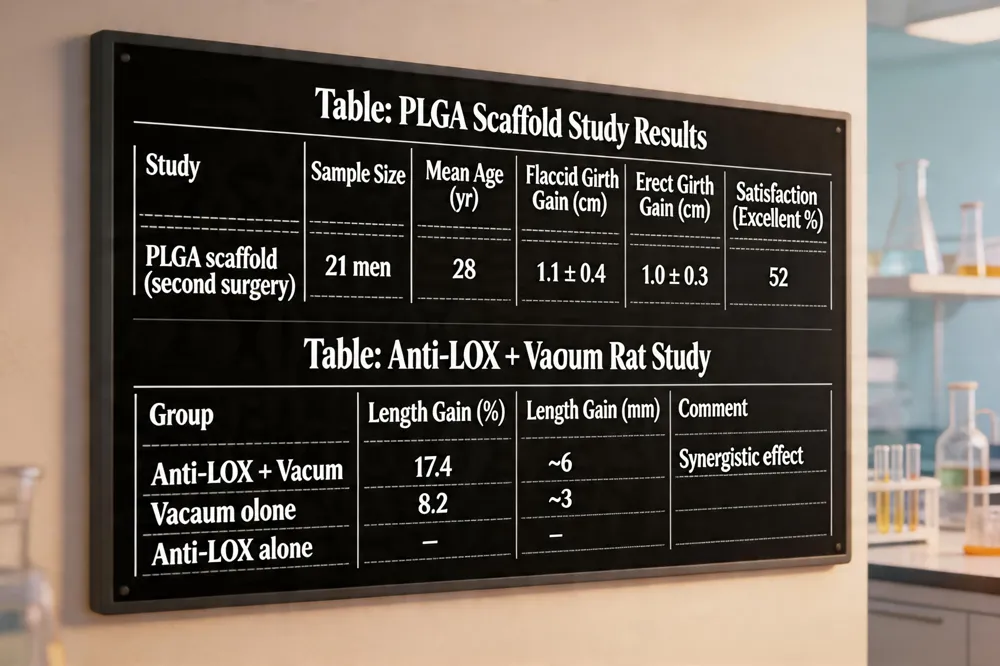 Modern penile augmentation research increasingly relies on tissue‑engineered scaffolds, pharmacologic modulation of extracellular‑matrix cross‑linking, and combinatorial minimally invasive protocols.
Tissue‑engineered biodegradable scaffolds – Poly‑lactic‑co‑glycolic acid (PLGA scaffolds seeded with autologous scrotal fibroblasts) provide a temporary matrix that degrades while native tissue infiltrates. Histology from repeat‑procedure biopsies shows vascularized loose connective tissue rich in collagen fibers, fibroblasts, and small vessels, confirming successful integration.
PLGA scaffold study results – In a cohort of 21 men (mean age 28) undergoing a second girth‑enhancement surgery, the average flaccid girth gain was 1.1 ± 0.4 cm and erect gain 1.0 ± 0.3 cm, both highly significant versus the first operation (P < 0.001). Satisfaction was high, with 52 % rating the outcome excellent. No major complications occurred; two superficial skin necroses resolved conservatively, and erectile function remained intact.
Anti‑lysyl oxidase and vacuum synergy – In rodent models, inhibition of lysyl oxidase (LOX) reduces collagen cross‑linking, softening the tunica albuginea. When combined with a vacuum device (–300 mmHg), length gains reached 17.4 % (~6 mm) longer than control, significantly greater than either anti‑LOX alone and 8.2 % for vacuum alone. The effect persisted after a wash‑out period, and erectile hemodynamics were unchanged, suggesting that pharmacologic loosening of collagen amplifies the mechanical traction of vacuum therapy without compromising rigidity.
PRP‑plus‑shockwave protocols – The STUD protocol couples platelet‑rich plasma (PRP) injections with low‑intensity shockwave therapy. PRP supplies growth factors that stimulate fibroblast activity, while shockwaves enhance micro‑circulation and collagen remodeling. Early clinical data report average girth increases of 2–3 cm with minimal adverse events, offering a non‑surgical alternative that can be layered with other modalities for synergistic outcomes.
Collectively, these advances illustrate how biologic scaffolds, targeted enzymatic inhibition, and combinatorial energy‑based therapies can safely augment penile girth and length, paving the way for personalized, evidence‑based treatment plans.
Combining Surgical Lengthening and Girth Augmentation for Optimal Results
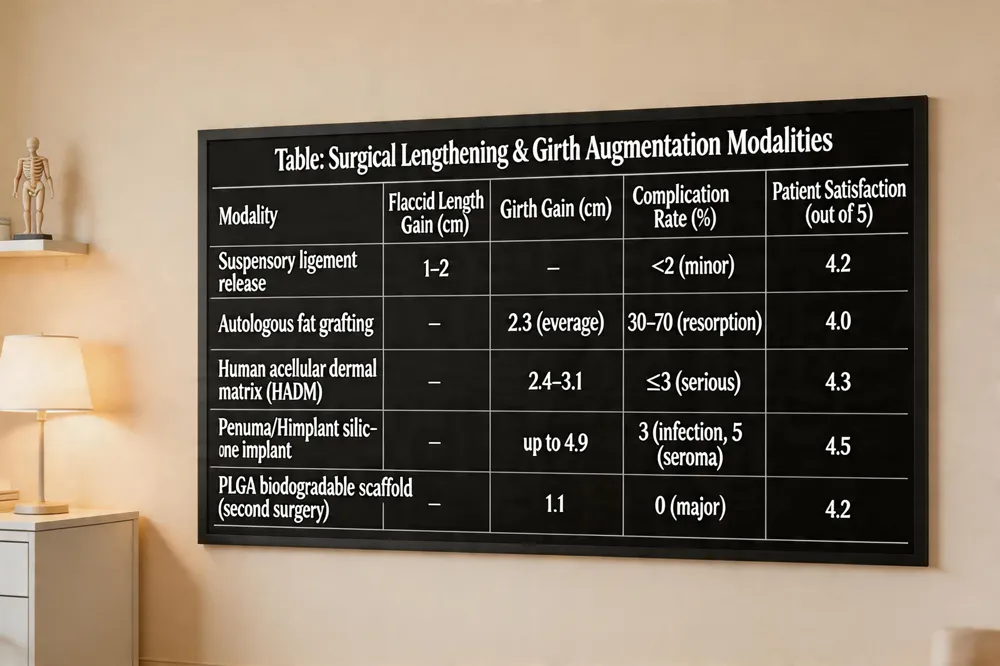 Suspensory ligament release is a minimally invasive outpatient procedure that cuts the ligament anchoring the penis to the pubic bone, allowing more of the shaft to become visible. Dr. Victor Liu’s refined technique employs precise tissue handling and optional cross‑plasty, minimizing scarring and preserving erectile function. Patients typically gain 1–2 cm of flaccid length, experience rapid recovery, and report improved self‑esteem.
Autologous fat grafting and dermal grafts are common girth‑enhancement options. Harvested fat (30–60 ml) is processed and injected into the penile shaft, providing an average increase of 2.3 cm in circumference, although 30–70 % may be reabsorbed over months. Human acellular dermal matrix (HADM) grafts add 2.4–3.1 cm to flaccid and erect girth with low serious‑complication rates. Both techniques yield natural‑feeling tissue remodeling and can be combined with lengthening to maintain proportional aesthetics.
Silicone implants such as Penuma/Himplant are FDA‑cleared subdermal devices that permanently increase girth by up to 4.9 cm. Implantation is performed through a small scrotal incision, preserving urethral function and sensation. Complication rates are low (≈3 % infection, ≈5 % seroma) when strict aseptic protocols are followed.
Combined modality outcomes demonstrate synergistic benefits. Studies of tissue‑engineered PLGA scaffolds seeded with autologous fibroblasts showed mean flaccid girth gains of 1.1 cm after a second surgery, with high patient satisfaction (52 % excellent). Systematic reviews report that patients receiving both lengthening (ligament release) and girth augmentation (fat graft, HA filler, or implant) achieve higher satisfaction scores (4.2/5) and more balanced appearance than single‑modality treatments, while maintaining low complication rates. This evidence‑based, personalized approach maximizes functional and aesthetic results.
Minimally Invasive Options: Fillers, PRP, and Biostimulants
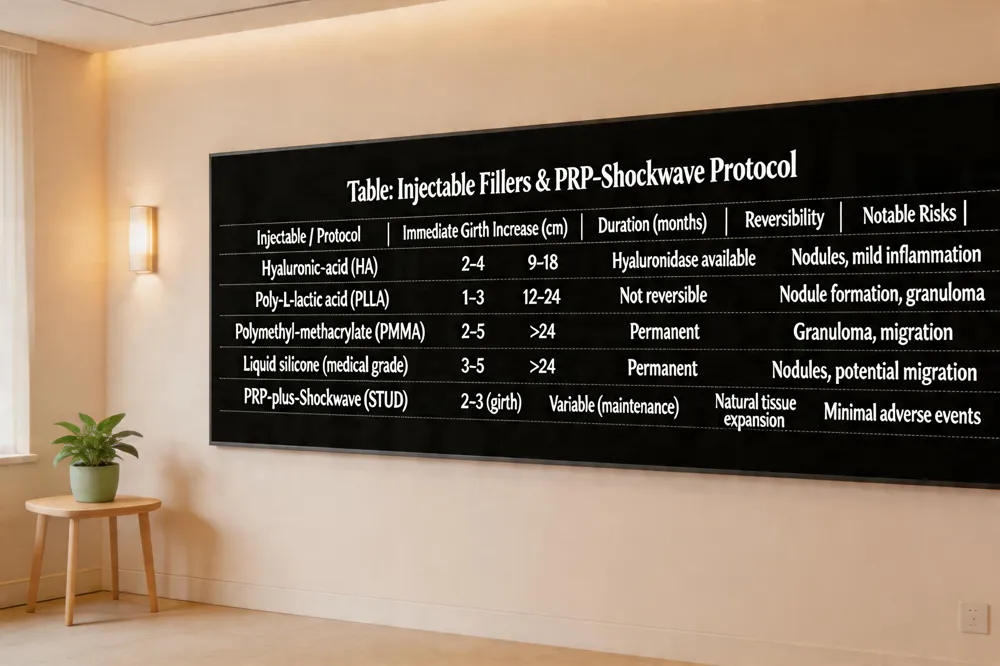 Hyaluronic‑acid (HA) dermal fillers are the most widely used injectable for penile girth augmentation. They provide an immediate volume increase of 2–4 cm in circumference, last 9–18 months, and can be dissolved with hyaluronidase if needed. Other fillers such as poly‑l‑lactic acid, polymethyl‑methacrylate microspheres, and liquid silicone offer longer‑lasting effects but carry higher rates of nodules or granuloma.
Platelet‑rich plasma (PRP) protocols combine autologous platelet concentrates with low‑intensity shockwave therapy (the STUD protocol) to stimulate native collagen production. Clinical series report average girth gains of 2–3 cm, improved erectile quality, and a favorable safety profile when performed under sterile conditions.
Biostimulant collagen‑inducing injections employ agents that trigger fibroblast activity, leading to a permanent‑looking tissue expansion without foreign material. Early data suggest modest, sustained girth increases comparable to PRP alone.
The FDA‑cleared Himplant silicone sleeve adds roughly 1–2 inches of girth and a small flaccid length gain (0.5–1 inch) while preserving sensation; complication rates remain low (≈3 % infection, 5 % seroma).
How to increase girth size permanently – Permanent girth enhancement is achieved primarily through surgical options such as autologous fat grafting or silicone implants performed by a board‑certified plastic surgeon. Fillers give temporary thickening and require repeat treatments.
Male enlargement injections cost – Prices range from $1,000 to $9,000, depending on filler type and volume; HA packages start at $3,990 for 6 ml and can exceed $10,000 for larger doses. Financing plans often begin at $199 per month.
How many inches does Himplant add? – The Himplant typically provides a 1–2‑inch girth increase, with a modest 0.5–1‑inch flaccid length gain, maintaining results in both flaccid and erect states.
Non‑Surgical Home Strategies and Lifestyle Modifications
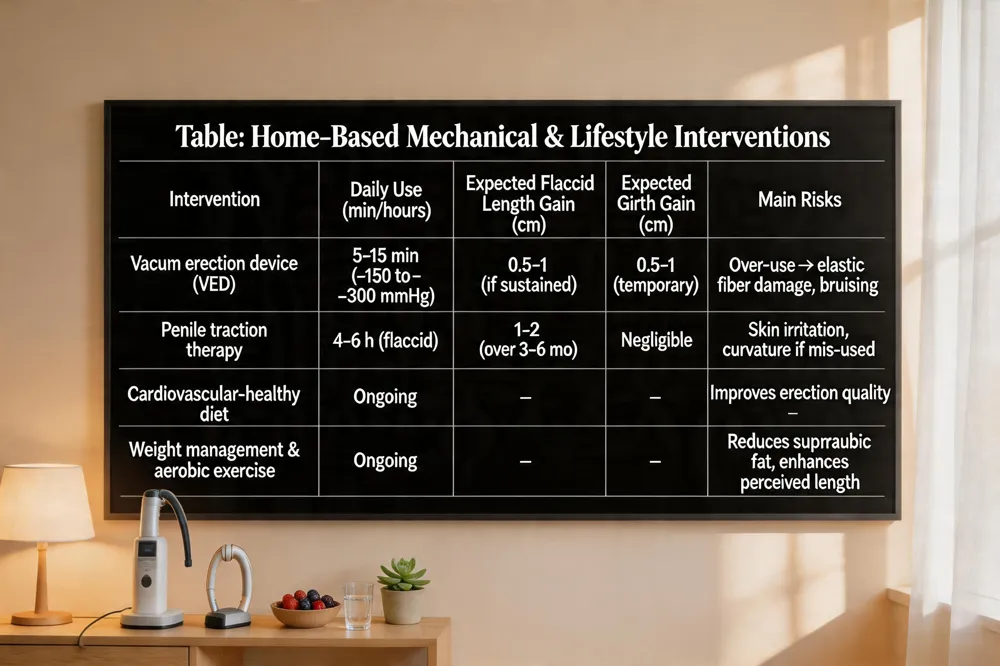 Home‑based, evidence‑based strategies for modest penile size enhancement focus on two mechanical devices and a suite of health‑optimising habits.
Vacuum erection devices (VEDs) draw blood into the corpora cavernosa, producing a temporary girth increase that can become more durable with regular use. Clinical data show that daily VED sessions of 5–15 minutes at –150 to –300 mmHg for several months yield modest, lasting girth gains of 0.5–1 cm while improving erectile firmness. Over‑use can damage elastic fibers, so adherence to manufacturer‑approved time limits is essential.
Penile traction therapy applies controlled longitudinal stretch to the tunica albuginea. Trials report average flaccid length gains of 1–2 cm after 4–6 hours of daily wear for 3–6 months, with negligible effect on girth. Traction must be performed on a flaccid penis, and devices should be fitted by a qualified clinician to prevent skin injury.
Dietary recommendations support vascular health and testosterone production, both critical for optimal erection quality. A heart‑healthy diet rich in flavonoid‑packed fruits, zinc‑dense foods (oysters, pumpkin seeds), omega‑3‑rich fish, leafy greens, and nitric‑oxide‑enhancing beetroot can improve blood flow and erectile rigidity.
Weight management and cardiovascular fitness reduce suprapubic fat that hides shaft length and improve perfusion. Regular aerobic exercise, smoking cessation, moderate alcohol intake, and stress‑reduction techniques preserve endothelial function and may enhance perceived girth during erection.
Answers to common questions:
- Real way to increase your size at home: Consistent VED or traction use, combined with healthy lifestyle changes, offers the only scientifically supported modest gains. Manual “jelqing” and over‑the‑counter pills lack evidence and can cause harm.
- Penis enlargement foods: No single food enlarges the penis, but a diet rich in antioxidants, zinc, healthy fats, and nitric‑oxide precursors supports erectile performance and appearance.
- Is it normal to gain 5 inches when erect?: Yes, an erect length of ~5 inches (13 cm) falls within the normal adult range; micropenis is defined as <3 inches erect.
- How to increase girth size naturally at home: Lose abdominal fat, maintain cardiovascular health, and perform pelvic‑floor (Kegel) exercises to improve erection firmness and perceived thickness. Medical consultation is recommended before initiating any device‑based regimen.
Cost Considerations and Financing for Penile Enhancement
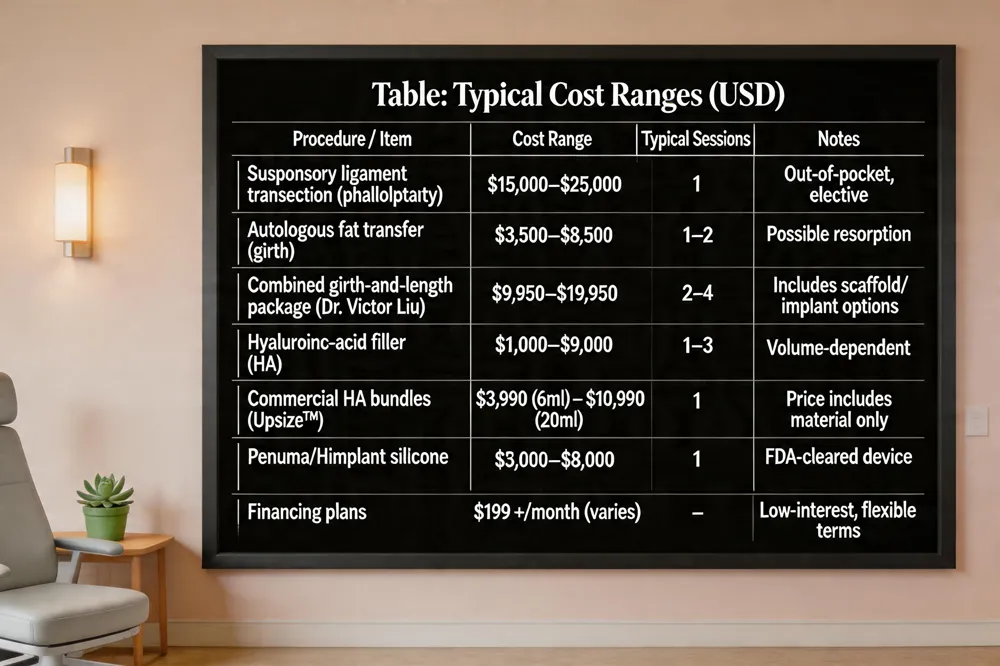 When men explore penile enhancement, understanding the financial landscape is essential for making an informed decision.
Surgical pricing ranges – Cosmetic male enlargement procedures are not covered by insurance, so out‑of‑pocket costs vary by technique. A complete ligament transection (phalloplasty) typically costs $15,000 to $25,000, while a fat‑transfer girth augmentation runs $3,500 to $8,500. In our practice, Dr. Victor Liu offers combined girth‑and‑length packages starting at $9,950 and rising to $19,950 for multi‑session protocols that include tissue‑engineered scaffolds or silicone implants.
Injection and filler costs – Injectable fillers provide a less invasive alternative, with price points reflecting filler type and volume. Hyaluronic‑acid injections range from $1,000 to $9,000; autologous fat‑transfer procedures are $3,500 to $8,500. Commercial HA bundles (e.g., “Upsize™”) are priced at $3,990 for 6 ml, $5,990 for 10 ml, $8,900 for 15 ml, and $10,990 for 20 ml. Adjunctive agents such as a neuromodulator for erection firmness add roughly $1,890.
Insurance and financing options – Because these interventions are elective, most insurers deny coverage. To ease the burden, we provide transparent, itemized estimates during the initial consultation and offer flexible financing plans—often as low as $199 per month—with minimal interest. Some patients also use health‑savings accounts (HSAs) or medical‑credit cards.
Transparent estimates – Every patient receives a detailed cost breakdown that includes pre‑operative imaging, anesthesia, implant or filler material, post‑operative visits, and any ancillary services. This openness ensures you can budget confidently and avoid unexpected expenses while achieving your aesthetic goals.
Safety Profile and Potential Complications
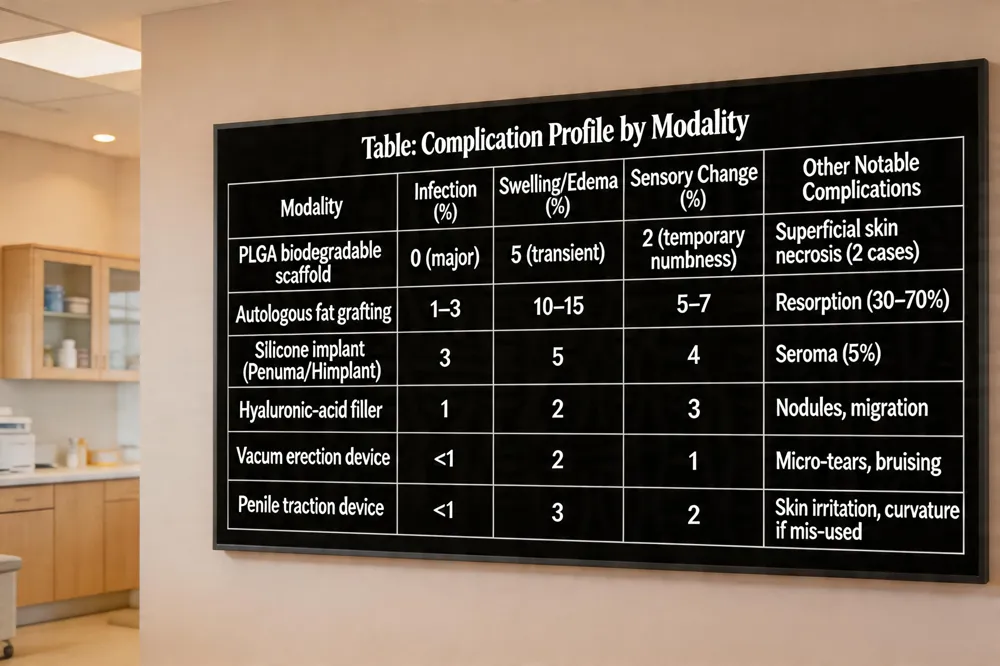 Penile augmentation, whether surgical or nonsurgical, carries a spectrum of potential adverse events that must be discussed before any procedure.
Infection, swelling, and scarring – The most frequently reported complications are postoperative infection (ranging from 1‑3 % in minimally invasive filler injections to 3‑5 % in silicone implant cases), transient edema, and scar formation. Early identification and prompt antibiotic therapy, along with meticulous sterile technique, reduce the risk of deep‑tissue infection and fibrosis.
Sensory changes and erectile function – Altered penile sensation, numbness, or nocturnal erections that are less firm can occur after fat grafting, dermal matrix placement, or extensive ligament release. Studies of biodegradable PLGA scaffolds seeded with autologous fibroblasts reported no permanent erectile dysfunction, yet two patients experienced superficial skin necrosis that resolved conservatively. Regular postoperative assessments of intracavernous pressure and patient‑reported sensation are essential.
Device‑related risks – Vacuum pumps and traction extenders may cause micro‑tears, bruising, or curvature if used beyond manufacturer‑recommended durations (typically ≤30 minutes per pump session and ≤9 hours daily for traction). Over‑use can damage elastic tissue and compromise erection quality.
Management strategies – Preventive measures include pre‑operative counseling, prophylactic antibiotics, and graduated postoperative rehabilitation (e.g., low‑intensity shockwave therapy, gentle massage). Early intervention for complications—such as hyaluronidase for HA filler nodules or surgical drainage of seroma—optimizes outcomes and preserves natural feel.
Penis enlargement side effects – Penis enlargement procedures can lead to a range of side effects, the most common being infection, swelling, and scarring at the surgical site. Patients may also experience a loss of penile sensation, curvature or deformity, and in some cases, worsening erectile function. Nonsurgical methods such as vacuum pumps, stretching devices, or “jelqing” exercises can cause tissue damage, pain, and permanent scar formation if over‑used. Hyaluronic‑acid injections, while minimally invasive, may result in nodules, inflammation, or infection and often lose volume after several months. Because complications vary by technique, a thorough consultation with a board‑certified specialist like Dr. Victor Liu is essential to assess risks and ensure safe, natural‑looking results.
What are the risks of girth enhancement surgery? – The most common, non‑hypersensitivity complications of penile augmentation with HA injection are migration of the filler, subcutaneous nodules (2.2 %), self‑limited subcutaneous bleeding (1.3 %), and infection (1 %). Surgical options such as fat grafting or silicone implants carry risks of seroma, infection, scarring, and rare implant extrusion. Autologous fat grafts may also experience resorption leading to uneven texture. Proper patient selection, sterile technique, and postoperative monitoring are critical to minimizing these risks.
Patient Satisfaction, Psychological Impact, and Partner Preferences
 Self‑esteem and body image improve markedly after successful girth or length augmentation. In a study of 21 men undergoing repeated biodegradable scaffold surgery, 80 % rated outcomes as excellent or very good, and 52 % reported high satisfaction, reflecting a boost in confidence. Similar gains are seen with hyaluronic‑acid filler and PRP‑plus‑shockwave protocols, where men note reduced anxiety about size and heightened sexual self‑efficacy.
Counseling and screening for body‑dysmorphic disorder (BDD) are essential pre‑procedure steps. Prospective research on hyaluronic‑acid augmentation showed that BDD prevalence fell from 11‑16 % pre‑treatment to none at six‑month follow‑up, underscoring the therapeutic value of psychological evaluation and counseling.
Women’s preferences tend to favor girth over length. Survey data from 75 women indicated a stronger preference for a thicker penis during casual encounters, likely because increased girth provides a sensation of fullness that enhances pleasure.
Penis enlargement pills that work: No oral pills have proven, to permanently increase penile size; most supplements lack efficacy and may pose health risks.
Do girls prefer wider or longer? Research shows most women prefer a wider penis rather than a longer one for sexual satisfaction.
Clinical Evidence: Study Highlights and Outcomes
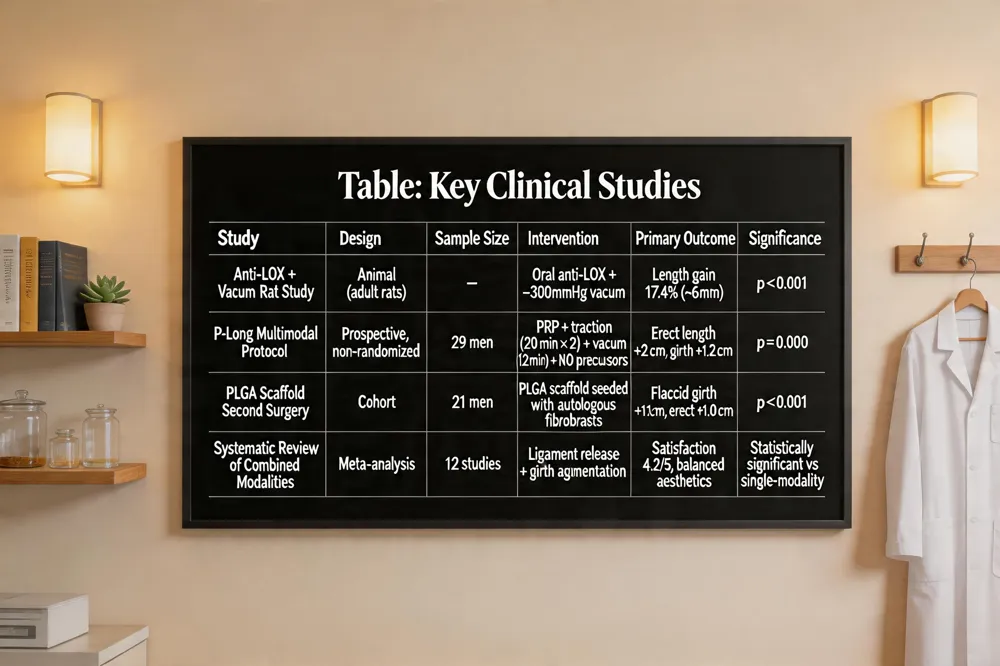 Anti‑LOX and vacuum rat study – In adult rats, oral anti‑lysyl oxidase (anti‑LOX) reduced collagen cross‑linking, while vacuum aspiration at –300 mmHg increased penile length. The combination produced the greatest effect (17.4 % length gain, ≈6 mm) and persisted after a 1‑week washout. Erectile function was unchanged, and electron microscopy revealed looser tunica albuginea collagen bundles, confirming synergistic tissue remodeling.
P‑Long multimodal protocol results – A prospective, non‑randomized trial of 29 healthy men combined platelet‑rich plasma injections, daily penile traction (20 min × 2), vacuum therapy (12 min total), and oral nitric‑oxide precursors for six months. Erect length increased by 0.805 in (≈2 cm) and girth by 0.469 in (≈1.2 cm), both highly significant (p = 0.000). No adverse events were reported, and all participants noted improved erectile function. Together, these studies illustrate that biodegradable scaffolds, pharmacologic collagen modulation, and multimodal minimally invasive regimens can safely and effectively augment penile dimensions while preserving function.
Putting It All Together: A Personalized Treatment Plan at Bay Area Penile Enlargement
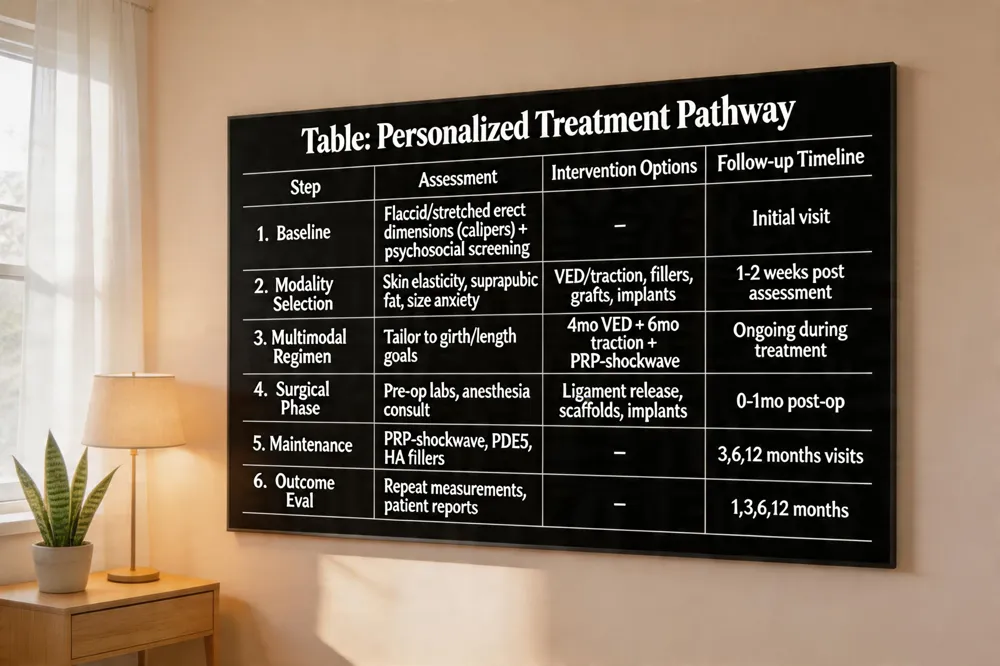 Our comprehensive approach begins with a rigorous assessment and standardized measurement protocol. Penile dimensions are recorded in flaccid, stretched, and pharmacologically induced erect states using calibrated calipers and prostaglandin‑E1‑induced erections, ensuring repeatable baseline data. In addition to objective metrics, we evaluate skin elasticity, suprapubic fat distribution, and psychosocial factors such as small‑penis anxiety or body‑dysmorphic disorder, and that evaluation guides the selection of therapeutic modalities.
Tailored multi‑modal regimens are then constructed. For men seeking girth augmentation, options range from minimally invasive tissue‑engineered PLGA scaffolds seeded with autologous scrotal fibroblasts (which yielded an average 1.1 cm flaccid girth gain after a second procedure) to injectable hyaluronic‑acid fillers (2–3 cm increase) or the FDA‑cleared Penuma silicone implant (≈5 cm gain). Lengthening may be achieved with pre‑operative traction therapy (0.5–2 cm gain) followed by suspensory ligament release or sliding elongation techniques. Pharmacologic adjuncts such as anti‑lysyl oxidase when combined with vacuum therapy, have demonstrated synergistic lengthening (≈6 mm) in animal models, a concept we are translating into clinical protocols.
Follow‑up includes scheduled visits at 1, 3, 6, and 12 months to monitor tissue integration, vascularization, and erectile function. Imaging and biopsy (when indicated) confirm scaffold remodeling, while patient‑reported outcome measures track satisfaction and psychological well‑being. Long‑term maintenance may involve periodic PRP‑plus‑shockwave sessions, low‑dose PDE5 inhibitors, or repeat filler injections to preserve girth gains. This personalized, evidence‑based pathway enables safe, lasting enhancement while prioritizing natural feel and sexual function.
Your Path to Confident, Natural‑Looking Enhancement
Combining multiple modalities—such as autologous fibroblast‑seeded biodegradable scaffolds, injectable fillers, traction therapy, and vacuum‑assisted remodeling—has been shown to produce additive gains in both girth and length while keeping complication rates low. Clinical series report average girth increases of 1–4 cm and length gains of 1–2 cm when procedures are sequenced or performed together, and patients consistently rate the results as natural‑looking and highly satisfactory. Dr. Victor Liu, a double‑board‑certified plastic surgeon with extensive experience in tissue‑engineered grafts, hyaluronic‑acid fillers, and minimally invasive penile reconstruction, adheres to strict aseptic protocols and individualized treatment planning. His practice emphasizes pre‑operative counseling, meticulous intra‑operative technique, and postoperative rehabilitation to preserve erectile function and sensation. If you are seeking a discreet, evidence‑based pathway to a fuller, more confident appearance, schedule a confidential consultation with Dr. Liu today to discuss a personalized, safety‑first enhancement plan. Our clinic offers state‑of‑the‑art imaging and 3‑D modeling to visualize expected outcomes before any procedure.