

Understanding the Role of Follow‑Up
Scheduled follow‑up appointments are a cornerstone of any penile girth‑enhancement plan, whether the patient has received UroFill® hyaluronic‑acid fillers, autologous fat grafts, or a surgical graft. During each visit the clinician evaluates the ’s volume, symmetry, and integration, checks for signs of infection, bruising, nodule formation or filler migration, and confirms that the dressing and supportive underwear are still appropriate. Imaging such as ultrasound may be used to verify that the filler or graft remains in the intended plane. Early detection of complications—excess swelling, pain, or loss of sensation—allows prompt intervention with antibiotics, hyaluronidase, or corrective injections, preserving the aesthetic result. Regular monitoring also guides the timing of touch‑up injections (typically every 12‑18 months for HA fillers) and informs recommendations for lifestyle modifications (hydration, nutrition, smoking cessation) that sustain tissue health and long‑term girth gains.
Why Regular Follow‑Up Is Essential for Girth Maintenance

Regular follow‑up visits are the cornerstone of long‑term penile girth preservation. By seeing the surgeon or urologist at scheduled intervals—typically at 2 weeks, 1 month, 3 months, and then every 6‑12 months—clinicians can detect early complications such as infection, hematoma, seroma, or uneven filler migration before they jeopardize results. Prompt identification of infection allows a full course of antibiotics, while early scar monitoring enables timely intervention (e.g., massage, compression, or minor revision) to prevent contracture that could reduce girth or alter sensation.
Balancing risks and benefits requires transparent discussion of side‑effects. Penis enlargement surgery side effects include postoperative pain, swelling, bruising, temporary loss of sensation, infection, seroma formation, scarring that may cause curvature, and, in rare cases, implant or filler displacement requiring corrective surgery. What are the cons of a penis enlargement surgery? The procedure carries risks of infection, scarring, loss of sensation, potential erectile dysfunction, and graft or implant rejection. Ligament‑release techniques may create instability, and the aesthetic gains are often modest and may diminish over time, leading to disappointment and high costs.
Continued follow‑up ensures any adverse changes are managed swiftly, maximizes the durability of girth gains, and helps patients weigh the ongoing benefits against the inherent procedural risks.
Scheduling Follow‑Up Visits and Touch‑Up Timing
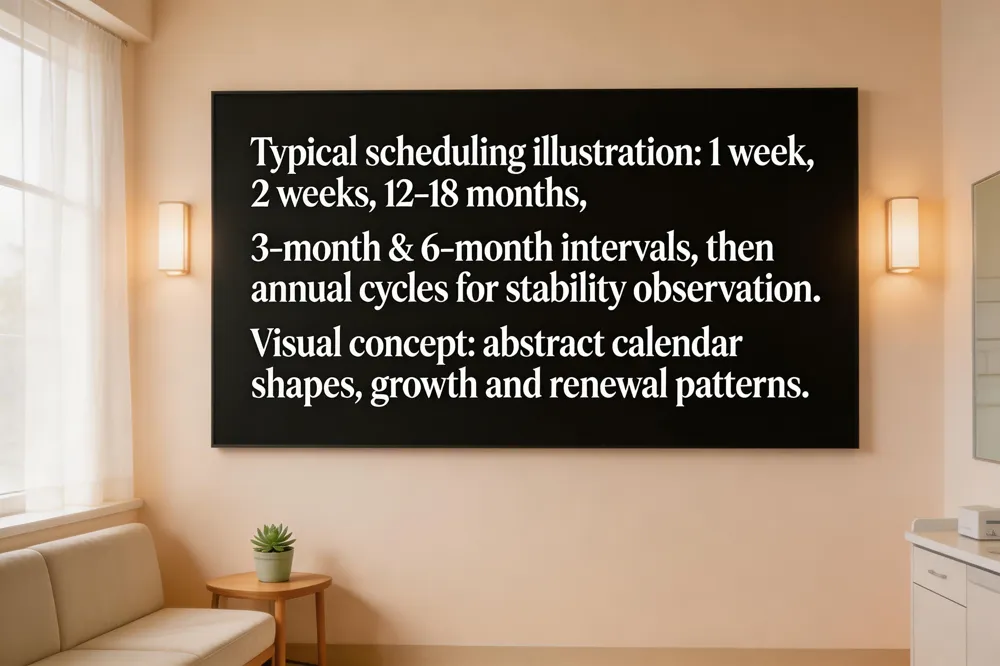
After a penile girth‑enhancement procedure—whether hyaluronic‑acid filler (UroFill®), calcium‑hydroxyapatite, or autologous fat graft—most clinicians follow a predictable after‑care timetable. The first visit typically occurs 1 week post‑procedure to assess swelling, bruising and early filler placement; many providers also perform manual modeling (gentle massage while the penis is erect) during this appointment to smooth any irregularities. A second follow‑up at 2 weeks evaluates graft stability and determines whether additional manipulation is needed before patients resume normal activities. For hyaluronic‑acid fillers, touch‑up injections are usually scheduled every 12–18 months (or sooner if volume loss is noticeable) because the gel naturally resorbs after 6–24 months. Fat‑transfer grafts often require a 3‑month check, then another at 6 months to monitor retention, as up to 30 % of the graft may be reabsorbed. Long‑term surveillance—at 1 year and annually thereafter—helps clinicians detect infection, migration, or contracture early, ensuring the achieved girth remains stable and the patient’s sexual health stays optimal.
Maintaining Filler, Graft, and Implant Stability

How to make your penis more girthy? The most reliable increase comes from medically supervised procedures: autologous fat grafting, silicone/Penuma implants, or hyaluronic‑acid (HA) filler injections performed by a board‑certified specialist. Fat grafting adds 0.5–1.5 inches of circumference, implants give a permanent uniform boost, and HA fillers (e.g., UroFill®) offer a lower‑risk, short‑recovery option that requires periodic touch‑ups.
How many inches does the XXL Penuma add? Clinical data show the XXL Penuma yields roughly 2–2.5 inches of length and 1.5–2 inches of girth increase, with results persisting once the silicone sleeve integrates.
How to increase girth size permanently Permanent girth is best achieved with surgical fat transfer or silicone implants, both providing lasting volume. Non‑surgical HA fillers are temporary and need repeat injections every 12–18 months.
Penis enlargement clinic A specialized clinic (e.g., Bay Area Penis Enlargement) offers surgical and non‑surgical options under Dr. Victor Liu, emphasizing safety, privacy, and natural‑looking outcomes.
Penis enlargement non‑surgical HA fillers, traction devices, and low‑intensity shockwave therapy are evidence‑based, minimally invasive methods; they are reversible and require strict follow‑up.
How to increase length and girth Combine proven surgical techniques (fat grafting, Penuma) with non‑surgical adjuncts (traction, shockwave) for comprehensive enhancement, guided by a personalized, medically supervised plan.
Lifestyle, Nutrition, and Hydration for Long‑Term Gains

Adequate hydration (≈35 ml × body‑weight kg daily) and a diet rich in fruits, vegetables, legumes, soy, protein, vitamin C, and zinc support collagen synthesis, skin elasticity, and overall tissue health—critical after filler or graft procedures.
Smoking and excessive alcohol impair microvascular flow and accelerate filler breakdown; cessation therefore prolongs girth retention.
Regular aerobic exercise, weight‑management, and pelvic‑floor (Kegel) training improve vascular health and erection firmness, making the shaft appear thicker.
Effective methods to increase penis size at home – No safe, proven home techniques reliably enlarge penile tissue. Lifestyle changes improve function and appearance but do not add permanent length or girth. A board‑certified specialist can offer evidence‑based, minimally invasive options.
How to naturally increase penis size – Gentle stretching or jelqing may modestly boost blood flow; weight loss and cardiovascular fitness enhance erection quality, creating a temporary perception of greater size. Supplements lack robust evidence.
How to increase girth size naturally at home – Reducing abdominal fat, maintaining optimal testosterone, and using a medically approved vacuum device can transiently improve thickness, but lasting girth requires professional augmentation.
How much larger can girth get? – Hyaluronic‑acid fillers add 0.5‑1 inch (1.2‑2.5 cm); surgical grafts or silicone implants can provide up to 2 inches (≈5 cm). Results vary by technique, baseline size, and healing.
Adjunct Therapies: PRP, Shockwave, Traction, and Vacuum
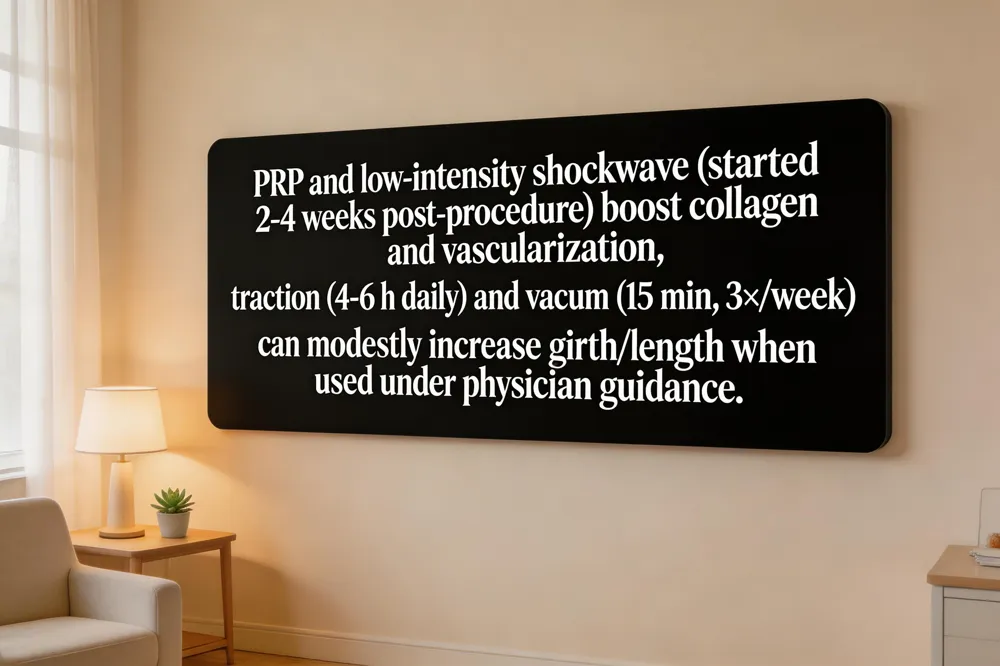
Platelet‑rich plasma (PRP) injections deliver autologous growth factors that stimulate collagen synthesis, improve micro‑vascular perfusion, and enhance tissue elasticity after girth‑augmentation procedures. When combined with hyaluronic‑acid fillers or fat grafts, PRP can accelerate integration and reduce resorption, extending the durability of results. Low‑intensity shockwave therapy (Li‑SWT) uses focused acoustic waves to promote neovascularization and cellular remodeling; clinical reports show modest improvements in penile girth and erection quality when administered weekly for 6–8 weeks as an adjunct to primary enhancement. Traction devices and vacuum pumps are safe when used under physician guidance: daily wear of 4–6 hours for traction or 15‑minute pump sessions three times a week can modestly increase girth and length, but excessive force must be avoided to prevent bruising, nerve injury, or fibrosis. Integration of these adjuncts follows a structured timeline—PRP or Li‑SWT is typically initiated 2–4 weeks post‑procedure, while stretching or vacuum therapy begins after the initial healing window (usually after 1 week) to protect the filler or graft.
Penis enlargement surgery side effects – Surgery may cause pain, swelling, bruising, temporary loss of sensation, infection, hematoma, seroma, scarring leading to curvature or shortening, erectile dysfunction, or material displacement requiring revision.
Penis enlargement non‑surgical – Options include hyaluronic‑acid filler injections (2‑3 cm girth gain, reversible), traction devices (0.5–2 cm length gain over months), and vacuum pumps (temporary fullness). Over‑the‑counter pills and unproven exercises lack evidence and can cause injury.
How to increase length and girth – A personalized plan may combine surgical grafts or implants for permanent gains with minimally invasive fillers, PRP, shockwave, and structured traction for incremental improvement, all overseen by a board‑certified specialist to ensure safety and natural results.
Identifying Red‑Flag Symptoms and Prompt Intervention

After any penile girth‑enhancement procedure—whether hyaluronic‑acid filler, autologous fat transfer, or surgical graft—patients must watch for warning signs that demand immediate medical attention. Typical red‑flag symptoms include increasing pain, spreading redness, warmth, fever, or drainage, which may indicate infection; persistent or worsening bruising that does not resolve within two weeks; and any sudden change in shape, size, or firmness suggesting filler migration, hematoma, or graft displacement. Unusual swelling, numbness, or a cold, mottled glans can signal vascular compromise and should be reported the. If any of these occur, contact your clinic promptly, and if severe (e.g., high fever, intense pain, loss of erection) call emergency services. Pain and swelling are expected early on; use prescribed analgesics, ice packs, and compression as directed, but do not ignore escalating discomfort. Early intervention reduces the risk of permanent tissue loss, scarring, or loss of girth gains.
Jelqing – Manual “milking” exercises lack scientific support for permanent enlargement and can cause bruising, pain, tissue irritation, and increase the risk of Peyronie’s disease or erectile dysfunction. Reputable urologists, such as Dr. Victor Liu, advise against jelqing and recommend professional, evidence‑based options.
Penis enlargement surgery side effects – Common postoperative issues include pain, swelling, bruising, temporary sensory changes, infection, hematoma, or seroma. More serious complications can be scarring leading to curvature or shortening, persistent erectile dysfunction, graft displacement, or implant migration, occasionally requiring corrective surgery.
Patient Support, Counseling, and Realistic Expectations

Psychological well‑being is a cornerstone of successful penile enhancement. Men often experience "small‑penis anxiety" or body‑image concerns; counseling, sex‑therapy, or peer‑support groups can mitigate stress, improve confidence, and encourage adherence to post‑procedure protocols.
Accurate tracking of progress reinforces realistic expectations. Patients should record girth measurements at the same time of day, fully erect, using a soft measuring tape, and supplement these data with standardized photographs. Regular documentation provides objective evidence for the clinician during follow‑up visits and helps identify early signs of asymmetry, edema, or filler migration.
Counseling resources include in‑clinic psychologists, online forums moderated by board‑certified urologists, and support groups such as the Male Enhancement Alliance, which offer confidential discussion of experiences and coping strategies.
Penis enlargement clinic – A penis enlargement clinic is a specialized medical practice that offers both surgical and non‑surgical solutions to increase penile girth and length while preserving natural function and appearance. At bayareapenisenlargement.com, the clinic is led by Dr. Victor Liu, a double‑board‑certified plastic surgeon renowned for his expertise in male genital enhancement and erectile dysfunction treatment. The practice utilizes advanced, minimally invasive techniques—such as hyaluronic‑acid filler injections and proprietary Urosculpt™ protocols—to achieve noticeable, natural‑looking results with little downtime. Each patient receives a personalized treatment plan that prioritizes safety, privacy, and long‑term satisfaction. By combining cutting‑edge technology with Dr. Liu’s surgical precision, the clinic delivers discreet, effective enhancement options tailored to each individual’s goals.
Penis enlargement surgery – Penis enlargement surgery is a set of medically performed procedures designed to increase the length, girth, or both of the penis, often using techniques such as ligament release, grafting, or dermal fillers. At our clinic, Dr. Victor Liu—double‑board‑certified in plastic surgery and urology—offers personalized, minimally invasive options that prioritize natural‑looking results and patient safety. Candidates typically include men with micropenis, buried penis, or those seeking aesthetic enhancement after thorough evaluation and counseling. The procedures are performed under local or general anesthesia, with a recovery period that usually involves a few weeks of limited activity and careful postoperative care to minimize infection and scarring. By combining advanced surgical expertise with a focus on functional and cosmetic outcomes, we help patients restore confidence while maintaining erectile function and overall sexual health.
Your Path to Sustained Confidence
Regular follow‑up appointments are the cornerstone of lasting girth enhancement. They allow clinicians to verify filler stability, monitor for infection or migration, and adjust treatment before minor issues become permanent setbacks. Our practice treats every patient as a unique case; we tailor post‑procedure protocols—hydration targets, nutrition plans, pelvic‑floor exercises, and timing of touch‑up injections—to match individual metabolism, lifestyle, and aesthetic goals. For men ready to begin, the next step is a confidential, board‑certified clinical evaluation where we discuss medical history, desired outcomes, and the most appropriate minimally invasive or surgical option. After that, a personalized care roadmap is created, including a detailed after‑care checklist, scheduled follow‑up visits at 1 week, 1 month, and 3 months, and a maintenance plan that typically involves touch‑up fillers every 12‑18 months. Contact our office to schedule your initial consultation and take the first confident step toward a lasting, natural‑looking result.