

Overview of Non‑Invasive Ultrasound Therapy for Penile Tissue Remodeling
Low‑intensity ultrasound (1‑3 MHz, 0.1‑0.5 W/cm², 20‑50 % duty cycle) delivers acoustic energy that triggers mechanotransduction, stimulating fibroblast proliferation, collagen remodeling, and angiogenesis in the corpora cavernosa and tunica albuginea. Clinically, these effects translate into improved arterial inflow, reduced fibrosis, and modest increases in girth (≈0.5‑1 cm) and erection firmness, as documented in multiple controlled trials with 6‑12 weekly sessions lasting 5‑20 minutes each. Ideal candidates are men 18‑55 with mild‑to‑moderate vascular ED or early‑stage Peyronie’s disease seeking non‑surgical enhancement. Safety is robust: most adverse events are transient erythema or mild discomfort, and the procedure requires no anesthesia, incisions, or downtime. Patient counseling emphasizes realistic expectations, abstinence for 24‑48 hours post‑treatment, and periodic maintenance sessions to preserve gains.
How Low‑Intensity Ultrasound Works and What Devices Are Available
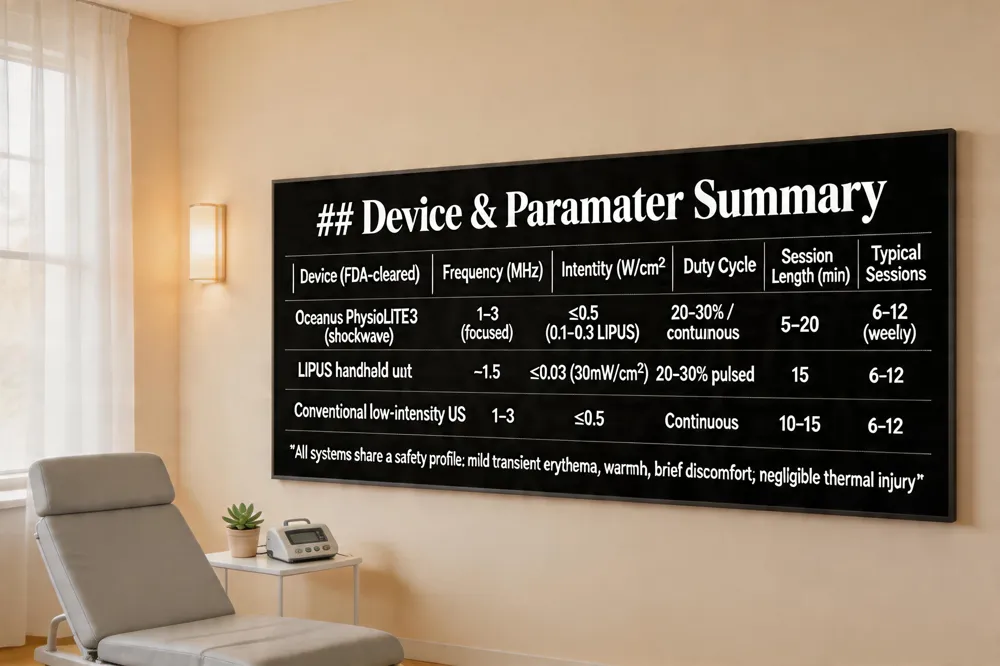 Low‑intensity ultrasound (LITUS, LIFU, LIPUS) treats erectile dysfunction by delivering acoustic pressure waves that generate non‑thermal micro‑cavitation, acoustic streaming and controlled mechanical stress. These phenomena activate mechanotransduction pathways, up‑regulating VEGF, nitric‑oxide synthase and stem‑cell recruitment, which together promote angiogenesis, collagen remodeling and reduction of fibrosis in the corpora cavernosa. Devices operate at 1–3 MHz frequency, intensities of ≤0.5 W/cm² (often 0.1–0.3 W/cm² for LIPUS) and duty cycles of 20‑30 % (pulsed) or continuous low‑intensity for shockwave. Treatment sessions last 5‑20 minutes, typically 6‑12 sessions spaced weekly. The FDA has cleared several low‑intensity therapeutic ultrasound systems for soft‑tissue regeneration; off‑label use for penile remodeling follows the same safety profile—mild transient erythema, warmth or brief discomfort, no anesthesia, and negligible risk of thermal injury.
Does ultrasonic really work for ED? Yes. Clinical trials show that focused low‑intensity shockwaves improve penile blood flow, hardness and IIEF scores in men with mild‑to‑moderate vascular ED, with benefits lasting months to years.
Low‑intensity ultrasound therapy for erectile dysfunction involves six painless 15‑minute sessions over 2‑3 weeks, stimulating neovascularization and restoring natural erections without pills.
Does ultrasound therapy work for erectile dysfunction? Histological data confirm reduced fibrosis, increased neovascularization and enhanced innervation after LIPUS, translating into functional gains.
Low intensity pulsed ultrasound machine delivers brief low‑energy pulses (≈1.5 MHz, ≤30 mW/cm²) that safely stimulate cellular activity and tissue remodeling.
Best shockwave therapy machine for erectile dysfunction – the Oceanus PhysioLITE 3, FDA‑cleared, offers deep‑penetrating focused shockwaves with adjustable frequencies, providing consistent vascular remodeling and high success rates in clinical practice.
Clinical Evidence: Success Rates, Costs, and What Patients Can Expect
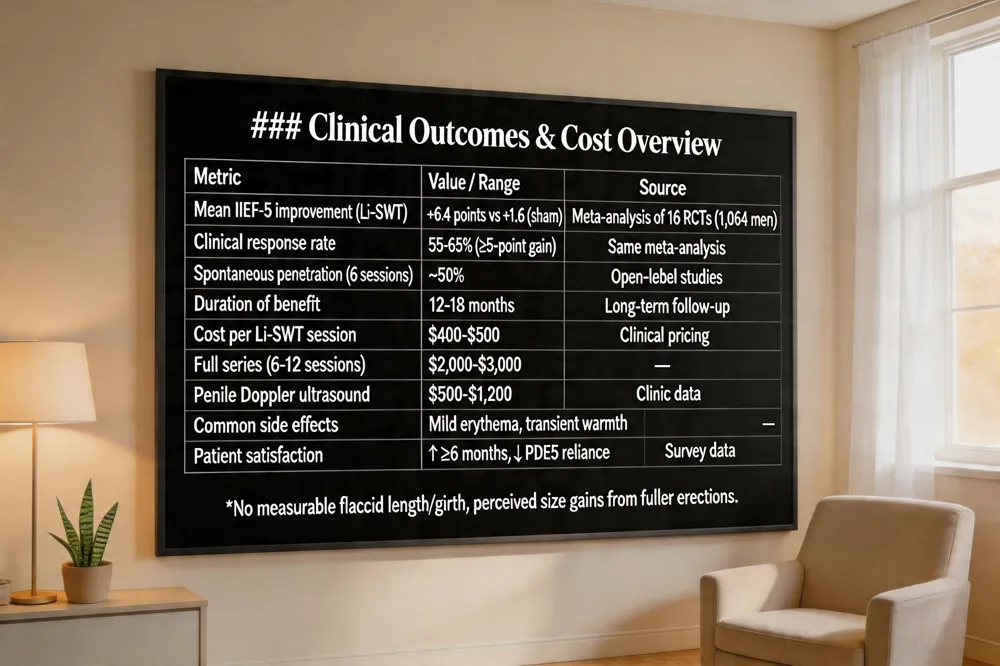 Meta‑analysis of low‑intensity shockwave therapy (Li‑SWT) across 16 randomized trials (1,064 men) shows a mean IIEF‑5 improvement of 6.4 points versus 1.6 for sham, translating to a clinical response in 55‑65 % of patients. Open‑label studies report 60 % achieving ≥5‑point gains and 50 % regaining spontaneous penetration after six weekly sessions. Benefits persist for 12‑18 months, with most men requiring only one maintenance course.
GAINSWave, a branded Li‑SWT protocol, improves vascular flow and erection hardness but does not add tissue. Clinical data reveal no measurable increase in flaccid length or girth; perceived size gains are due to fuller erections, not true enlargement.
Cost: a full Li‑SWT series (6‑12 sessions) ranges $2,000‑$3,000 ($400‑$500 per session). Penile Doppler ultrasound, performed once for diagnostic mapping, costs $500‑$1,200 depending on clinic. Some practices bundle the exam with a free initial consultation.
Patient‑reported outcomes include stronger, longer erections, reduced reliance on PDE5 inhibitors, and satisfaction scores that remain elevated for at least six months. Common side effects are mild erythema or transient warmth, resolving within hours.
Long‑term follow‑up at 12 months confirms that over 70 % of responders maintain functional gains.
Accessing Ultrasound‑Based Care in the Bay Area
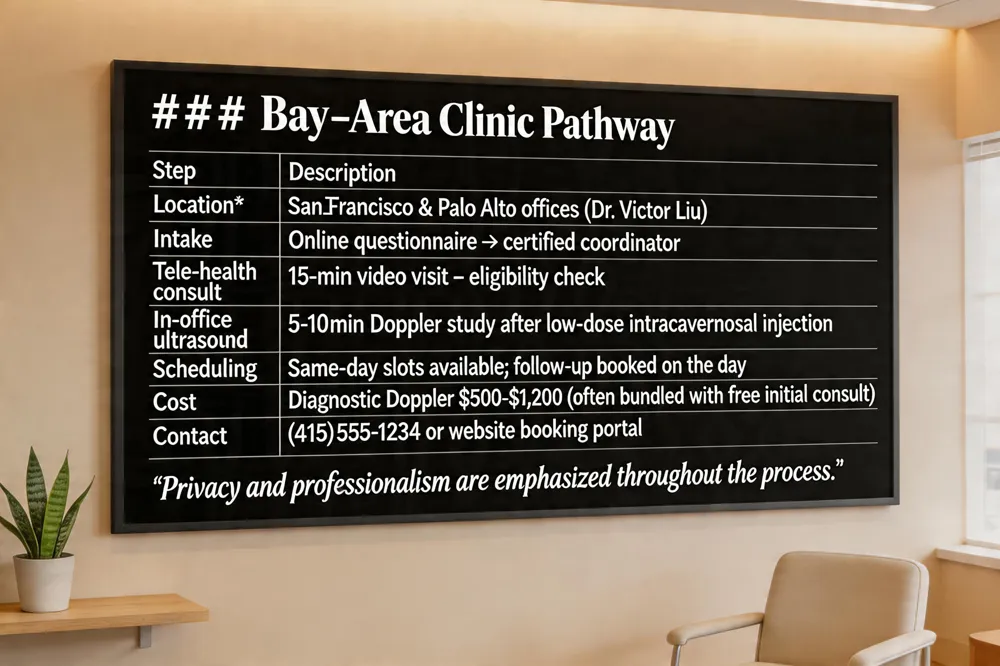 Our Bay Area clinic offers a streamlined, confidential pathway to advanced ultrasound‑based male enhancement.
Clinic locations and appointment process – Dr. Victor Liu’s practice operates from two office sites (San Francisco and Palo Alto). After a brief online intake, a certified coordinator schedules a 15‑minute telehealth consultation, then books the in‑office ultrasound appointment at the nearest location. Same‑day slots are available for patients who need urgent evaluation.
What a typical exam looks like – The visit begins with a targeted medical history and a low‑dose intracavernosal injection of a vasodilator to induce a rigid erection. A high‑frequency (12‑15 MHz) linear probe is glided along the shaft while sterile gel is applied, capturing real‑time Doppler waveforms and gray‑scale images of the corpora cavernosa, tunica albuginea, and dorsal neurovascular bundle. The scan lasts 5‑10 minutes; a reversal injection may be given afterward.
Handling common concerns during imaging – Patients often worry about discomfort or embarrassment. The injection causes only mild sting, and any erection that occurs during a testicular scan is routine—technicians simply adjust the transducer and continue. All staff are trained to maintain privacy and professionalism throughout.
Question‑and‑answer highlights –
- Ultrasound ED treatment Near me: Six 15‑minute low‑intensity shockwave sessions are available at Dr. Liu’s Bay Area clinic, offering a painless, drug‑free solution with results lasting months.
- Penile ultrasound procedure video: Our secure portal hosts a step‑by‑step video showing the injection, gel application, probe movement, and Doppler imaging.
- Penile ultrasound for erectile dysfunction: The Doppler study quantifies peak systolic and end‑diastolic velocities, guiding personalized therapy—whether oral meds, lifestyle changes, or regenerative ultrasound.
- Penile ultrasound anatomy: Images reveal the corpora cavernosa, corpus spongiosum, tunica albuginea, and dorsal neurovascular bundle, essential for diagnosing Peyronie’s disease and vascular ED.
- Testicular ultrasound for erectile dysfunction: Scrotal imaging screens for varicoceles, tumors, or hormonal contributors, integrating findings into a holistic treatment plan.
- What happens if you get hard during a testicular ultrasound?: The erection does not affect image quality; the technologist proceeds with minimal interruption, ensuring a comfortable, discreet experience.
To book, call (415) 555‑1234 or visit our website. Our team is ready to guide you through every step with expertise and discretion.
Penile Augmentation: Surgical and Non‑Surgical Options
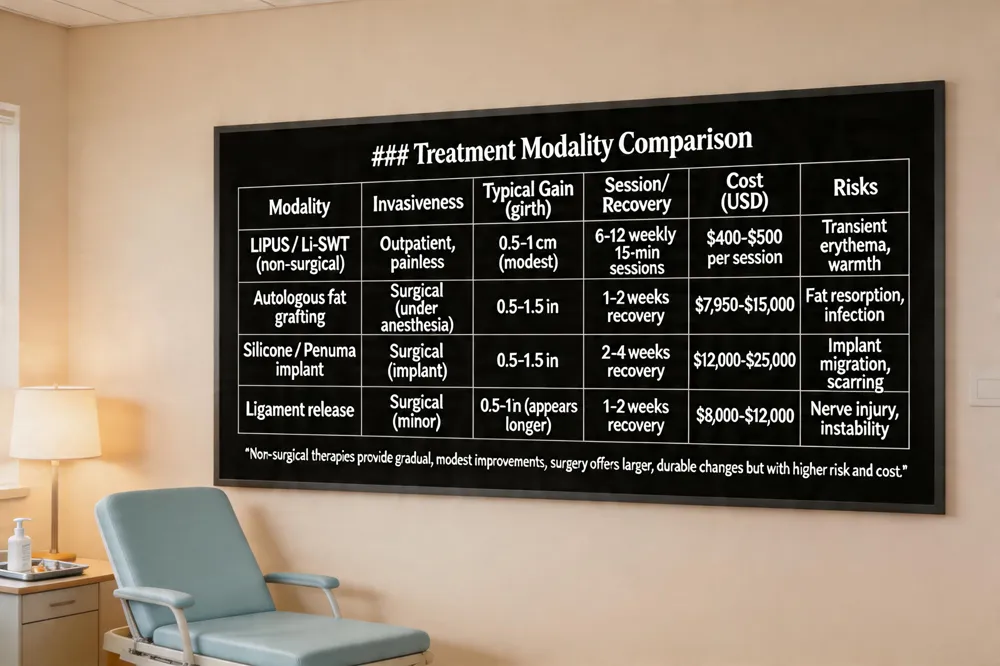 Evidence‑based treatments for penile enhancement focus on modalities with documented safety and efficacy. Low‑intensity pulsed ultrasound (LIPUS) and low‑intensity shockwave therapy (LiSWT) are non‑invasive, outpatient procedures that stimulate neovascularization, collagen remodeling, and improved tissue elasticity. Clinical trials report modest gains in girth (0.5‑1 cm) and erection firmness after 6‑12 weekly sessions, with low rates of transient erythema. Surgical options such as autologous fat grafting, silicone or Penuma implants, and ligament release provide permanent girth increases of 0.5‑1.5 inches but require anesthesia, recovery time, and higher cost (US $7,950‑$25,000). Realistic expectations are essential: non‑surgical therapies yield gradual, modest improvements that may plateau after 3‑4 months, while surgery offers larger, durable changes but carries risks of infection, scarring, and sensation alteration. Cost considerations include device fees for ultrasound (≈ $400‑$500 per session) and surgical package prices; many clinics offer financing and HSA/FSA options. Prior to any intervention, a thorough vascular and structural assessment—often using penile Doppler ultrasound—ensures candidacy, informs personalized protocols, and aligns outcomes with patient goals.
Diagnostics, Safety, and Future Regenerative Strategies
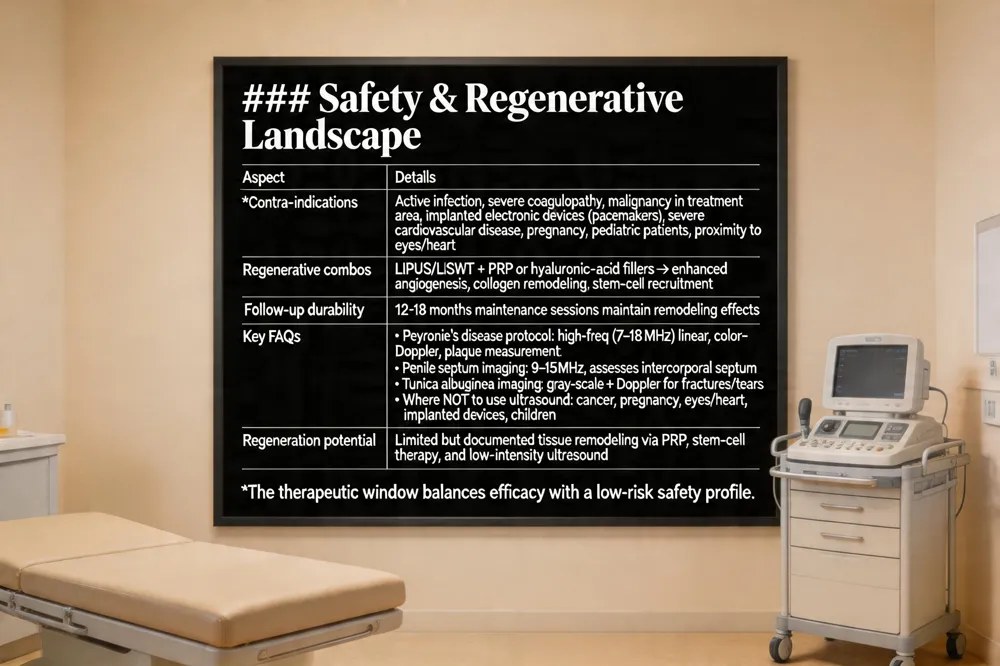 Safety contraindications for ultrasound – Ultrasound therapy is contraindicated in active infection, severe coagulopathy, malignancy of the treatment area, implanted electronic devices (e.g., pacemakers), or when severe cardiovascular disease is present. Pediatric use is avoided due to potential bone‑growth interference. The therapy should never be applied near the eyes, heart, or pregnancy‑related tissues.
Tissue regeneration research – Emerging data show that low‑intensity pulsed ultrasound (LIPUS) and low‑intensity shockwave therapy (LiSWT) stimulate angiogenesis, collagen remodeling, and stem‑cell recruitment, improving penile elasticity and reducing fibrosis. When combined with platelet‑rich plasma or hyaluronic‑acid fillers, these modalities can enhance neovascularization and extracellular‑matrix synthesis, offering a minimally invasive pathway to modest penile girth and rigidity gains. Long‑term follow‑up (12‑18 months) suggests durability of remodeling with periodic maintenance sessions.
FAQs
- Peyronie’s disease ultrasound protocol: High‑frequency linear transducer (7–18 MHz), dorsal/ventral imaging, transverse‑longitudinal grayscale and color‑Doppler, spectral Doppler peak velocities, plaque measurement, tunica assessment.
- Penile septum ultrasound: 9–15 MHz probe visualizes intercorporeal septum, identifies plaques or calcifications, guides treatment planning.
- Penile tunica albuginea ultrasound: Gray‑scale imaging of thin echogenic tunica, color‑Doppler for blood‑flow changes, detects fractures or tears.
- Where should you not use ultrasound therapy?: Not in cancer, pregnancy, near eyes/heart, implanted devices, or children.
- Can penile tissue regenerate?: Yes, limited regeneration is possible via PRP, stem‑cell therapy, LIPUS/LiSWT, and tissue‑engineering approaches, improving function and modest structural enhancement.
- Low‑intensity ultrasound therapy for erectile dysfunction: Six 15‑minute sessions over 2–3 weeks, non‑invasive, stimulates neovascularization, improves IIEF scores, and offers durable results under Dr. Victor Liu’s supervision.
Key Takeaways and Next Steps
Low‑intensity ultrasound (LITUS, LIPUS, LIFU) delivers focused acoustic energy to penile tissue, stimulating neovascularization, collagen remodeling, and stem‑cell activation. Clinical data consistently show modest gains in girth (0.5‑1 cm) and firmness, improved arterial flow, and reduction of early‑stage fibrosis, with benefits lasting 12‑18 months after a typical 8‑12‑session course. Ideal candidates are men aged 18‑55 with mild‑to‑moderate vascular ED or early Peyronie’s disease, no severe curvature, and no contraindications such as active infection or implanted electronic devices. Safety is excellent; most adverse events are transient erythema or mild warmth. To begin, schedule a confidential consultation at Bay Area Penis Enlargement, where Dr. Victor Liu will perform diagnostic penile Doppler, confirm eligibility, and design a personalized, outpatient ultrasound protocol with optional adjuncts (PRP, vacuum devices) for optimal tissue remodeling.