

Why Privacy Matters in Male Genital Enhancement
Patient trust is the cornerstone of any male genital enhancement program. When men know their intimate health information—diagnoses, procedural details, photos, and billing data—will stay confidential, they are more likely to share accurate medical histories, follow pre‑ and post‑operative instructions, and achieve optimal outcomes. The regulatory backdrop reinforces this need for discretion. HIPAA’s Privacy and Security Rules require clinics to implement administrative, physical, and technical safeguards, including role‑based access controls, encryption of data at rest and in transit, and audit logs for all electronic protected health information (ePHI). The 21st Century Cures Act and the 2024 updates to the HIPAA Privacy Rule further protect reproductive‑health care, mandating that patient access to records not create barriers while prohibiting unauthorized disclosures. Digital‑health security fundamentals now extend beyond the clinic walls: multi‑factor authentication, biometric verification, and adaptive authentication protect patient portals; TLS/SSL encryption secures web forms and tele‑health video streams; and Business Associate Agreements ensure that third‑party vendors uphold the same standards. Together, these safeguards create a privacy‑first environment that encourages candid communication, minimizes insider and cyber threats, and upholds the legal and ethical obligations of clinics offering sensitive enhancement procedures.
Core Legal Safeguards that Protect Your PHI

HIPAA Privacy and Security Rules – HIPAA requires covered entities to implement administrative, physical, and technical safeguards for protected health information (PHI). Encryption, multi‑factor authentication, role‑based access controls, and audit logs are mandatory technical measures. Failure to comply can result in civil and criminal penalties, and breaches cost U.S. clinics an average of $9.7 million per incident.
21st Century Cures Act Access – The Act mandates that patients receive their health data without unnecessary barriers. Clinics must provide electronic access (e.g., secure patient portals) while ensuring that digital identity solutions—such as biometric or adaptive authentication—comply with both HIPAA and the Cures Act.
Reproductive‑health attestation requirements –
- HIPAA reproductive health attestation – A signed statement confirming that a PHI request is not for a prohibited purpose (e.g., investigating lawful reproductive care). Entities must verify the attestation’s completeness before disclosure; false statements can trigger civil and criminal liability.
- Reproductive health attestation form – The form contains only required language and cannot be bundled with unrelated documents. It certifies the requestor’s good‑faith basis and is used when state law or internal policy demands it, even after the 2025 court decision limited the federal requirement.
- HIPAA Privacy Rule Final Rule to Support reproductive health care privacy – The 2024 Final Rule presumes reproductive care is lawful unless a provider has actual knowledge to the contrary and requires written attestations for health‑oversight, judicial, or administrative disclosures. Though a 2025 court decision vacated many provisions, the rule’s core privacy protections remain in force, and clinics must continue to follow them while monitoring evolving state requirements.
Digital Identity and Access Controls in the Clinic

Modern male‑enhancement clinics rely on layered digital‑identity safeguards to protect highly sensitive health information. Biometric authentication and MFA are now standard in U.S. healthcare; fingerprint, facial‑recognition, and iris scans combined with multi‑factor authentication (MFA) reduce credential‑theft risk and meet HIPAA‑mandated technical safeguards (Censinet; Filkins et al., 2016). Role‑Based Access Control (RBAC) limits data visibility to staff whose duties require it, curbing insider threats and satisfying the “minimum necessary” principle of the HIPAA Privacy Rule (HHS, 2024). FHIR APIs with OAuth 2.0 and SMART on FHIR enable secure, interoperable data exchange across providers while encrypting PHI in transit, preserving patient confidentiality during referrals or tele‑health visits (Censinet).
Data privacy and security in digital health – Clinics must comply with HIPAA, the 21st Century Cures Act, and state statutes (e.g., CCPA). Robust TLS/SSL encryption, regular vulnerability scans, and AI‑driven anomaly detection protect ePHI from breaches that average $9.7 million per incident (Censinet. Transparent privacy notices and patient‑consent workflows foster trust, allowing patients to share intimate details confidently.
Security and privacy of technologies in health information systems: a systematic literature review – Emerging tools such as blockchain audit trails, IoT devices, and cloud storage expand the attack surface. The review emphasizes three core dimensions: secure access control, protected data sharing, and safe storage. Implementing encryption, consent‑management frameworks, and interoperable standards (FHIR) is essential, while balancing scalability and usability.
Security and privacy in digital healthcare systems: challenges and mitigation strategies – Threats include ransomware, phishing, and unauthorized data egress. Mitigation requires end‑to‑end TLS, MFA, regular staff training, privacy‑by‑design, and adherence to HIPAA and GDPR. Continuous monitoring, audit logs, and incident‑response plans ensure rapid breach containment and preserve patient confidence in sensitive procedures such as genital enhancement.
Patient Identification and Verification Protocols

Accurate patient identification is a cornerstone of safe care, especially for sensitive procedures such as male genital enhancement. The Joint Commission mandates a two‑identifier verification process, and HIPAA requires safeguards that limit access to protected health information (PHI).
Patient identification guidelines
Before any evaluation or procedure, staff must confirm at least two independent identifiers—typically the patient’s full legal name and date of birth—against the electronic health record (EHR). Wristbands or barcode labels must display these identifiers, and staff must read them aloud and verify them with the patient or a legally authorized representative. In cases where the patient cannot speak, a photo ID, unique clinic number, or caregiver confirmation is required. All specimens, imaging studies, and medication orders are labeled with the same identifiers at the point of collection; any mismatch must be resolved before care proceeds.
How to prevent patient identification errors
Implement a two‑step verification workflow: first check name and DOB, then confirm the medical‑record number or barcode on the wristband. Use color‑coded bands, RFID tags, or biometric methods (fingerprint, facial recognition) to enhance accuracy. Integrated EHR safety checks flag mismatches in real time. Conduct regular audits, staff training, and promote a "stop‑the‑line" culture where any team member can pause care to re‑verify identity without fear of reprisal.
Patient identification in healthcare
Consistent use of two identifiers prevents medication, transfusion, laboratory, and procedural errors. Modern clinics augment verification with biometric and RFID technology, ensuring that only authorized personnel can access PHI. When patients share common names or lack reliable ID, additional verification such as photo confirmation or caretaker involvement is essential. These practices uphold HIPAA privacy, reduce insider threats through role‑based access control, and protect the confidentiality of sensitive enhancement procedures.
Clinical Privacy: From Records to Communication

Encryption of PHI is the foundation of a clinic’s privacy program. All electronic health records are stored with AES‑256 encryption, and any data leaving the network—whether via patient portals, email, or API calls—is protected by TLS 1.3/HTTPS. This ensures that PHI remains unreadable both at rest and in transit, meeting HIPAA’s technical safeguard requirements.
Secure patient portals and messaging platforms provide patients with a private, encrypted channel for accessing test results, scheduling appointments, and communicating with clinicians. Multi‑factor authentication (MFA) and role‑based access controls (RBAC) limit portal access to the minimum necessary information, reducing insider‑threat risk and complying with the Security Rule.
Business Associate Agreements (BAAs) formalize the responsibility of third‑party vendors—such as cloud hosts, billing services, and analytics platforms—to protect PHI. Clinics must verify that each associate implements the same encryption standards, MFA, and audit‑log monitoring before any data exchange occurs.
Patient privacy examples
Clinics protect patient privacy by storing electronic health records on encrypted, password‑protected systems that only authorized staff can access. They limit telephone messages to the minimum necessary information and follow each patient’s preferred contact instructions. Before sharing any medical records with third parties, they obtain a signed, specific authorization that outlines exactly what information will be disclosed. A clear Notice of Privacy Practices is provided to every patient, and a written acknowledgment is collected prior to any intake or treatment. Any audio or visual recordings made for educational purposes are performed only after the patient gives explicit consent and the recordings are stored securely.
How does the clinic ensure patient confidentiality?
Our clinic adheres strictly to HIPAA and other federal privacy regulations, employing 256‑bit encryption for all electronic health records and any data transmitted over public networks. Access to patient information is limited to authorized staff members who must use multi‑factor authentication and role‑based permissions, ensuring that only the minimum necessary data is visible for each task. Before any disclosure of protected health information, we obtain written informed consent and provide patients with a clear notice of their privacy rights. The clinic conducts regular risk assessments, third‑party audits, and continuous staff training on privacy‑by‑design principles to detect and prevent insider threats or human error. Additionally, we de‑identify patient data for research or quality‑improvement purposes, further safeguarding confidentiality while maintaining high standards of care.
What can medical facilities do to protect patient information?
Medical facilities can safeguard patient information by employing strong encryption for data both at rest and in transit, including end‑to‑end encryption to keep records locked while they move across networks. They should adopt recognized cybersecurity frameworks such as NIST or ISO standards to guide risk assessments, implement controls, and maintain compliance with regulations like HIPAA. Role‑based access controls and multi‑factor authentication limit data exposure to only those staff members who need it, and require multiple credentials for entry. Continuous monitoring tools, powered by AI and machine‑learning analytics, detect anomalous activity and potential breaches in real time. Finally, emerging technologies like blockchain can create tamper‑proof, decentralized logs of patient records, adding an extra layer of integrity and protection against unauthorized alterations.
Special Considerations for Male Genital Enhancement
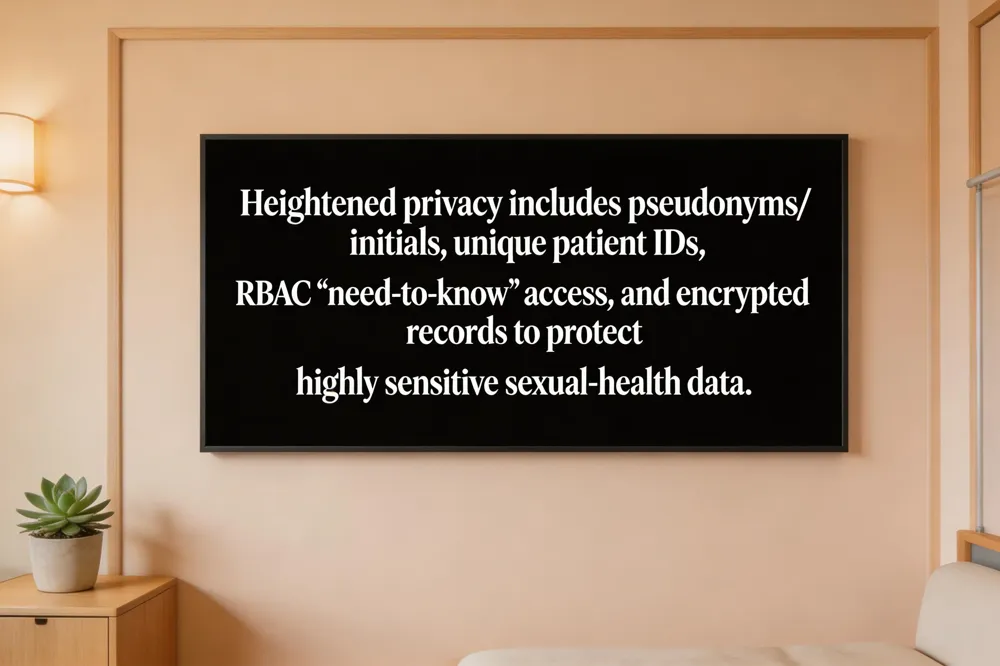
Sensitive procedures such as penile enhancement demand heightened privacy safeguards. U.S. clinics must comply with HIPAA, which requires administrative, physical, and technical safeguards—including multi‑factor authentication, role‑based access controls, and encryption of data in transit and at rest—to protect protected health information (PHI) (HIPAA Privacy Rule, HHS.gov; Censinet RiskOps™. To further reduce exposure, many clinics assign a unique patient identifier and permit the use of pseudonyms or initials on internal documents, billing statements, and appointment reminders, separating personal identifiers from clinical notes (lexisNexis Risk Solutions; Non‑surgical Penis Enhancement). This "need‑to‑know" approach limits staff access to only the data necessary for care (RBAC.
How many inches does Penuma add? The Penuma implant typically adds roughly 1.5 to 2.5 inches to penile length, with an additional 0.5 to 1.5 inches in girth. Results vary based on baseline size, tissue elasticity, and post‑operative care (Penile Enlargement with Fillers).
Will a sexual health clinic tell my wife? Clinics must keep all discussions and test results confidential and will not disclose them without your explicit permission, except when required by law for serious safety threats (HIPAA Privacy Rule, HHS.gov).
Can you break confidentiality for STI? STI status remains private unless a serious risk of harm to self or others is identified or a legal reporting duty applies; in such cases, the clinic will discuss the situation with you before any disclosure (HIPAA Privacy Rule, HHS.gov).
Patient Rights, Access, and Legal Recourse

Under the HIPAA Privacy Rule, patients have a clear set of rights that protect their protected health information (PHI). They may request access to their records in the format of their choice, ask for corrections of inaccurate data, and obtain an accounting of disclosures for the past six years. When a clinic receives a written request, it must verify the patient’s identity—using multi‑factor authentication or biometric authentication where feasible—and respond within 30 days, with a possible 30‑day extension if a written notice is provided.
Exceptions to the need for patient consent are narrow. HIPAA Privacy Rule prohibits PHI disclosure without patient authorization except limited circumstances. Law‑enforcement agencies, courts, and public‑health authorities may receive PHI without a signed authorization when a legal process, subpoena, or public‑health emergency is involved. Providers may also share information with other health‑care entities for treatment, payment, or health‑care operations, and they must report abuse, neglect, or threats of violence to appropriate authorities. A personal representative (parent, guardian, or health proxy) can access records on the patient’s behalf.
If a patient believes their privacy has been violated, they can file a complaint with the clinic’s privacy officer, the health plan, or the HHS Office for Civil Rights. OCR investigations can result in corrective actions, civil fines, or criminal penalties, reinforcing the importance of robust administrative, technical, and physical safeguards—including encryption, secure HTTPS, and staff training—to maintain confidentiality in both traditional and digital care settings.
Future‑Proofing Privacy: Emerging Technologies and Ongoing Audits

Our clinic continuously upgrades privacy safeguards through AI‑driven anomaly detection, blockchain audit trails, and regular risk analysis with incident‑response planning. AI monitors system logs in real time, flagging unusual access patterns that could indicate credential compromise or insider misuse. Blockchain provides immutable audit logs for every PHI transaction, ensuring a tamper‑proof record of who accessed what data and when, simplifying compliance reporting and forensic investigations. Routine risk assessments identify emerging threats, while a documented incident‑response protocol guarantees rapid containment, notification, and remediation within the 60‑day HIPAA breach‑notification window.
How can the security of patient information be enhanced? Implement end‑to‑end encryption, multi‑factor authentication, frequent vulnerability scans, and ongoing staff training on HIPAA and data‑handling best practices.
Privacy, security and confidentiality in healthcare All PHI is protected by encrypted EHRs, strict access controls, and regular privacy training. Only clinicians directly involved in a patient’s care may view records; disclosures for treatment, payment, or operations occur without additional consent. Physical privacy during examinations and any visual documentation require explicit patient permission.
Patient confidentiality definition Patient confidentiality is the legal and ethical duty to keep personal health information from unauthorized access or disclosure, limiting access to those directly involved in care and adhering to HIPAA’s privacy and security standards.
Your Privacy Is Our Priority
At our clinic we align every data‑handling practice with the HIPAA Privacy and Security Rules, the 21st Century Cures Act, and state‑level statutes such as California’s CCPA. All electronic protected health information (ePHI) is encrypted at rest with AES‑256 and in transit using TLS 1.3, while access is limited by role‑based controls and multi‑factor authentication that includes biometric verification. FHIR APIs protected by OAuth 2.0 enable secure, interoperable exchange with labs and imaging centers without exposing patient identifiers. Continuous improvement is driven by automated risk assessments through Censinet RiskOps™, quarterly vulnerability scans, penetration testing, and mandatory staff training on phishing and privacy best practices. We maintain a current Notice of Privacy Practices, provide patients a secure portal that logs every access attempt, and honor requests for accounting of disclosures, data corrections, or pseudonymous billing. By offering transparent consent forms, opt‑in communication preferences, and real‑time audit reports, we empower patients to control their health information while receiving discreet, expert male genital enhancement care. Our compliance team conducts audits and updates encryption protocols to meet standards, ensuring every interaction—from appointment scheduling to post‑procedure follow‑up—remains trustworthy.