

Why Safety Matters
Penile implant surgery is a definitive solution for men with refractory erectile dysfunction, offering durable restoration of sexual function through inflatable or malleable prostheses. Because the procedure involves implantation of foreign material, meticulous attention to infection control, bleeding risk, and patient‑specific comorbidities is essential; a structured safety checklist—addressing pre‑operative clearance, medication management, antiseptic preparation, and postoperative monitoring—substantially reduces complications such as infection, hematoma, or device malfunction. Dr. Victor Liu, a double‑board‑certified plastic and general surgeon with over 25 years of experience, exemplifies the expertise required to execute this checklist. His practice incorporates comprehensive medical evaluation, antibiotic‑coated devices, a no‑touch technique, and individualized patient counseling, ensuring that each implant placement meets the highest standards of safety, efficacy, and patient satisfaction.
Pre‑operative Evaluation and Clearance
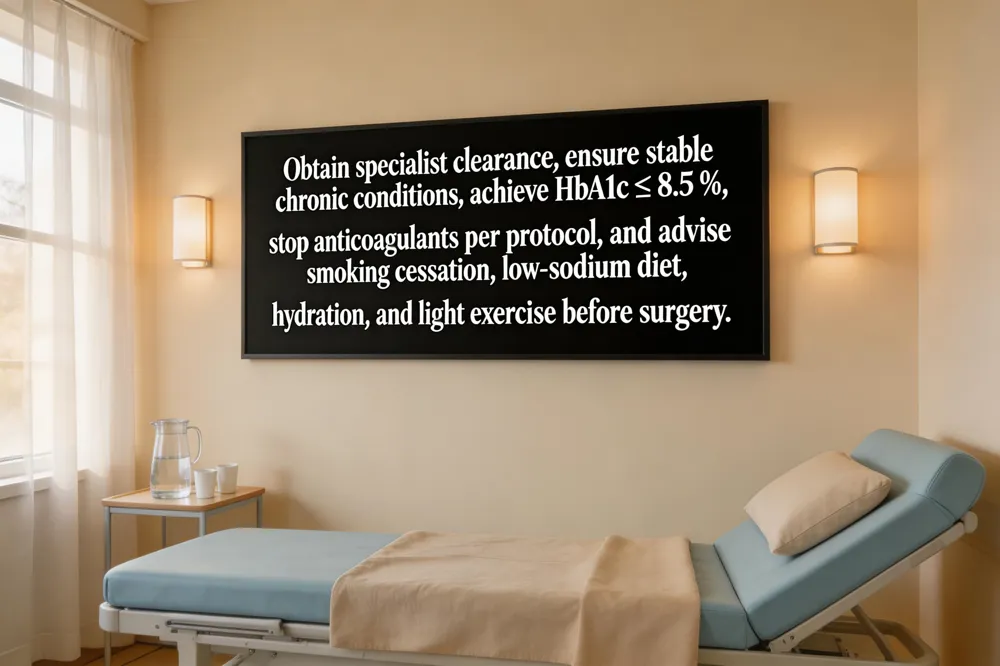
A thorough pre‑operative assessment begins with obtaining clearance letters from any specialist physicians—cardiologists, pulmonologists, or endocrinologists—who must confirm that chronic conditions are stable enough for anesthesia and surgery. Laboratory work includes a complete blood count, coagulation profile (PT/INR, aPTT), fasting glucose or HbA1c, and a urinalysis to rule out infection; diabetic patients should aim for HbA1c ≤ 8.5 % (or ≤ 10 % in some protocols) before proceeding. All medications are reviewed; aspirin, ibuprofen, and anticoagulants (warfarin, Pradaxa, Plavix) are stopped per the surgeon’s timeline (often 5‑10 days), while low‑dose aspirin may continue if indicated for recent myocardial infarction or stroke. Smoking cessation, a low‑sodium diet rich in leafy greens, adequate hydration, and light aerobic exercise (e.g., daily walking) are encouraged to improve immune function and healing. Patients are excluded if they have active infection (urinary, genital, or systemic), uncontrolled diabetes, severe cardiovascular disease, coagulopathy, or inability to operate an inflatable pump due to limited manual dexterity.
Who cannot get a penile implant? Men with active infection, uncontrolled diabetes, severe cardiac disease, significant coagulopathy, or poor tissue quality (e.g., severe peripheral vascular disease, recent pelvic radiation, spinal‑cord injury limiting dexterity) are not candidates until these issues are addressed.
What precautions should you take after penile implant? Avoid heavy lifting, vigorous activity, and sexual intercourse for 4‑6 weeks; keep the incision dry, wear supportive underwear, complete the prescribed antibiotic course, and monitor for fever, redness, swelling, or drainage.
Free men’s health clinic near me The Pacific Free Clinic in Santa Clara County offers walk‑in, no‑appointment visits for uninsured adults; while not specialized in penile implants, it can refer patients to board‑certified urologists. Dr. Victor Liu’s Bay Area practice provides comprehensive penile implant counseling and accepts many insurance plans, with discounted cash‑pay options for the uninsured.
Intra‑operative Sterility and Device Selection

A meticulous intra‑operative environment is essential for optimal penile implant outcomes.
No‑touch technique and double gloving – The surgeon uses a sterile drape that exposes only the penis and scrotum, then changes gloves and instruments before handling the prosthesis. This "no‑touch" approach, combined with double gloving, dramatically reduces bacterial contamination and lowers infection rates (≈0.4% vs. 1.7%).
Antibiotic prophylaxis and antimicrobial‑impregnated implants – A weight‑based dose of a first‑generation cephalosporin (e.g., cefazolin) is given within 60 minutes of incision, often supplemented with vancomycin for penicillin‑allergic patients. Modern devices are frequently coated with rifampin/minocycline or hydrophilic antibiotics, further decreasing infection risk.
Reservoir placement strategies – When the space of Retzius is unavailable (prior pelvic surgery or obesity), a submuscular pocket is preferred, using the two‑finger technique to avoid blind puncture and vascular injury.
MRI compatibility of modern devices – Most contemporary inflatable prostheses (AMS 700 series, Coloplast Titan, Zephyr ZSI 475) are MRI‑conditional up to 3 T; fully silicone malleables are MRI‑safe. Legacy ferromagnetic models (Duraphase, Omniphase) are not recommended without special stabilization.
Cylinder length and girth options – Cylinder lengths range from 10 cm to 15 cm with diameters of 9 mm to 13 mm, especially in three‑piece systems (AMS 700 LGX, Titan). Accurate measurement of flaccid and stretched penis ensures proper sizing, preserving natural appearance and minimizing complications.
Penile implant MRI safety list – Most modern inflatable implants are MRI‑conditional at 1.5 T or 3 T when manufacturer guidelines are followed; malleable devices with stainless‑steel cores are also MRI‑conditional. Verify model specifics with your surgeon before any scan.
Penile implant size options – Implants are available in multiple lengths (≈10‑15 cm) and girths (≈9‑13 mm). Dr. Victor Liu will match device dimensions to your anatomy for optimal comfort and function.
What does the coffin effect affect a penile implant? – The "coffin effect" describes a pseudo‑capsule that can restrict prosthesis expansion, potentially shortening the penis; early activation of the implant helps prevent this complication.
Post‑operative Recovery, Device Use, and Patient Education

After penile implant surgery patients remain in the hospital overnight and must arrange for a responsible adult to drive them home. Activity restrictions are strict: light movements are allowed for the first five days, and lifting more than 20 lb should be avoided for two weeks. Sexual activity, including masturbation, is deferred for 4–6 weeks to permit proper wound healing and to reduce the risk of infection or device migration.
Pump cycling schedule and safe frequency – Early activation of the prosthesis (often at the 3‑week follow‑up) helps prevent the “coffin effect,” a pseudo‑capsule that can limit expansion and cause apparent shortening. Surgeons typically recommend a gradual cycling regimen: gentle inflation/deflation 1–2 times per week for the first 3‑6 months, then a maintenance schedule of one to two cycles weekly. Excessive cycling can accelerate wear on cylinders, pump, and tubing, potentially shortening the implant’s lifespan.
Deflation technique – To deflate, locate the scrotal pump and press the two release bars (thumb on one side, finger on the opposite) firmly and continuously until fluid returns to the reservoir and the penis becomes flaccid. If resistance is felt, do not force the pump; contact the surgeon promptly.
Early activation to avoid coffin effect – Initiating gentle inflations soon after surgery (typically 3‑4 weeks) conditions the tissue, maintains corporal length, and reduces the chance of a restrictive capsule forming around the device.
Recognizing complications – Patients should monitor for signs of infection (redness, swelling, fever, drainage), mechanical malfunction (difficulty inflating/deflating, audible clicking), erosion (pain, loss of firmness), or urinary retention. Prompt medical evaluation is essential to preserve the implant and overall penile health.
Complications, Risk Management, and Long‑term Outcomes

Infection rates and risk factors
Current series report infection in 1‑3 % of primary inflatable implants, rising in revisions. Key risk factors include uncontrolled diabetes (HbA1c > 8.5 % or > 10 % in some protocols), immunosuppression, obesity, spinal‑cord injury, and active urinary or genital infection. Pre‑operative optimization—cessation of smoking, achieving HbA1c ≤ 8.5 %, and discontinuing anticoagulants per surgeon instructions—significantly lowers risk. Antibiotic‑coated devices (rifampin/minocycline or InhibiZone) and a strict “no‑touch” technique with chlorhexidine‑alcohol skin prep further reduce bacterial contamination.
Mechanical failure and revision surgery
Mechanical failure occurs in ~7‑11 % of implants over ten years, often due to pump or reservoir malfunction. When failure is identified, revision surgery is performed; the first implantation has the lowest infection risk, while revisions carry higher rates. Surgeons typically use a submuscular reservoir placement in patients with prior pelvic surgery to avoid bladder or bowel injury.
Erosion, shortening, and the coffin effect
Post‑operative penile shortening is reported by up to 54 % of patients, especially with pre‑existing Peyronie’s disease. The “coffin effect” describes a pseudo‑capsule that restricts cylinder expansion, worsening perceived loss of length. Early activation of the device (inflation at 4‑6 weeks) and daily cycling for the first year help maintain tissue elasticity and mitigate this effect.
Monitoring for signs of trouble
Patients should watch for redness, swelling, fever, drainage, rapid loss of firmness, or difficulty urinating. Prompt reporting enables early intervention—often a course of targeted antibiotics or, in severe cases, implant removal. Routine follow‑up at 1 week, 4‑6 weeks, and 3 months ensures wound healing, device function, and early detection of complications.
Is a sexual health clinic confidential?
Yes. Clinics operate under HIPAA and strict privacy policies; all information is protected unless a legal or safety exception applies.
What does a man do at a sexual health clinic?
He checks in, provides a medical and sexual history, undergoes STI testing and a genital exam, receives counseling, and gets a personalized treatment plan.
Men's Health clinic testosterone
The clinic orders a comprehensive hormone panel, then offers FDA‑approved testosterone therapy (injections, pellets, or oral agents) overseen by Dr. Victor Liu, with regular monitoring for safety and efficacy.
What does the coffin effect affect a penile implant?
It creates a restrictive capsule around the prosthesis, potentially limiting expansion and causing perceived shortening; early device cycling helps prevent it.
Penile implant video how it works
The video demonstrates incision, cylinder placement, reservoir and pump positioning, and the inflation/deflation mechanism that creates a natural‑looking erection.
Financial, Insurance, and Clinic Legitimacy Considerations

Penile‑implant surgery typically costs $10,000‑$20,000, encompassing the device, surgeon’s fees, anesthesia, facility charges, and post‑operative care. Most commercial insurers—including Medicare—cover the procedure when it is deemed medically necessary for erectile dysfunction, though co‑pays and prior‑authorization requirements vary. Many surgeons offer bundled package pricing $16k‑$19k and manufacturers provide co‑pay assistance or financing plans to lessen out‑of‑pocket burden.
Legitimate men’s‑health clinics are staffed by board‑certified specialists, such as board‑certified urologists or double‑board‑certified plastic surgeons (e.g., Dr. Victor Liu), and operate within accredited facilities. Transparency about credentials, success rates, evidence‑based protocols, and strict HIPAA compliance signals legitimacy. Clinics must also follow standard pre‑operative checklists, laboratory optimization, and postoperative follow‑up to ensure safety.
Insurance generally covers medically necessary evaluations and treatments for erectile dysfunction, hormone therapy, and reconstructive penile surgery, but elective cosmetic enlargement procedures are often excluded. Patients should verify coverage and obtain prior authorization before scheduling.
Penile implant cost – In the United States a penile‑implant procedure typically costs between $10,000 and $20,000, which includes the device, surgeon’s fees, anesthesia, facility charges and post‑operative care. Medicare and many private insurers will cover the surgery when it is deemed medically necessary for erectile dysfunction, although some plans still require substantial co‑pays or may deny coverage. For patients without insurance or with limited benefits, surgeons often offer a “package price” that bundles all fees at a discounted rate, usually ranging from $16,000 to $19,000. Manufacturers may also provide co‑pay assistance programs or financing options to help reduce out‑of‑pocket expenses. It is advisable to verify coverage with your insurer and discuss any financial‑aid programs during your consultation.
Are men's health clinics covered by insurance? – Most major health insurers will cover medically necessary services such as evaluation and treatment for erectile dysfunction, hormone therapy, and related surgical procedures when they are deemed essential for health. However, elective genital‑enhancement surgeries that are primarily cosmetic—like many penis‑enlargement operations—are typically excluded from coverage. Some plans may reimburse portions of minimally invasive or reconstructive procedures if they address a functional impairment, but patients must obtain a proper diagnosis and prior‑authorization. It’s essential to contact your insurance provider directly and confirm whether the specific service you’re considering is considered medically necessary. Always verify coverage before scheduling any appointment to avoid unexpected out‑of‑pocket costs.
Is men's health clinic legit? – A men’s health clinic is legitimate when it is run by physicians who hold appropriate board certifications—such as a urologist, endocrinologist, or a double‑board‑certified plastic surgeon like Dr. Victor Liu—and are affiliated with an accredited medical facility. The clinic should provide clear information about its staff’s credentials, disclose treatment success rates, and follow strict privacy and safety regulations (HIPAA, OSHA, etc.). Look for evidence of regular monitoring, including blood work and follow‑up appointments, especially for hormone or surgical procedures. Transparency about costs, evidence‑based treatment options, and the absence of overly aggressive marketing claims also signals legitimacy. If these criteria are met, you can have confidence that the clinic operates safely and ethically.
Free men's health clinic near me – If you are looking for a free men’s health clinic in the Bay Area, the volunteer‑run Pacific Free Clinic in Santa Clara County offers walk‑in, no‑appointment visits on Saturdays for uninsured adults and can provide basic primary care and referrals. While the clinic does not specialize in male sexual health or penile enhancement, it can connect you with a board‑certified urologist or plastic surgeon for further evaluation. For more specialized, low‑cost care focused on penile enlargement, erectile dysfunction, and aesthetic improvements, Dr. Victor Liu’s clinic in the Bay Area offers comprehensive consultations and minimally invasive procedures. The practice accepts many insurance plans and also provides discounted cash‑pay options for patients without coverage. Call the Pacific Free Clinic at 408‑555‑1234 or Dr. Liu’s office at 650‑555‑6789 to learn about current hours and eligibility.
Patient Outcomes, Satisfaction, and Visual Proof

Before‑and‑After Photography High‑resolution before‑and‑after images from board‑certified surgeons demonstrate the dramatic improvement in rigidity, girth, and aesthetic contour after penile implant placement. The pre‑operative photos typically show limited firmness and curvature, while the post‑operative images reveal a straight, firm shaft that mimics a natural erection. Each gallery entry notes the surgical technique—most often a minimally invasive penoscrotal or infrapubic incision, “no‑touch” handling, and antimicrobial‑coated devices—to emphasize safety and personalized sizing.
Implant Length and Girth Gains Clinical series and patient‑reported outcomes consistently show an average girth increase of 1–2 inches and a modest flaccid length gain of 0.5–1 inch after implantation. The device sits beneath the skin without altering the mechanics of a natural erection, providing a realistic, natural‑looking enhancement in both flaccid and erect states.
Typical Satisfaction Rates When performed by experienced urologists or plastic surgeons, satisfaction rates exceed 85 % for inflatable implants and 90 % for malleable devices. Patients report restored sexual confidence, improved partner satisfaction, and high overall quality‑of‑life scores. Long‑term studies show device survival of >94 % at five years when antibiotic‑impregnated prostheses and strict peri‑operative protocols are used.
Impact of Age on Candidacy Chronological age alone does not preclude implantation. An 80‑year‑old can be a candidate if cardiovascular health, coagulation status, and anesthesia risk are acceptable. Comprehensive pre‑operative evaluation—including CBC, coagulation profile, and control of diabetes or hypertension—guides device selection; many older patients prefer the simpler malleable prosthesis for ease of use.
Most Common Male Sexual Health Problem Erectile dysfunction (ED) remains the most prevalent issue, affecting >50 % of men aged 40‑70. It often signals underlying systemic disease, making early assessment and tailored therapy—from lifestyle modification to penile prosthesis implantation—critical for overall health.
Your Path to a Safe and Satisfying Outcome
A comprehensive safety checklist underpins every penile‑implant case. Patients first obtain clearance letters from any specialists, stop blood‑thinners as directed, and verify insurance coverage. Pre‑operative optimization includes smoking cessation, tight glycemic control (HbA1c ≤ 8.5 %), a balanced diet, and light aerobic exercise. On the day of surgery, a responsible adult must provide transportation, and the surgical team follows strict aseptic protocols—chlorhexidine‑alcohol skin prep, double gloving, a "no‑touch" technique, and weight‑based antibiotic prophylaxis. Dr. Victor Liu’s practice builds on this foundation with personalized care: each patient receives a detailed medical review, tailored counseling on device type, and a clear postoperative plan covering pain management, activity restrictions, and daily pump‑cycling when applicable. The team remains accessible via MyChart messaging or a dedicated phone line for any pre‑operative questions. Take the next step toward restored sexual function—schedule a confidential consultation with Dr. Liu today and experience expert, discreet care from start to finish.