

Overview of Scrotal Lift Surgery
A scrotal lift, or scrotoplasty, is a surgical reduction that removes excess scrotal skin and, when needed, tightens underlying muscle to elevate the scrotum to a more natural, youthful position. Ideal candidates are men whose scrotum has become sagging or low‑hanging due to aging, weight changes, varicocele or hydrocele surgery, or chronic stretching from activities such as cycling; motivations include pain, chafing, irritation, difficulty with clothing, and self‑consciousness about genital appearance. The procedure is performed on an outpatient basis, typically under local, twilight, or general anesthesia, and lasts 30‑60 minutes. Key benefits are relief from discomfort during daily activities and sexual intercourse, improved visual proportion of the penis, and a boost in confidence and quality of life.
Safety, Pain Management, and Surgeon Qualification

Scrotal lift (scrotoplasty) is a safe outpatient procedure when performed by a board‑certified plastic surgeon experienced in male genital aesthetics, such as Dr. Victor Liu or Dr. Boris Volshteyn. A thorough pre‑operative evaluation rules out active infections, testicular torsion, or other urgent conditions, thereby minimizing intra‑operative risk. Common intra‑ and postoperative complications are typically mild and include bleeding, infection, temporary swelling, bruising, asymmetry, and scar formation; serious adverse events are rare. Patients usually experience mild to moderate postoperative soreness, which can be managed with acetaminophen, ibuprofen, or a short course of prescription analgesics, and supportive garments to reduce tension. Most surgeons use absorbable sutures and place incisions along the natural raphe to conceal scarring. Insurance coverage is generally limited to medically necessary cases—such as functional pain after varicocele surgery or a buried penis—while purely cosmetic lifts are usually out‑of‑pocket. Selecting a qualified, board‑certified surgeon ensures optimal safety, natural results, and comprehensive postoperative care.
Procedural Techniques and Variations

A scrotal lift (scrotoplasty) removes excess skin and, when needed, subcutaneous tissue, then tightens and re‑positions the scrotal wall to create a firmer, higher‑riding sac. The surgery does not alter the testicles, preserving fertility and normal sensation. Incisions are most often placed along the median raphe to hide scars; severe cases may use a lower incision or a Z‑plasty to address asymmetry and improve tension distribution. Techniques range from skin‑only excision to combined skin‑and‑muscle tightening, with some surgeons adding plication of the dartos fascia for lasting support. The “Man Lift” variation focuses on low‑hanging scrotums and can relieve cord tension during biking or sitting. Anesthesia options include local, twilight (conscious sedation), or general anesthesia, selected based on case complexity and patient preference. Educational videos are available through Dr. Victor Liu’s secure patient portal and reputable medical platforms such as the American Society of Plastic Surgeons, offering narrated, step‑by‑step demonstrations of the procedure.
Recovery Protocols and Post‑Operative Care
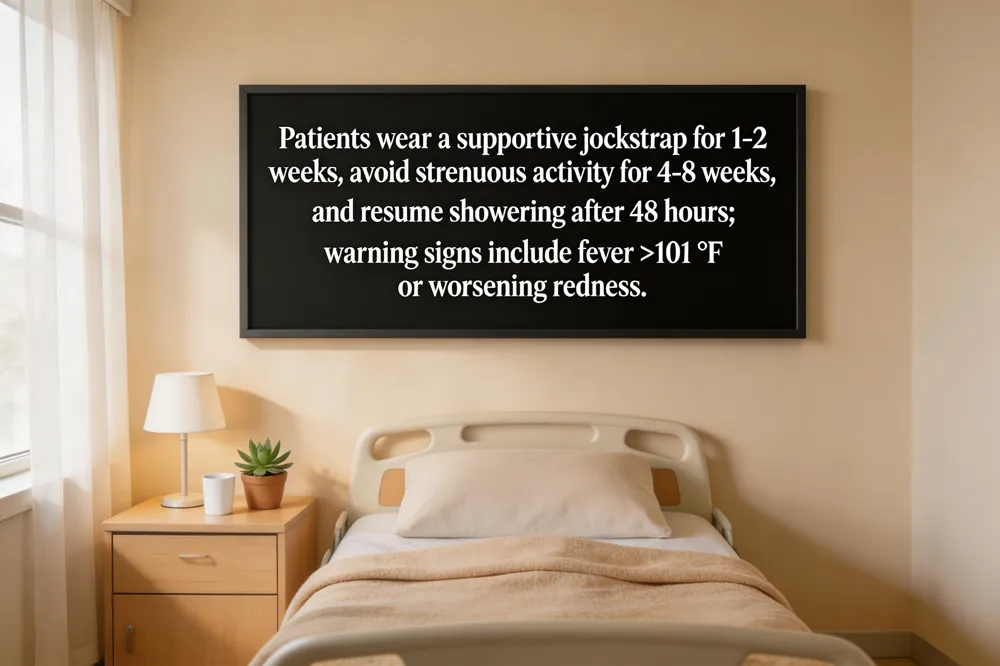
After a scrotal lift (scrotoplasty) patients should wear a supportive jockstrap or loose boxer briefs for the first 1‑2 weeks to protect incisions and maintain hygiene; daily gentle cleansing and a barrier ointment aid healing. Light walking is encouraged, but strenuous exercise, heavy lifting, and any pressure on the scrotum (e.g., sitting directly on it) must be avoided for 4‑8 weeks; sexual activity is typically postponed until 8 weeks post‑op. Swelling, bruising, and mild drainage are normal and usually subside within a month—manage them with intermittent ice packs, compression garments, and OTC pain relievers. Showering can resume after 48 hours, but baths, hot tubs, or swimming are prohibited for at least six weeks to reduce infection risk. Warning signs requiring immediate medical attention include fever > 101 °F, increasing redness, pain, or darkening of the incision site. For penoscrotal webbing correction, wear a snug jockstrap for two weeks, limit activity for 3‑4 weeks, and follow wound checks to ensure proper healing.
Visual Outcomes: Before‑and‑After Galleries

Before‑and‑after photographs are the most compelling way to illustrate the results of a scrotal lift. Typical aesthetic changes after skin excision include a dramatic reduction of excess,, a smoother, firmer scrotal contour, and a more balanced penis‑scrotum proportion that enhances overall genital appearance. Patients frequently report heightened confidence and relief from chafing, irritation, and discomfort during daily activities and exercise. Secure, HIPAA‑compliant photo libraries are maintained by board‑certified surgeons such as Dr. Victor Liu, Dr. Boris Volshteyn, and Dr. Remus Repta; these galleries can be reviewed during a private consultation and include age, ethnicity, and procedural details while preserving patient anonymity. The visual evidence demonstrates that a scrotal lift or scrotoplasty restores a youthful, natural shape, improves hygiene, and provides lasting functional and cosmetic benefits.
Financial Considerations: Costs, Insurance, and Financing

Scrotal lift surgery typically costs between $3,000 and $10,000, reflecting surgeon expertise, geographic location, and the amount of tissue removed. Major metropolitan markets such as Miami or New Jersey often fall in the $7,000‑$10,000 range, while smaller markets may be closer to $3,000. The fee generally includes the surgeon’s professional fee, anesthesia, and outpatient facility use.
Scrotox (Botox for the scrotum) is usually billed at $300‑$600 per session, with many clinics offering a full‑dose flat fee of $800‑$1,200. Prices vary by toxin amount, provider skill, and regional market differences.
Insurance may cover scrotoplasty when performed for medically necessary reasons—e.g., buried penis, lymphedema, or pain‑causing functional impairment—but purely cosmetic lifts are typically excluded. Coverage depends on the plan and state, so verification before surgery is essential.
Penoscrotal webbing correction costs $2,000‑$4,500, often bundled with pre‑op evaluation and follow‑up. Financing through partners such as United Medical Credit or CareCredit is commonly offered to spread out‑of‑pocket confidence n:
Scrotoplasty results in a firmer, smoother scrotum with reduced excess skin, improved comfort during daily activities and intimacy, minimal scarring, and enhanced confidence. The procedure does not affect fertility or testicular function.
Adjunctive Treatments, Locations, and Emerging Options
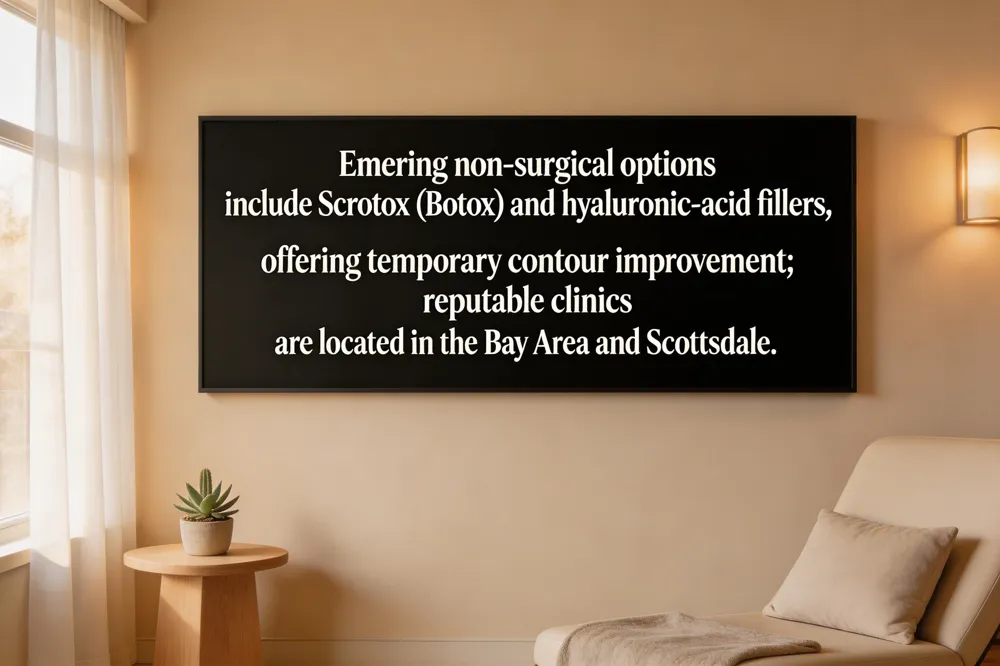
Scrotox and scrotal filler therapies are emerging alternatives to surgical lift. Patients typically observe a smoother, more relaxed scrotal contour within one‑to‑two weeks after Botox (Scrotox) injections, with full results by the third to fourth week, lasting three to six months; some reports note benefits up to twelve months. Hyaluronic‑acid fillers provide volume for roughly 12‑18 months before metabolism reduces the effect, prompting yearly touch‑ups for many men.
Testicular rejuvenation encompasses minimally invasive measures—topical minoxidil, laser hair removal, botulinum‑toxin to relax the dartos muscle—and surgical options such as absorbable suspension sutures for scrotal lift, aiming for a firmer, more proportionate appearance while preserving sensation and function.
For patients seeking scrotoplasty or scrotal lift, reputable clinics include Dr. Victor Liu’s Bay Area practice (San Francisco, Oakland) and Dr. Remus Repta in Scottsdale, AZ. Consultations can be arranged by phone (e.g., Liu’s office at (555) 123‑4567) or online request forms.
Scrotal reconstruction surgery uses tissue flaps or grafts to restore form after trauma, congenital defects, or conditions like buried penis, with Dr. Liu offering customized, minimally invasive techniques.
Putting It All Together – Your Path to Confidence
Scrotal lift surgery is a safe, outpatient procedure that removes excess skin and tightens the scrotal wall, typically performed under local or general anesthesia in 30‑60 minutes. Board‑certified surgeons use a midline raphe incision or Z‑plasty to minimize visible scarring, employ absorbable sutures, and often add muscle tightening or liposuction for lasting contour. Post‑op recovery is; most men resume work within four days, wear a garment for a week, and avoid heavy activity and sexual intercourse for six to eight weeks while swelling subsides. Dr. Victor Liu tailors each operation to anatomy, emphasizing comfort, natural results, and follow‑up. Call today to arrange a consultation and begin your journey toward greater confidence.