

Setting the Stage
In 2026 the male sexual‑health market has expanded beyond $10 billion, driven by rising awareness of erectile dysfunction, hormone imbalance, and size‑related anxiety. Patients now expect treatments that are both scientifically validated and tailored to their individual physiology, lifestyle, and psychological profile. Evidence‑based protocols—combining cardiovascular exercise, optimized nutrition, sleep hygiene, and targeted medical therapies such as PDE5 inhibitors, low‑intensity shockwave, and bioidentical testosterone—serve as the foundation for any intervention. Personalization is achieved through comprehensive hormone panels, genetic and AI‑driven analytics, and tele‑medicine platforms that monitor blood pressure, cholesterol, glucose, and nocturnal erections in real time. This integrated, data‑rich approach maximizes efficacy, minimizes risk, and respects the discreet, confidential needs of adult men seeking expert care.
Lifestyle Foundations and Hormonal Balance
 A robust cardiovascular system is the cornerstone of erectile health; regular aerobic exercise improves endothelial function and blood flow, while resistance training supports testosterone production and insulin sensitivity. Nutrition that supplies adequate protein, healthy fats, zinc, magnesium, vitamin D, and antioxidants further balances hormones and sustains nitric‑oxide pathways essential for erections. Consistent sleep (7‑9 hours) and stress‑management practices—mindfulness, counseling, and work‑life balance—prevent cortisol spikes that suppress testosterone and diminish arousal. Excess abdominal fat and metabolic syndrome accelerate the conversion of testosterone to estrogen, impair vascular health, and raise insulin resistance, all of which are strongly linked to erectile dysfunction. Addressing these factors creates a solid foundation for any medical or procedural intervention.
Why do so many guys have ED now? Modern lifestyle choices—sedentary habits, poor diet, smoking, excessive alcohol, chronic stress, and certain medications—damage blood vessels and nerves, while low testosterone, cardiovascular disease, diabetes, and obesity compound the problem.
Real way to increase your size at home The safest route is to enhance erectile quality through cardio exercise, balanced nutrition, adequate sleep, weight loss, and pelvic‑floor training. FDA‑cleared vacuum devices or traction systems can be used under professional supervision for modest gains.
What can I drink for a full erection? Beverages rich in nitric‑oxide precursors—beetroot, pomegranate, watermelon juices—and hydrating options like water, green tea, and hibiscus support vascular flow. Limit sugary sodas and alcohol.
What makes a man's thing bigger? Genetics and pubertal hormone surges set baseline size; healthy weight, proper hormone levels, and good vascular health preserve apparent length and girth. Non‑surgical devices offer temporary, modest changes, while surgical augmentation should be reserved for qualified surgeons after thorough evaluation.
What are the 7 P’s of sexual health? Partners, Practices, Protection (STI prevention), Past STI history, Pregnancy prevention, Permission (informed consent), and Personal identity form a comprehensive framework for personalized, safe sexual‑health care.
Non‑Surgical Enhancement and Device‑Based Therapies
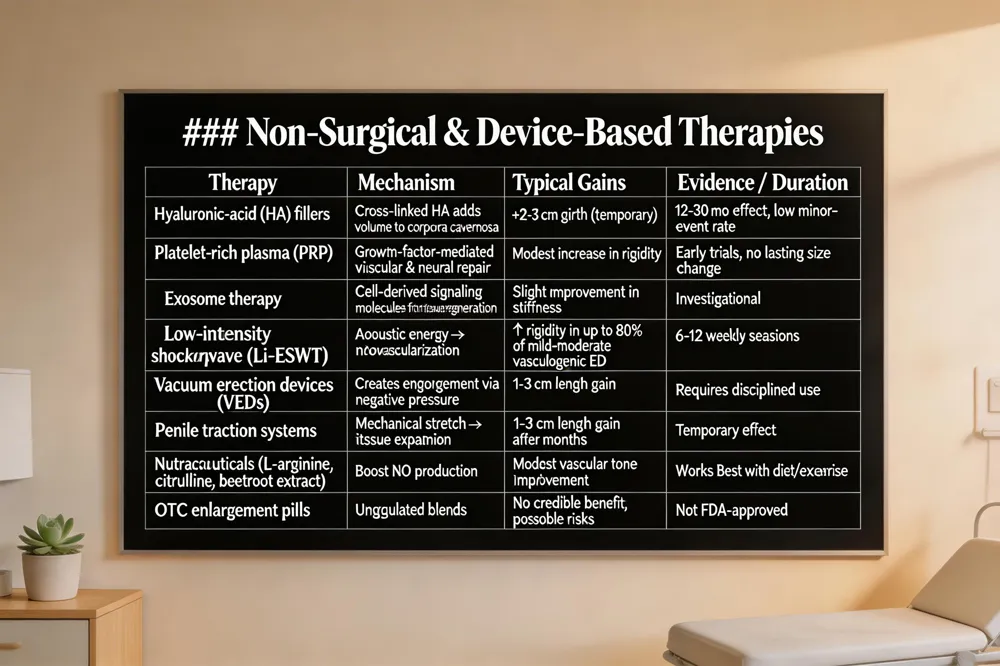 Injectable hyaluronic‑acid (HA) fillers are the most evidence‑based non‑surgical option for girth augmentation. Cross‑linked HA can add 2–3 cm of circumference, with effects lasting 12–30 months and a low minor‑event rate (bruising, mild inflammation). Repeat sessions are needed for maintenance. Platelet‑rich plasma (PRP) and exosome therapies are being studied for vascular and neural regeneration; early trials show modest improvements in erectile stiffness when combined with lifestyle optimization, but they do not produce lasting size changes. Low‑intensity extracoreoreal shockwave therapy (Li‑ESWT) delivers acoustic energy that promotes neovascularization and endothelial health, improving erectile rigidity in up to 80 % of men with mild‑to‑moderate vasulogenic ED after 6–12 weekly sessions. Vacuum erection devices (VEDs) and penile traction systems provide temporary engorgement and can yield 1–3 cm length gains after months of disciplined use, but they do not create permanent girth increase. Oral nutraceuticals such as L‑arginine, citrulline and beetroot extract support nitric‑oxide production and modestly enhance vascular tone when paired with regular exercise and diet. Over‑the‑counter enlargement pills lack FDA approval and credible data; many contain unregulated blends that may cause hormonal imbalance or cardiovascular risk, and reputable clinicians advise against their use.
Regenerative Medicine, Gene‑Based Therapies and Cutting‑Edge Pharmacology
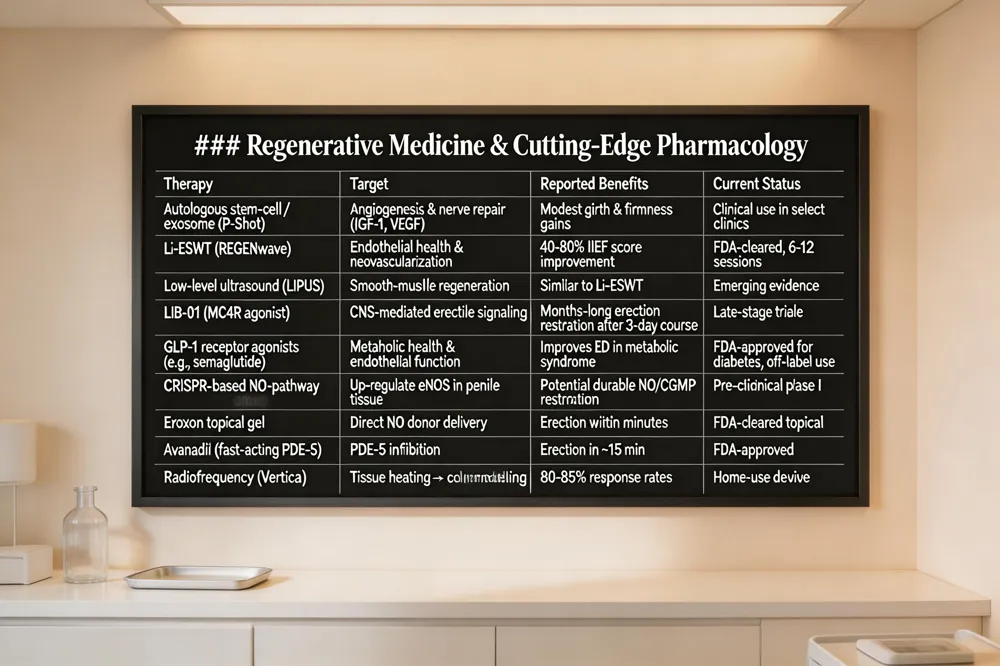 Advances in male sexual health now blend regenerative medicine, energy‑based devices, and novel pharmacology. Autologous stem‑cell and exosome injections, marketed as the “P‑Shot”, deliver growth factors (IGF‑1, VEGF) that promote angiogenesis and nerve repair, showing modest gains in penile girth and erectile firmness. Low‑intensity extracorporeal shockwave therapy (Li‑ESWT) and low‑level ultrasound (LIPUS) stimulate neovascularization and smooth‑muscle regeneration, with meta‑analyses reporting 40‑80% improvement in International Index of Erectile Function scores after 6‑12 weekly sessions. The melanocortin‑based drug LIB‑01, a CNS‑targeted MC4R agonist, has entered late‑stage trials and can restore erectile function for months after a brief three‑day course, offering an alternative for PDE‑5 non‑responders. GLP‑1 receptor agonists originally for diabetes, improve metabolic health, insulin sensitivity, and endothelial function, translating into measurable erectile benefits in men with metabolic syndrome. Emerging gene‑editing approaches (CRISPR‑Cas9) aim to enhance nitric‑oxide synthase expression in penile tissue, potentially providing durable restoration of the NO/cGMP pathway.
Latest developments in erectile dysfunction treatment: FDA‑cleared topical gel Eroxon delivers erections within minutes; fast‑acting oral avanafil works in 15 minutes; Li‑ESWT (REGENwave) and home‑use radiofrequency (Vertica) achieve 80‑85% response rates; combination protocols pair PDE‑5 inhibitors with shockwave or PRP to address vascular and neural health; LIB‑01 offers months‑long relief after a short regimen.
New ED treatments 2025: LIB‑01, extended‑half‑life PDE‑5 formulations, regenerative stem‑cell/PRP injections, over‑the‑counter gel Eroxon, and early nitric‑oxide pathway gene‑editing trials expand the therapeutic toolbox.
Research on erectile dysfunction highlights stem‑cell/PRP regenerative repair, Li‑ESWT efficacy up to 80%, GLP‑1 agonists improving vascular tone, and AI‑driven risk prediction models.
Best medicine for permanent erectile dysfunction: No oral drug cures ED permanently; PDE‑5 inhibitors remain first‑line, while lasting solutions include minimally invasive vascular reconstruction or penile prostheses combined with lifestyle optimization and hormonal balance.
नवीनतम ईडी उपचार में लॉ‑इंटेंसिटी शॉकववे थैरेपी, उन्नत पीडीई‑5 दवाएँ, और टेस्ट्रोस्टेरोन रिप्लेसमेंट को संयोजित किया जाता है; व्यक्तिगत परीक्षण के बाद उपचार योजना बनती है।
Surgical Augmentation, Implants and Permanent Girth Gains
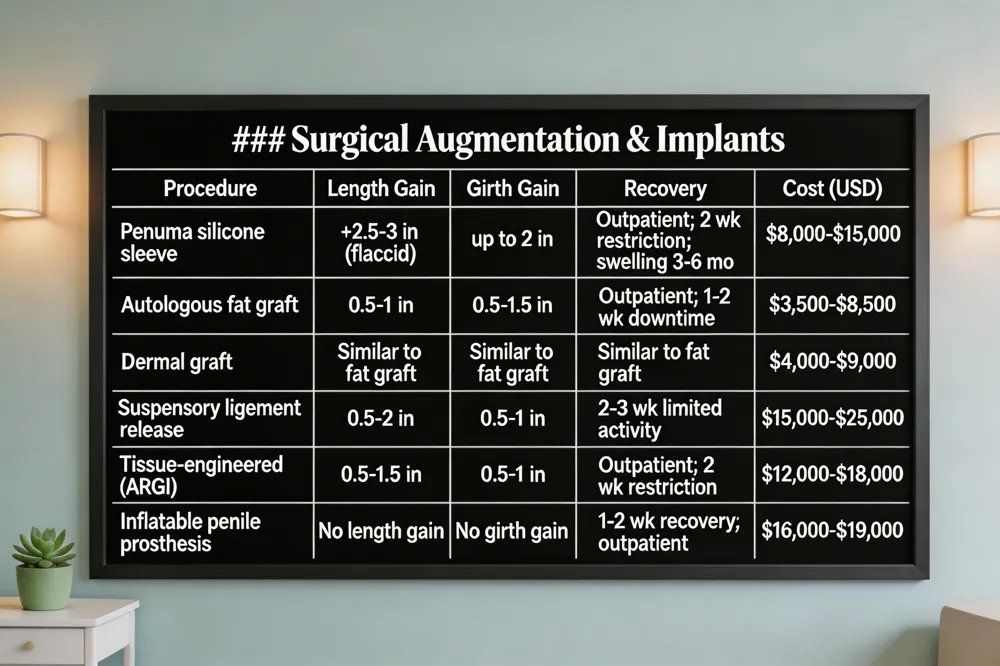 Penis enlargement surgery – FDA‑cleared options include the Penuma silicone sleeve, autologous fat or dermal grafts, suspensory ligament release with tunica expansion, and tissue‑engineered biodegradable scaffolds (e.g., ARGI rectus‑graft‑implant). Gains range from 0.5–2 inches of length and 0.5–1.5 inches of girth, depending on anatomy and technique. Ideal candidates are men with micropenis, buried penis, or those who have exhausted non‑surgical methods and are in good health. Recovery is typically outpatient, with two weeks of activity restriction and swelling subsiding over 3–6 months.
Penis enlargement surgery near me – For Bay Area residents, Dr. Victor Liu’s clinic offers board‑certified, minimally invasive procedures, including Penuma implantation, fat grafting and personalized postoperative plans. Initial consultations include a full exam, goal discussion, and tailored treatment.
How many inches does the XXL Penuma add? – The XXL configuration can increase flaccid length by 2.5–3 inches (≈6.4 cm) and girth by up to 2 inches, with average gains near 2 inches. Results vary with baseline size and postoperative tissue settling.
Permanent male enlargement surgery cost – Prices range $8,000–$25,000. Penuma or ARGI implants fall $8,000–$15,000; ligament transection phalloplasty $15,000–$25,000; fat‑transfer $3,500–$8,500; inflatable prostheses $16,000–$19,000. Costs include surgeon fee, OR, anesthesia, and standard postoperative care.
Best male enlargement surgery – Penuma silicone implant and FDA‑cleared Himplant® soft‑silicone device are the most reputable, offering 1–2 inches of girth gain with natural feel. Autologous fat or dermal grafts are suitable for severe cases when performed by an experienced, double‑board‑certified surgeon.
Penile enlargement side effects – Common temporary effects are swelling, bruising, and numbness. Serious complications include infection, bleeding, scarring, loss of sensation, erectile dysfunction, or curvature. Risks are minimized with certified surgeons, strict aseptic technique, and individualized treatment planning.
Hormone Optimization, Metabolic Health and Holistic Care
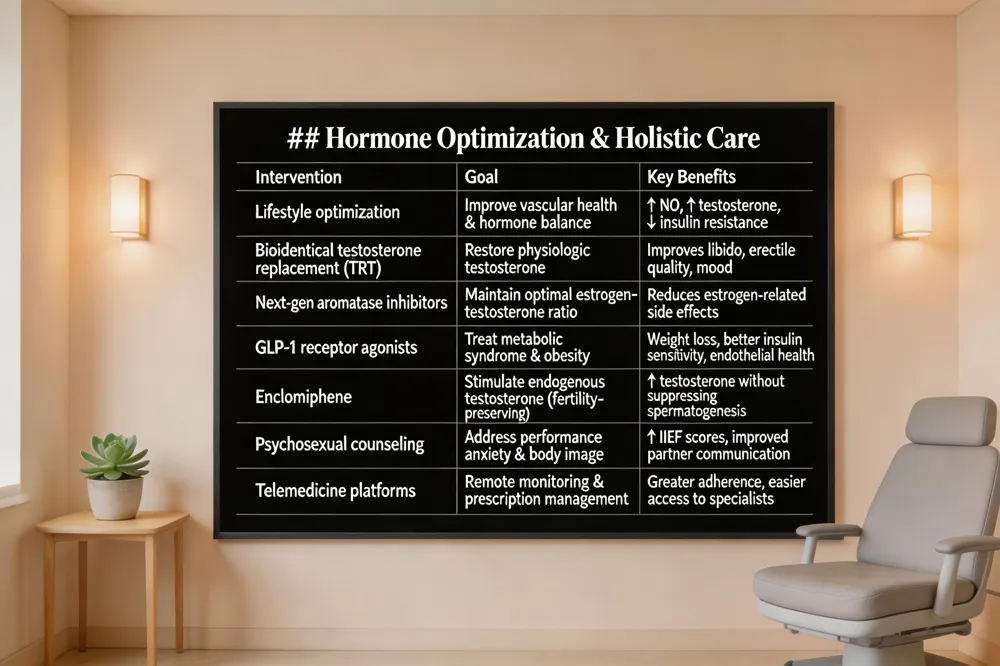 Effective management of erectile dysfunction (ED) begins with a comprehensive health assessment and is increasingly personalized. First‑line therapy relies on lifestyle optimization—regular cardiovascular and resistance training, a protein‑rich diet with zinc, magnesium and vitamin D, adequate 7‑9 hours of sleep, and stress reduction—to improve vascular health, insulin sensitivity and testosterone production. When hormonal insufficiency is documented, testosterone replacement therapy (TRT) now favors bioidentical formulations combined with next‑generation aromatase inhibitors to maintain a physiologic estrogen‑testosterone balance while minimizing cardiovascular risk. For men with metabolic syndrome, GLP‑1 receptor agonists (e.g., semaglutide) promote weight loss, lower insulin resistance and have demonstrated measurable gains in erectile function. Enclomiphene offers a fertility‑preserving alternative that stimulates endogenous testosterone production. Psychosexual counseling and structured partner communication address performance anxiety and “small‑penis” concerns, markedly improving International Index of Erectile Function scores when integrated with medical treatment. Telemedicine platforms provide remote hormone monitoring, prescription management of PDE5 inhibitors, and virtual counseling, enhancing adherence and access to expert care. Together, these metabolic, hormonal and psychosocial strategies form a holistic, evidence‑based approach to restoring sexual wellness in men.
Future Outlook: AI, 3‑D Printing, Smart Prostheses and Gene Editing
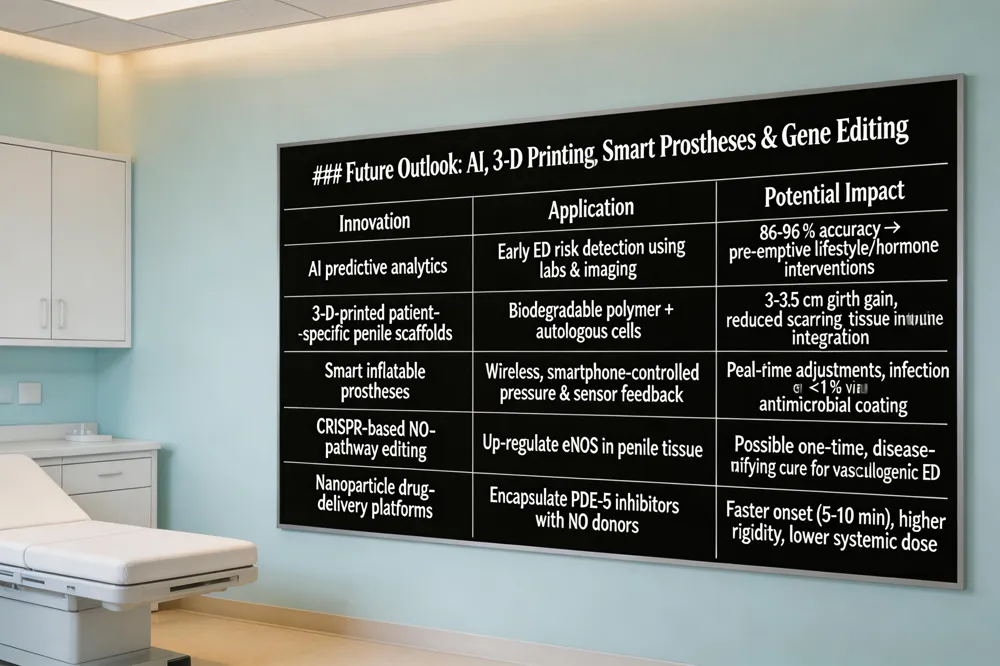 Artificial‑intelligence (AI) predictive analytics are reshaping male sexual health by mining large datasets to flag early signs of erectile dysfunction (ED) and to tailor lifestyle and therapeutic recommendations. Algorithms analyzing testosterone, lipid, glucose, and vascular imaging data can predict ED risk with 86‑96% accuracy, enabling pre‑emptive interventions such as weight management, exercise, or hormone optimization.
3‑D‑printed patient‑specific penile scaffolds represent the next frontier in regenerative augmentation. Biodegradable polymers seeded with autologous fibroblasts or stem cells are printed to match individual anatomy, offering a temporary framework that integrates with native tissue, promotes neovascularization, and reduces infection rates compared with traditional grafts. Early trials report average girth gains of 3‑3.5 cm with minimal scarring.
Smart inflatable prostheses are evolving from purely mechanical devices to wireless, smartphone‑controlled systems. Integrated sensors monitor pressure, temperature, and erection quality, transmitting data to a companion app that allows discreet adjustments and real‑time troubleshooting, while antimicrobial coatings keep infection rates below 1 %.
CRISPR‑based gene‑editing research is targeting nitric‑oxide (NO) pathways to restore endothelial function. Pre‑clinical studies demonstrate up‑regulation of eNOS, improving penile blood flow without systemic side effects. Though still experimental, this approach could provide a one‑time, disease‑modifying solution for vasculogenic ED.
Nanoparticle drug‑delivery platforms are enhancing oral PDE5 inhibitors by encapsulating the active molecule with NO donors, producing faster onset (within 5‑10 minutes) and higher erection rigidity while lowering required doses and systemic adverse events. These innovations together herald a personalized, minimally invasive era for male sexual wellness.
Looking Ahead – A Personalized, Evidence‑Based Future
The next era of male sexual wellness will blend lifestyle optimization, precise hormone management, regenerative medicine and cutting‑edge technology into a single, individualized protocol. Regular cardio, resistance training, adequate sleep, and a nutrient‑dense diet lay the vascular and endocrine foundation for healthy erections, while personalized bioidentical testosterone or next‑generation aromatase inhibitors restore libido and muscle mass without undue cardiovascular risk. Regenerative options such as low‑intensity extracorporeal shockwave therapy (Li‑ESWT), platelet‑rich plasma (PRP) and autologous stem‑cell injections promote neovascularization and nerve repair, extending benefits beyond the short‑term effects of oral PDE5 inhibitors. Dr. Victor Liu’s clinic integrates these modalities with AI‑driven analytics, telemedicine monitoring, and meticulous surgical expertise—offering minimally invasive fillers, biodegradable scaffold implants, and the Penuma® silicone system with a focus on natural feel, low infection rates and rapid recovery. Men are encouraged to seek board‑certified specialists who can tailor a comprehensive plan, ensuring safety, realistic expectations and lasting confidence.