

Why Sterile Environments Matter in Penis Enlargement Surgery
Maintaining a strict sterile environment is the cornerstone of patient safety in penile enhancement procedures. By adhering to CDC, OSHA and Joint Commission standards—such as a minimum of 15 air changes per hour, HEPA‑filtered laminar flow, and validated autoclave cycles (121 °C for ≥30 minutes)—the operating room reduces airborne and surface microbial loads, cutting surgical‑site infection rates from 3–5 % to under 1 %. These infection‑prevention measures protect the patient’s tissue, preserve the integrity of grafts or implants, and prevent complications such as seroma, granuloma, or prosthesis failure. Consequently, surgeons achieve more predictable aesthetic outcomes, fewer revisions, and faster recoveries, reinforcing both clinical success and patient confidence in male genital enhancement surgery.
Fundamentals of Airflow, Temperature, and Humidity Control

Maintaining a sterile environment for male enhancement procedures begins with strict air‑handling standards. The CDC and OSHA require a minimum of 15 air changes per hour (ACH) in the operating suite, and HEPA‑filtered supply air must be used to capture ≥ 99.97% of particles ≥ 0.3 µm. Many facilities augment this baseline with laminar‑flow ventilation, which delivers a unidirectional stream of filtered air over the surgical field and can achieve ISO Class 5 (ISO 7) clean‑room classification, reducing airborne bacterial counts by up to 90 %. Positive‑pressure different relative to adjoining areas prevents ingress of contaminated air when doors open. Temperature should be kept between 20 °C and 22 °C (68 °F‑72 °F) and relative humidity between 30 % and 60 % to optimize staff comfort, preserve the integrity of sterile drapes and gowns, and inhibit microbial growth. Together, these controls create a consistently low‑microbial‑load environment essential for minimizing postoperative infection rates in penile augmentation and other genital surgeries.
Hand Hygiene, Gowning, and Gloving: The First Line of Defense
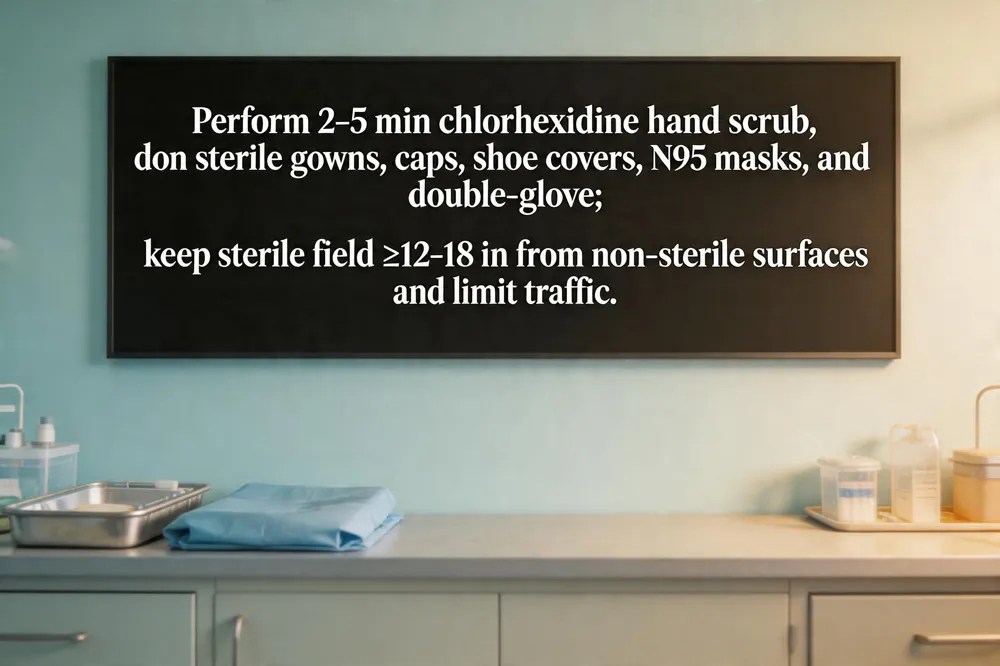
Hand scrub duration of 2‑5 minutes with chlorhexidine‑based antimicrobial soap or 2 % chlorhexidine‑alcohol is required before gowning to eliminate transient flora. After scrubbing, staff don steril gowns, caps, shoe covers, and N95‑or‑higher masks; double‑gloving is mandated because it reduces inner‑glove perforation by up to 70 % during lengthy penile enhancement cases. The surgical team establishes a sterile field by positioning the back table, Mayo stand, and equipment at least 12–18 inches from walls or non‑sterile objects before opening any supplies. Traffic is limited to essential personnel, and any breach—such as accidental contact with a non‑sterile surface or a dropped instrument—must be reported and corrected immediately. By rigorously applying these evidence‑based protocols, Dr. Victor Liu’s clinic minimizes surgical‑site infection risk and delivers safe, natural‑looking outcomes for male genital enhancement patients.
Instrument Sterilization, Validation, and Tracking

Maintaining a truly sterile environment for male enhancement surgeries begins with rigorous instrument processing. The gold‑standard method is steam autoclaving at 121 °C for a minimum of 30 minutes which reliably produces a 6‑log reduction of bacterial spores and meets AAMI and ISO 14644‑1 requirements for critical devices. Heat‑sensitive equipment such as implantable silicone prostheses or polymeric delivery systems are sterilized with low‑temperature hydrogen‑peroxide plasma, a validated low‑temperature method that also achieves >6‑log spore kill while preserving device integrity. After each cycle, instruments are inspected for indicator change, packaging integrity, and correct exposure parameters before release. To prevent the inadvertent use of improperly processed items, every instrument and implant is tagged with a barcode or RFID tag that records the sterilization date, cycle parameters, and responsible central sterile services department. Scanning the tag before surgery verifies that the item has completed a validated cycle and that the tracking log matches the patient’s case, eliminating the risk of cross‑contamination and ensuring compliance with Joint Commission and OSHA environmental‑monitoring standards.
Environmental Monitoring and Real‑Time Air Quality Checks

Maintaining a sterile environment for male‑enhancement surgery relies on rigorous environmental monitoring. Routine bacterial air sampling and surface swabs are performed daily to verify that colony‑forming units stay below the CDC‑recommended thresholds (≤10 CFU/m³ for air and <1 CFU/25 cm² for surfaces). ATP bioluminescence testing of settle plates provides rapid, quantitative feedback on residual organic load, allowing staff to detect breaches in real time and intervene before contamination spreads. In parallel, continuous verification of positive pressure relative to adjacent areas, while filter efficiency checks confirm that HEPA units retain ≥99.97 % capture of 0.3‑µm particles. Together, these measures create a dynamic quality‑control loop that upholds ISO Class 5/ISO 7 standards, minimizes airborne microbial load, and protects patients from postoperative infection.
Antibiotic Prophylaxis and Infection Prevention Strategies
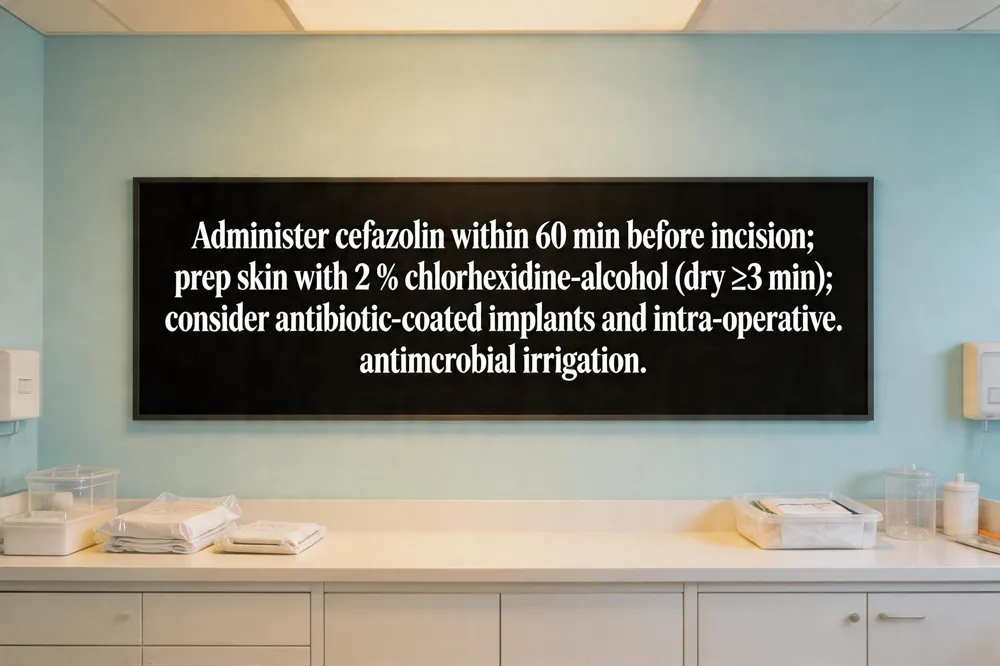
Prophylactic antibiotics and meticulous skin antisepsis are cornerstones of infection control in penile enhancement surgery. A single dose of a first‑generation cephalosporin, cefazolin, is administered within 60 minutes before incision, achieving a 30 % reduction in surgical‑site infection rates for implants and grafts. The operative field is prepared with a 2 % chlorhexidine‑alcohol solution applied outward and allowed to dry for at least three minutes, which outperforms povidone‑iodine in eliminating skin flora. Many surgeons now employ antibiotic‑coated implants and irrigate the wound with antimicrobial solutions intra‑operatively, further lowering bacterial load. Common side effects of penis enlargement procedures include temporary swelling, bruising, localized pain, and occasional numbness; more serious complications such as infection, hematoma, scarring, curvature, or erectile dysfunction are rare when these sterile protocols are followed. Dr. Victor Liu’s clinic emphasizes these measures to ensure safe recovery and natural‑looking outcomes for patients worldwide today.
Patient‑Centric Outcomes, Costs, and Procedure Options

Male enhancement surgery balances measurable gains with safety. Permanent procedures—such as the Penuma® silicone implant, autologous fat grafting, or suspensory ligament release—typically cost $8,000‑$15,000, while ligament transection lengthening ranges $15,000‑$25,000. Temporary options, including hyaluronic‑acid fillers or PRP injections, fall between $1,000‑$9,000. The XXL Penuma sleeve adds an average of 1.5‑2.5 inches (≈4‑6 cm) of flaccid length and 0.5‑1 inch of girth, providing a natural‑looking result that many patients find satisfactory. Dr. Victor Liu’s Fresno practice offers both surgical (Penuma®, ligament release, grafting) and minimally invasive adjuncts (VASER‑Penoplasty, BodyTite, PRP) under strict sterile protocols—15 ACH, laminar HEPA flow, double‑gloving, and pre‑operative 2 % chlorhexidine‑alcohol skin prep—to minimize infection risk. Best outcomes arise from a personalized plan that matches anatomy and goals: permanent lengthening with ligamentolysis, girth enhancement with silicone implants or fat transfer, and reversible augmentation with fillers. Geographic availability is expanding, and Dr. Liu’s clinic provides discreet, board‑certified care throughout the Central Valley. Patients seeking “penis enlargement surgery near me” can schedule a confidential consultation to discuss expectations, financing, and postoperative care, ensuring safe, effective, and patient‑focused results.
Commitment to Sterile Excellence and Patient Satisfaction
At our clinic, every surgical team member participates in ongoing competency assessments and simulation‑based drills that reinforce aseptic technique, double‑gloving, and proper donning of PPE. Environmental safeguards include hourly air‑flow checks, HEPA filter validation, surface cultures, and real‑time particle monitoring to keep airborne counts below CDC thresholds. We provide clear, itemized pricing, flexible financing options, and a dedicated post‑operative care line that offers wound‑care guidance, medication counseling, and early‑intervention alerts, ensuring both safety and patient satisfaction. and personalized follow‑up appointments post‑operative ensuring optimal outcomes.