

Why Lifestyle Matters for Penile Enhancement
Both surgical and nonsurgical penis‑enhancement procedures rely on healthy tissue, robust circulation, and optimal wound healing. Smoking, obesity, excess alcohol and a diet low in antioxidants impair endothelial function, reduce nitric‑oxide availability, and delay collagen synthesis, leading to higher infection rates, scar formation, and loss of gains. Regular aerobic exercise improves peripheral blood flow and oxygenation, supporting graft integration, traction‑device remodeling, and the durability of vacuum‑pump or PRP‑based protocols. Maintaining a normal BMI and consuming a fruit‑rich, protein‑adequate diet supplies the micronutrients needed for collagen production and tissue repair, while adequate sleep and stress management preserve testosterone and growth‑factor levels essential for long‑term size retention. In short, a low‑risk lifestyle not only extends life expectancy but also maximizes the safety, effectiveness, and durability of penile‑enhancement outcomes.
Evidence‑Based Home Strategies and Their Limits

Manual stretching and medically‑approved penile traction devices can yield modest length gains of 1–3 cm after several months of disciplined daily wear, but results plateau without continuous use. Vacuum erection devices temporarily increase girth and improve erectile quality by drawing blood into the shaft; they do not produce permanent enlargement and excessive use may damage elastic tissue. Jelqing and other hand‑over‑hand exercises lack scientific validation and carry risks of micro‑tears, pain, and scar formation when performed aggressively. Over‑the‑counter pills, lotions, and supplements have no proven efficacy; many contain unregulated ingredients and can cause adverse effects.
Effective home methods to increase penis size: Gentle manual stretching or a certified traction device offers limited, measurable gains; VEDs improve temporary ength but not lasting size; jelqing is unsupported and potentially harmful; supplements are ineffective.
Effective penis enlargement pills: No OTC product has demonstrated true length or girth increase. The safest route is a board‑certified specialist consultation for evidence‑based, minimally invasive options.
Nutrition for Stamina, Blood Flow, and Vascular Health

A diet rich in zinc‑packed foods—oysters, beef, pumpkin seeds, fortified cereals supports testosterone synthesis and sustains sexual stamina. Watermelon supplies citrulline, which is converted to arginine and boosts nitric‑oxide production for better penile vasodilation. Dark chocolate, pomegranates, and berries provide flavonoids that enhance circulation and mood, while fatty fish (salmon, sardines) and nuts deliver omega‑3 fatty acids and vitamin B6 for heart health and prolonged energy. Leafy greens such as spinach and kale high in magnesium, iron, and nitrates, promote vascular relaxation and improve blood flow to the penis.
Conversely, foods that impair erectile function include fried items, saturated‑fat‑laden red and processed meats, high‑sodium fast‑food products, and excessive alcohol, all of which increase oxidative stress, raise blood pressure, and diminish endothelial nitric‑oxide availability, ultimately reducing penile blood flow and stamina.
Surgical Options, Risks, and Cost Realities
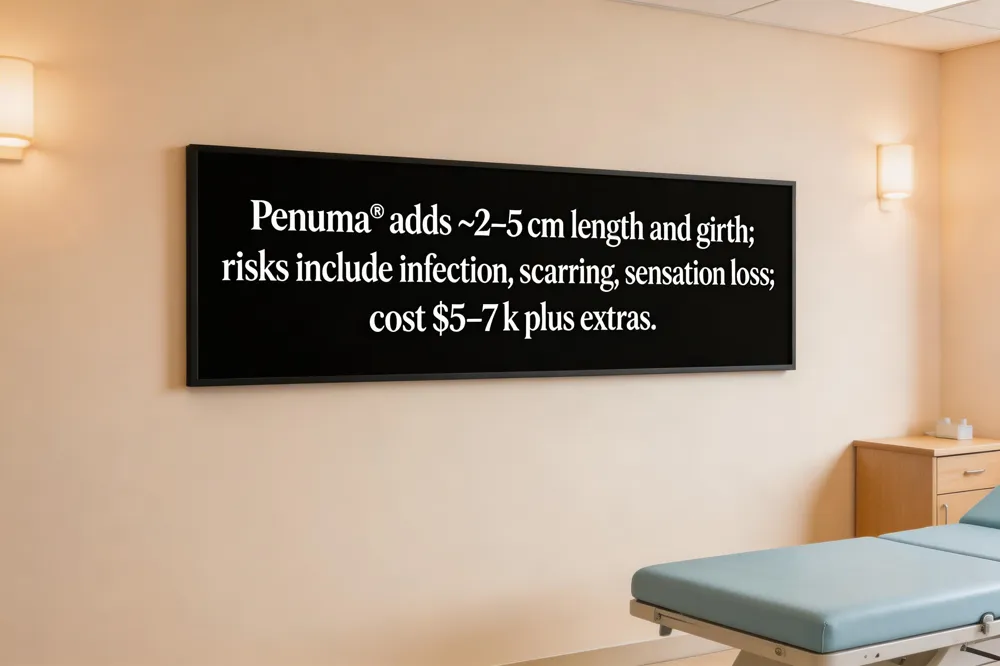
Penile enlargement surgery can produce a spectrum of side effects, ranging from mild swelling, bruising, and temporary discomfort to more serious complications such as infection, scarring, subcutaneous nodules, or penile curvature. Non‑healing wounds, altered sensation, and, rarely, erectile dysfunction may also occur, especially when synthetic materials or fat grafts are employed. At our clinic, Dr. Victor Liu utilizes minimally invasive, personalized techniques and a rigorous postoperative protocol to mitigate these risks and promote natural, safe outcomes.
The FDA‑cleared Penuma® silicone sleeve typically adds 1 to 2 inches (2.5‑5 cm) of flaccid length, with an average gain of 4.9 cm (≈1.9 inches) reported in clinical data, and a comparable 1‑2‑inch increase in girth. Results vary by anatomy, surgical technique, and healing.
Financially, permanent male enlargement procedures generally range from $5,000 to $7,000 for the core operation, but total out‑of‑pocket expenses rise when anesthesia, facility fees, and postoperative care are included. Because these procedures are cosmetic, insurance coverage is rare; patients should budget for follow‑up visits, medications, and possible revisions. Dr. Liu’s practice offers transparent, itemized quotes and financing options to help patients plan the investment required for safe, natural‑looking results.
Lifestyle as the Foundation of Sexual Health and Enhancement Durability

Regular aerobic exercise, weight management, and smoking cessation are cornerstones of cardiovascular health, improving nitric‑oxide production and penile blood flow. Adequate sleep, moderated alcohol intake, and stress‑reduction techniques keep testosterone and cortisol in balance, fostering tissue repair and erectile stamina. These habits directly affect hormone levels, endothelial function, and inflammation, which together dictate both natural sexual performance and the durability of surgical or nonsurgical enlargement outcomes.
How lifestyle impacts sexual health – A balanced diet low in refined sugars, combined with daily activity and a healthy BMI, reduces systemic inflammation and supports robust erections; adequate sleep and stress control restore hormonal equilibrium.
Lifestyle choices that affect sexual health – Exercise, proper nutrition, and sleep promote vascular integrity; excess alcohol, junk food, obesity, and smoking impair circulation and lower testosterone.
Negative effects of an unhealthy lifestyle – Smoking, poor diet, inactivity, chronic stress, and sleep deprivation cause endothelial dysfunction, obesity, and hormonal disruptions, leading to erectile dysfunction and poorer surgical healing.
What can increase penis size – Medically supervised traction devices and vacuum erection devices can modestly augment length or girth; surgical options (e.g., ligament release, fat grafting) provide larger, lasting changes but carry higher risk. Pills, jelqing, and unregulated supplements lack evidence and may cause harm.
Statistical Realities and Perception of Penis Size

Population data show that erect length follows a normal distribution centered near 5–6 inches. A 9‑inch erection is exceedingly rare—well under 1 % of men, roughly 0.5‑0.6 % (5‑6 per 1,000). A 7‑inch erect penis lies near the 95th percentile; only about 5 % of men reach this size, and those between 7‑8 inches comprise about 1 % of the population. Height modestly correlates with flaccid length, reflecting shared genetic and hormonal influences, yet individual variation is large and height does not determine size. A 4.7‑inch erect penis falls near the lower edge of the average range (≈ 5.1‑5.5 inches) and is not clinically small; roughly 45 % of men measure between 4.7‑5.5 inches. A 5.5‑inch erect penis sits at the upper end of the average range and is well within normal variation. Women’s preferences consistently favor girth over length; surveys indicate that a thicker penis contributes more to sexual satisfaction than additional length.
Managing Decline and Maintaining Gains Over Time

Age‑related reductions in tissue elasticity, arterial‑, and endothelial function combine with abdominal fat accumulation to make the penis appear shorter and less rigid. Chronic illnesses such as diabetes, hypertension and cardiovascular disease further impair microvascular flow, while medications that affect hormonal balance or cause fibrosis (e.g., certain antihypertensives and prostate‑cancer therapies) can accelerate atrophy. After any enlargement procedure, diligent pelvic‑floor (Kegel) training, graduated activity restrictions, and adherence to a heart‑healthy diet rich in antioxidants, protein, and zinc support collagen synthesis and maintain graft or implant integrity.
What causes a decrease in penis size? A decrease can result from natural aging, weight gain that buries the shaft, low testosterone, diabetes, cardiovascular disease, scar‑forming conditions such as Peyronie’s disease, radical prostatectomy, smoking, and prolonged inactivity.
How to strengthen and maintain penile health? Adopt regular aerobic exercise, a balanced diet, weight control, smoking cessation, moderate alcohol, safe sexual practices, routine urologic exams, and daily pelvic‑floor exercises to improve blood flow, tissue repair, and erectile quality.
Integrating Lifestyle With Advanced Treatments for Long‑Term Success

Pre‑operative optimization begins with smoking cessation, weight control, and a balanced diet rich in antioxidants, protein, and omega‑3 fatty acids to improve vascular health and collagen synthesis. Achieving a normal BMI 18.5‑25 kg/m² reduces infection risk and enhances wound healing, while quitting tobacco restores nitric‑oxide availability, supporting tissue oxygenation during surgery.
Post‑operative care should emphasize adequate protein (1.2‑1.6 g/kg), vitamins C/E, zinc, and hydration to promote collagen remodeling and reduce inflammation. Early, low‑impact aerobic activity (e.g., walking) improves peripheral circulation, while avoiding heavy lifting and tight garments protects grafts and implants. Continued smoking abstinence prevents microvascular compromise and scar formation.
Follow‑up protocols include scheduled visits for wound assessment, early detection of infection or seroma, and guidance on the use of vacuum or traction devices as prescribed. Ongoing lifestyle adherence—regular exercise, healthy eating, stress management, and sufficient sleep—maintains erectile function and preserves the aesthetic gains achieved through surgical or non‑surgical penile enhancement.
Putting It All Together – A Holistic Path to Safe Enlargement
Extensive research shows that five low‑risk lifestyle factors—nonsmoking, moderate alcohol use, regular aerobic activity, a diet rich in fruits, vegetables and lean protein, and maintaining a normal BMI—add up to a 7‑year gain in life expectancy and a 28 % reduction in annual health‑care costs. These same habits improve vascular health, testosterone balance, and tissue oxygenation, all of which enhance erectile quality and support the durability of both surgical and non‑surgical penile enlargement. Smoking, excess weight, and chronic alcohol use impair wound healing and increase complication rates, while exercise and antioxidant‑dense nutrition promote collagen synthesis and faster recovery. For lasting results, patients should work with a board‑certified specialist who can tailor pre‑ and post‑operative protocols to their physiology. Schedule a consultation with Dr. Victor Liu today to discuss safe, enhancement plan.